Dr. Naveen Polavarapu, Senior Consultant, Medical Gastroenterologist, Liver Specialist, Lead – Advanced Endoscopic Interventions & Training, Clinical Director, Yashoda Hospitals, Hyderabad.
India has renewed its commitment to eliminating hepatitis B and hepatitis C as public health threats by 2030, with greater focus on prevention, screening, diagnosis, treatment and long-term care. The country has already established the National Viral Hepatitis Control Programme (NVHCP), launched in 2018, to strengthen access to prevention, testing and treatment services.
However, achieving the 2030 goal will depend not only on treating people who are already diagnosed, but also on identifying those who may be living with hepatitis without knowing it.
This is important because hepatitis B and C can remain silent for years. A person may feel healthy while the infection is gradually causing liver damage. By the time symptoms appear, some patients may already have developed fibrosis, cirrhosis or liver cancer.
Why hepatitis B and C need early attention
Hepatitis means inflammation of the liver. Among the different types of viral hepatitis, hepatitis B and C are particularly important because they can become chronic infections.
Chronic hepatitis B can remain in the body for many years and may lead to progressive liver damage. Hepatitis C can also become chronic and, if untreated, increase the risk of cirrhosis and liver cancer.
The global burden remains substantial. WHO estimates that around 240 million people were living with chronic hepatitis B and 47 million with hepatitis C in 2024. Together, these infections accounted for more than 95% of deaths related to viral hepatitis.
India carries a significant share of this burden, making early detection and treatment important for reducing preventable liver-related illness and deaths.
The biggest problem can be the absence of symptoms
One of the reasons hepatitis is difficult to control is that infection does not always produce obvious symptoms.
A person with chronic hepatitis B or C may continue normal daily activities without knowing that the virus is present. Mild symptoms such as tiredness or loss of appetite, when present, may also be attributed to other causes.
This creates a gap between having an infection and knowing about it.
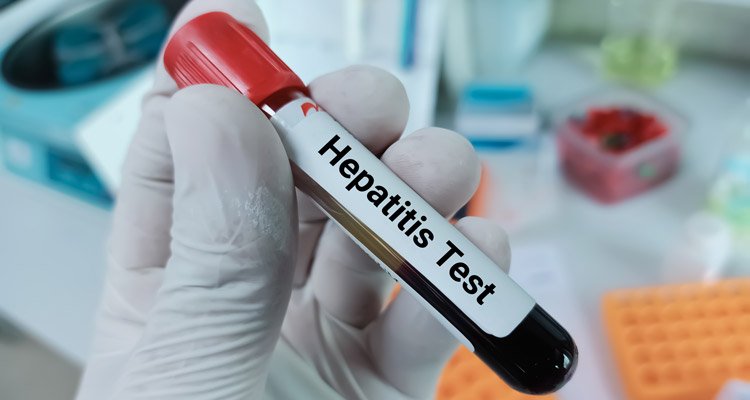
Testing helps identify this hidden burden. Once an infection is detected, further assessment can establish whether it is active, whether the liver has been affected and whether treatment or monitoring is required.
Testing is the link between prevention and treatment
Vaccination, safe blood practices and infection-control measures are essential for preventing new hepatitis infections. But these measures cannot identify people who are already infected.
For hepatitis B, testing commonly begins with a blood test for hepatitis B surface antigen (HBsAg). A positive result may be followed by tests such as HBV DNA, liver function tests and assessment of liver health, depending on the clinical situation.
For hepatitis C, screening generally begins with an antibody test. If antibodies are detected, further testing is needed to establish whether there is an active infection.
The process should therefore go beyond a screening result. A person who tests positive needs appropriate confirmation, clinical assessment and a clear pathway to treatment or follow-up.
WHO’s 2026 implementation handbook highlights rapid and point-of-care testing, molecular testing, reflex testing and simplified services to reduce delays between diagnosis and care.
Who should consider hepatitis testing?
Testing should be guided by a person’s exposure history, clinical circumstances and applicable screening recommendations.
People who may benefit from testing include those with a history of exposure to infected blood, potentially unsafe injections or medical procedures, shared needles or other recognised risk factors.
Pregnancy is another important opportunity for hepatitis B screening. Identifying infection in the mother allows the healthcare team to plan appropriate measures to reduce the risk of transmission to the newborn. WHO recommends that pregnant women be tested for HBsAg at least once and as early as possible during pregnancy.
People receiving dialysis, those with repeated exposure to blood or certain medical procedures, and other groups with increased exposure risk may also require screening based on medical advice.
The key point is that hepatitis cannot be reliably identified by symptoms alone.
India has already built a platform for hepatitis care
India launched the National Viral Hepatitis Control Programme in 2018 to strengthen prevention, diagnosis, treatment and follow-up for viral hepatitis.
The programme provides a framework for delivering hepatitis services through public health facilities and can be linked with other existing healthcare programmes.
Integrating hepatitis services with maternal healthcare, immunisation, HIV services, blood transfusion services and primary healthcare can make testing and treatment more accessible.
WHO’s latest guidance also emphasises decentralising hepatitis services and integrating them into primary healthcare and related programmes.
From screening to diagnosis: the gap needs attention
Finding an infection is only the first part of the care pathway. Some people may receive a positive screening result but not return for further testing or clinical evaluation. Others may receive a diagnosis but face delays in starting appropriate care.
Distance, cost, lack of awareness, stigma and the need for multiple healthcare visits can contribute to these gaps.
Simplifying the pathway can help.
Where medically appropriate, services can be organised so that testing, confirmation and initial assessment are connected more efficiently. Point-of-care and molecular testing can also help reduce delays between identifying an infection and confirming active disease.
The aim should be to ensure that a person does not get lost between screening and treatment.
Hepatitis B can be prevented
India has an important tool for preventing hepatitis B because an effective vaccine is available.
WHO recommends that infants receive a hepatitis B vaccine birth dose as soon as possible after birth, preferably within 24 hours. Timely vaccination is particularly important because infection acquired during infancy has a much higher chance of becoming chronic.
Screening pregnant women for hepatitis B is also important. If infection is identified, appropriate medical measures can be taken to reduce the risk of transmission to the baby.
Prevention therefore needs to work alongside diagnosis so that both new infections and existing infections are addressed.
Hepatitis C can be cured
Early diagnosis is particularly valuable for hepatitis C because the infection can now be cured in most people.
Direct-acting antiviral medicines can cure more than 95% of people with hepatitis C. Treatment is generally short, with many regimens completed within 8 to 12 weeks.
The challenge is therefore not simply whether effective treatment exists. It is whether people with hepatitis C are diagnosed and connected to treatment before complications develop or transmission continues.
Hepatitis B needs a different treatment approach
Hepatitis B is different from hepatitis C.
There is an effective vaccine to prevent hepatitis B, but chronic infection cannot currently be routinely cured in the same way as hepatitis C. Antiviral medicines can suppress the virus, slow liver disease and reduce the risk of serious complications in people who meet treatment criteria.
Some people require long-term treatment, while others may need regular monitoring without immediate medication.
Early diagnosis allows doctors to make this decision based on factors such as viral activity and liver health rather than waiting until advanced liver disease develops.
Elimination does not mean zero infections
The term “elimination” can sometimes be misunderstood.
WHO defines elimination of hepatitis B and C as eliminating them as a public health threat, rather than reducing infections to zero.
The 2030 strategy includes major reductions in new infections and deaths, along with high levels of diagnosis and treatment. Global programme targets include diagnosing 90% of people living with hepatitis B and C and treating or curing 80% of those eligible, depending on the infection.
This explains why diagnosis is central to the overall strategy. A person cannot enter the appropriate treatment pathway if the infection is never identified.
The road to 2030
India has the essential medical tools needed to make progress against hepatitis: vaccination for hepatitis B, effective antiviral treatment for chronic hepatitis B, curative treatment for hepatitis C and increasingly accessible diagnostic technologies.
The challenge is ensuring that these tools reach people early enough.
Testing needs to become easier to access through primary healthcare facilities, maternal health services and other appropriate points of care. People who receive a positive result need clear information about the next step. Healthcare systems also need mechanisms to ensure that patients do not disappear between screening, diagnosis and treatment.
Stigma must also be addressed. Hepatitis is an infection, not a reason to isolate or blame someone. Clear public information can encourage people to seek testing without fear or embarrassment.
WHO’s 2026 guidance highlights decentralised, person-centred services, integration with primary care and simplified testing and treatment as important approaches for accelerating progress towards elimination.
Early diagnosis can change the outcome
India’s 2030 hepatitis goal will depend on more than the number of treatment centres or vaccines administered. It will also depend on how many infections are identified before they lead to serious liver disease.
Hepatitis can remain silent, so feeling healthy does not always mean that there is no infection. Testing, when medically appropriate, is the first step towards knowing one’s status.
For the healthcare system, the priority is to make diagnosis easier to access and ensure that a positive result leads to appropriate care.
Strengthening the connection between testing, early diagnosis, treatment and follow-up can help reduce preventable liver disease and support India’s progress towards its 2030 hepatitis elimination goal.

Dr. Naveen Polavarapu is Clinical Director and Sr Consultant Gastroenterologist and Liver Specialist at Yashoda Hospitals, Hitec City, Hyderabad. He has over 25 years of experience in gastroenterology and specialises in the diagnosis and management of gastrointestinal and liver disorders in adults and children.
He has completed his MBBS from NTR University of Health Sciences and pursued advanced training in the UK, including MRCP and FRCP in Gastroenterology, followed by CCT in Gastroenterology. He also completed Advanced Endoscopy Fellowship Training in ERCP and Endoscopic Ultrasound at Aintree University Hospital and a Liver Transplant Fellowship at Queen Elizabeth Hospital, Birmingham.
Dr. Naveen has extensive expertise in advanced therapeutic endoscopy, liver, pancreatic and bile duct diseases, transplant hepatology and complex gastrointestinal conditions. He has performed more than 30,000 endoscopies, 10,000 colonoscopies, 9,000 ERCPs and 9,000 EUS procedures during his clinical practice.
He has published over 30 research papers and book chapters and has presented his work at international conferences. He is also actively involved in teaching and training, including as an MRCP PACES examiner for the Royal College of Physicians, UK.