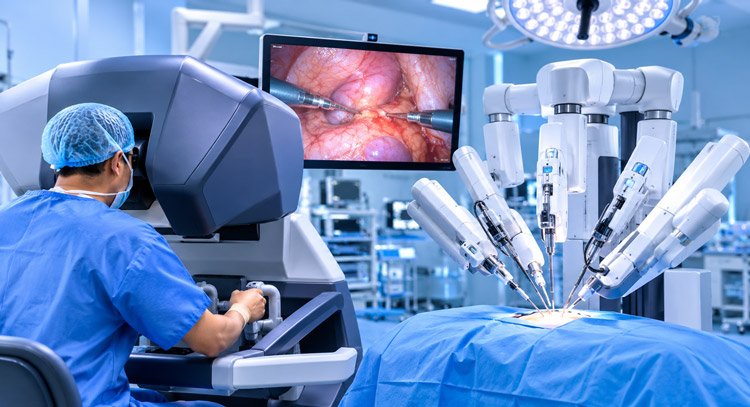
Advanced robotic technology is bringing greater precision and visual control to surgical procedures, particularly those involving delicate tissues and complex anatomical areas. The latest addition to this field is the Toumai Robotic Surgical System from MicroPort MedBot, now installed at Manipal Hospital Millers Road in Bengaluru. It is the first installation of this technology in Karnataka.
The platform will be used across several specialities, including general surgery, gynaecology, urology and bariatric surgery, further expanding the hospital’s minimally invasive surgical capabilities.
Unlike conventional open surgery, minimally invasive procedures are performed through small incisions. Depending on the patient’s condition and the type of operation, this approach may limit tissue disruption, reduce surgical trauma and support recovery.
The Toumai platform integrates advanced 3D imaging with robotic instruments that offer controlled and precise movements. Its imaging capabilities provide surgeons with a magnified view of the operating area, while an inbuilt smoke evacuation mechanism helps maintain visibility during procedures. Enhanced visualisation of blood vessels and surrounding structures can assist surgeons in navigating complex surgical sites.
A distinguishing feature of the technology is its ability to indicate the amount of force exerted by surgical instruments on body tissues. The feedback is displayed on the surgeon’s console, enabling doctors to monitor pressure and modify their movements while operating on sensitive structures. This capability, together with magnified imaging and robotic instrument control, may also prove useful in surgical education and skill development.
The system’s clinical applications have been demonstrated across different departments at Manipal Hospital Millers Road. Dr. Giridhar CM, Consultant – Surgical Oncology, performed an abdominoperineal resection for rectal cancer using the robotic platform. The procedure involves operating in the deep and restricted pelvic region, making precise instrument control particularly important.
In gastrointestinal surgery, Dr. Balakrishna S, Consultant – Gastrointestinal Surgery, highlighted its use in complex procedures, including robotic laparoscopic cholecystectomy. Dr. Geeth Monnappa, Lead Consultant – Obstetrics & Gynaecology, noted the advantages of improved magnification and surgical accuracy in gynaecological procedures.
Dr. Mohan K, Consultant – Urology Transplant & Laparoscopic Surgery, and Dr. Shashikala Ksheerasagar, Consultant – Obstetrics & Gynaecology, also highlighted the benefits of minimally invasive techniques and the system’s camera-control capabilities. Surgeons can reposition the camera and modify the operating view themselves, without having to rely on assistants for these adjustments.
Depending on the surgical procedure and individual patient factors, minimally invasive robotic surgery may help reduce postoperative pain and blood loss, facilitate recovery and potentially shorten hospital stays.
“Robotic surgery is evolving beyond precise movements. New systems can also provide surgeons with useful information about what is happening during an operation. Toumai combines information about the force applied by surgical instruments with advanced imaging to support surgeons during procedures. We are pleased to partner with Manipal Hospitals on this important milestone for Karnataka and the growth of robotic surgery in India,” said Dr. Mukesh Parmar, Managing Director for MicroPort and MedBot – India & South Asia.
The introduction of the Toumai system represents another development in Manipal Hospitals Bengaluru’s surgical technology infrastructure. By bringing advanced imaging, instrument precision and tissue-force feedback into the operating environment, the hospital aims to strengthen its robotic-assisted surgery services across multiple specialities.
(The above image is AI-generated and is for illustrative purposes only)