By Dr. Dilip Gude, Senior Consultant Physician, Yashoda Hospitals, Hyderabad

Most people have a plastic water bottle somewhere within reach. It goes to work, to school, to the gym and on almost every trip. It is light, cheap and easy to carry. But when someone has been using the same bottle for years, a small question often creeps in: is it still safe?
It is a fair thing to wonder about. Between talk of chemicals, germs, tiny plastic particles and hot cars, it is hard to know what to believe. The good news is that a good-quality, food-grade reusable bottle is usually fine for everyday use, as long as it is looked after. How safe it stays depends on the type of plastic, how it is cleaned, where it is kept, and what shape it is in.
What Is the Bottle Actually Made Of?
Not all plastic is the same. Reusable bottles are usually made from one of these:
- Polypropylene (PP): a light, tough plastic, also used in many food containers.
- High-density polyethylene (HDPE): a sturdy plastic used for several food and drink containers.
- Tritan: a clear, BPA-free plastic found in many modern drinking bottles.
- Polycarbonate (PC): a strong, clear plastic that was popular in older bottles and may contain BPA.
The easiest way to know what a bottle is made of is to check its label or base, or read the maker’s instructions.
So, Is It Safe to Use Every Day?
Yes, if the bottle is made for repeated use, is food-grade, and is used the way the maker intended.
The catch is that not every bottle is meant to last. The thin plastic bottle that comes with packaged water is designed for one use. Refilling it again and again isn’t a great idea, because it is hard to clean properly and it wears out and gets damaged quickly.
Heat, strong sunlight, harsh cleaning products and everyday wear and tear also take a toll on any plastic over time. Buying from a trusted brand and keeping up basic hygiene goes a long way.
What Can Go Wrong With Long-Term Use?
1. Chemicals seeping into the water
Some plastics contain additives from the manufacturing process. In certain conditions, tiny amounts can slip into the water. Heat, long storage and an aging, worn-out bottle make this more likely.
BPA (Bisphenol A) is the best-known example. It is found in some older polycarbonate plastics and has raised concern because it can interfere with the body’s hormones. A “BPA-free” label is a helpful sign, though it doesn’t mean the bottle is free of every other chemical.
2. Microplastics
When plastic gets scratched, scraped or worn down, it can shed very small particles. Scientists are still working to understand what this means for health in the long run. At present, there is no clear proof that using a well-kept reusable bottle every day causes any particular illness.
3. Germs
Honestly, this is the bigger everyday concern. A damp bottle, a little leftover water and some saliva make a perfect home for bacteria and fungi. If the bottle isn’t cleaned and dried properly, it can lead to stomach upsets and other infections.
Does Heat Make It Worse?
It can. High temperatures may make it easier for chemicals to move from certain plastics into the water. So people should take care to:
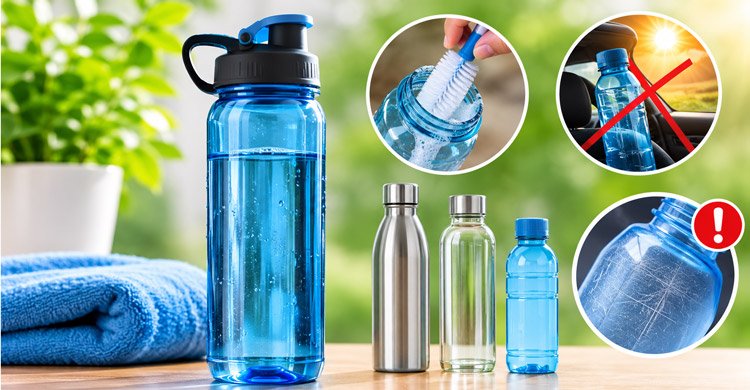
- Avoid leaving the bottle in a hot car or in direct sun for long.
- Avoid pouring hot water into it, unless the maker clearly says it is meant for that.
- Avoid putting it in the microwave or dishwasher unless the label says it is safe to do so.
- Store it somewhere cool and dry.
Simple Habits to Keep a Bottle Safe
A few small habits make a big difference:
- Wash it often. Warm water and a mild dish soap, ideally every day.
- Don’t forget the small parts. Lids, straws, seals and the mouthpiece are where germs love to hide.
- Let it dry fully. Leave it open to air-dry after washing.
- Go easy when scrubbing. Rough scrubbers can scratch the inside, and scratches trap dirt.
- Keep it personal. Sharing a bottle means sharing germs.
- Give it a quick check now and then. Look for scratches, cracks, stains or an odd smell.
When Is It Time for a New Bottle?
There is no fixed expiry date, because it depends on the bottle, how often it is used and how well it is cared for. But it is time to let go when a bottle shows any of these signs:
- Deep scratches or cracks
- Smells or stains that won’t go away after washing
- A cloudy or discoloured look that doesn’t clear up
- A damaged lid, seal or mouthpiece
- A shape that has bent out of form or looks worn out
A damaged bottle is harder to clean well, and it may no longer hold up the way it did when it was new.
Would Steel or Glass Be Better?
People who would rather not depend on plastic for years have other choices:
- Stainless steel: sturdy, long-lasting and a good everyday option when it is food-grade and well maintained.
- Glass: doesn’t give off plastic-related chemicals and is easy to clean, but it can break, so a protective sleeve helps.
- Plastic: light, cheap and great for travel, but it needs a little more watching and regular cleaning.
In the end, it comes down to what suits a person’s routine, budget and how much care they are willing to give.
When Should a Doctor Be Consulted?
Using a plastic bottle is not, by itself, a reason to worry or to rush for a check-up. But anyone with ongoing symptoms such as loose motions, vomiting, stomach pain or fever should see a doctor instead of simply blaming the bottle. A general physician can find out what is really behind it and suggest the right tests or treatment.
Final Take
A food-grade reusable plastic bottle can be a perfectly good companion for staying hydrated, as long as it is kept clean, kept away from heat, and replaced when it starts looking tired. A little care today keeps the daily sip safe for the years ahead.