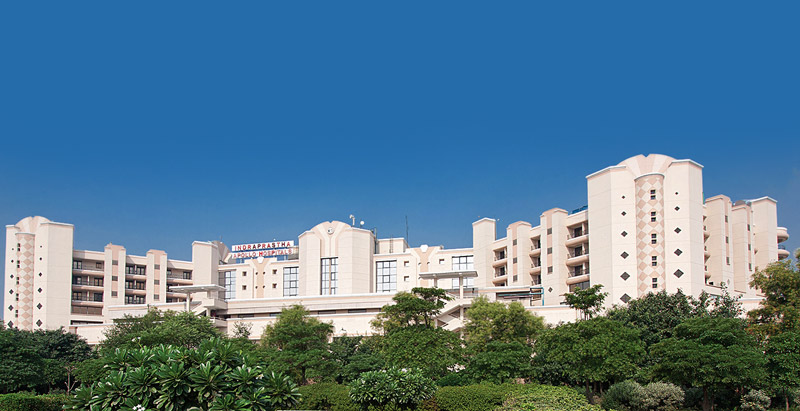
Apollo Hospitals Enterprises Ltd (AHEL) is gearing up for a significant expansion, with a renewed focus on strengthening its footprint in northern India and fast-growing tier-2 and tier-3 regions, Managing Director Suneeta Reddy confirmed.
In a recent interview, Reddy highlighted that the company has reassessed its national network and identified key markets that require deeper presence. “We reviewed our network with a planned strategy and identified the need to establish a stronger presence in northern markets as well as to reinforce our footprint in certain existing markets,” she said.
As part of its growth roadmap, Apollo intends to add a minimum of 4,500 beds over the next few years, increasing its existing capacity of approximately 9,000 beds. Reddy noted that rising insurance penetration is driving demand for accessible, high-quality healthcare. “The private sector currently has about 1.5 lakh beds, with corporate hospitals like Apollo providing around 70,000 of them. Seeing the clear need for more quality beds, we have decided to expand in some important markets to meet this demand,” she added.
The healthcare major recently launched a 225-bed hospital in Pune, which is set to double its capacity to 450 beds within a year. Additional expansions are in progress: the 180-bed Belenus Hospital in Sarjapur, Bengaluru, will be inaugurated early next year, followed by a new 250-bed facility—Apollo Sonarpur Hospital—in Kolkata. New hospitals in Gachibowli (Hyderabad) and Gurgaon are scheduled to open in the first quarter of the next financial year. Collectively, these projects will contribute nearly 1,700 beds, backed by an investment of around ₹3,500 crore.
Further developments are underway in Jubilee Hills, Worli, Seshadripuram and Mysore. Apollo is also significantly growing its presence in tier-2 and tier-3 hubs including Lucknow and Varanasi, along with strengthening its existing network in cities such as Madurai, Trichy, Karur, Karimnagar and Bilaspur.
Reddy emphasized the importance of these regions in India’s economic landscape. “The population in these cities contributes nearly 35 percent to India’s GDP, and we believe this segment has the ability and right to access quality healthcare,” she said. Existing hospitals are expected to register an annual growth of 12–13 percent over the next five years, while newer facilities in emerging markets are projected to grow around 5 percent. Strong returns, with ROCE above 22 percent, underscore the group’s confidence in these investments.
Addressing the ongoing discussions between the Association of Healthcare Providers of India (AHPI) and general insurers, Reddy said that talks remain positive and collaborative. She further noted that Apollo continues to partner with state governments to improve healthcare access in underserved regions, pointing out that “we have been managing the Chittoor Government Hospital since taking it over in 2015.”
(Photo courtesy: commons.wikimedia/Irshaaadk)