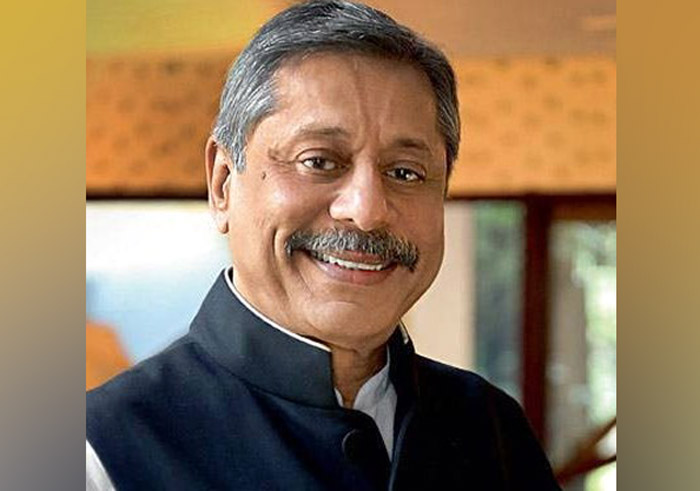
Renowned cardiovascular and cardiothoracic surgeon Dr Naresh Trehan has highlighted the vast scope for India and the United States to deepen cooperation across multiple healthcare domains, including artificial intelligence, medical technology, drug development, and medical hardware.
Speaking at an event in New York hosted by the Consulate General of India titled ‘Healthcare in a Developed India 2047’, Trehan noted that India is entering a pivotal moment in its healthcare advancement.
“We are now in a stage where I think the time has come… It’s India’s time. I’m gung-ho myself, I would say that anybody… looking at India should move, don’t waste anymore time because the opportunities are huge,” said Trehan, who is also the Chairman and Managing Director of Medanta and a Padma Bhushan awardee.
Focus Areas for Future Collaboration
According to the Consulate, the discussion emphasized several national healthcare priorities:
- Ensuring high-quality, affordable healthcare for all
- India’s rapidly expanding pool of skilled medical and allied-health professionals
- A stronger push toward pharma research and innovation
- The transformative impact of AI on diagnostics and healthcare delivery
- The growing potential of India as a global medical tourism hub
- New pathways for India-US collaboration in AI-driven health solutions and advanced medical technologies
Trehan outlined multiple areas where India and the US can jointly innovate, especially in AI, medical technology, drug discovery, and medical tourism.
AI’s Expanding Role
He highlighted how AI is rapidly reshaping healthcare:
He remarked that modern algorithms are now so advanced that “analysis can be compressed” and data processed in a fraction of the time previously required.
“If that’s the power of AI, you can actually see how you can convert it into delivery of healthcare and also predicting healthcare,” he said, adding that the US, with its technological depth, is well positioned to support India in this transformation.
However, Trehan cautioned that while AI will be central to healthcare’s future, it still requires strong validation. “It’s not like it’s the holy grail. It’s not,” he noted.
India’s Strength in IT and Drug Development
Trehan pointed out that about 70 percent of global medical software originates in India, even though the final products—such as MRI and CT systems—are manufactured elsewhere. He drew a parallel with colonial times, when raw materials from India were used to produce finished goods abroad.
On pharmaceuticals, he stressed the importance of building global partnerships.
“Now what we have to do is to actually build partnerships—India needs to go up the value chain… It’s not that… you can do everything yourself, you don’t have to,” he said.
Trehan added that India’s diverse genetic pool allows for faster and more representative drug development. The country, he said, holds an enormous opportunity for advancements in fields such as oncology research, where India can accelerate progress by working closely with the US and European nations.
Meeting Future Workforce Demands
As India works toward the vision of Viksit Bharat 2047, Trehan emphasized the need to scale up its medical workforce to cater to a population of 1.4 billion.
“We make 80,000 doctors a year. We need to produce 160,000 if you want to take care of our 1.4 billion population,” he said.
Trehan concluded by noting that India possesses exceptional talent, supported by an increasingly stable policy environment.
“I think the opportunity has actually increased hugely,” he said, expressing optimism about India’s potential to lead in global healthcare innovation.
(Photo courtesy: facebook/naresh.trehan)