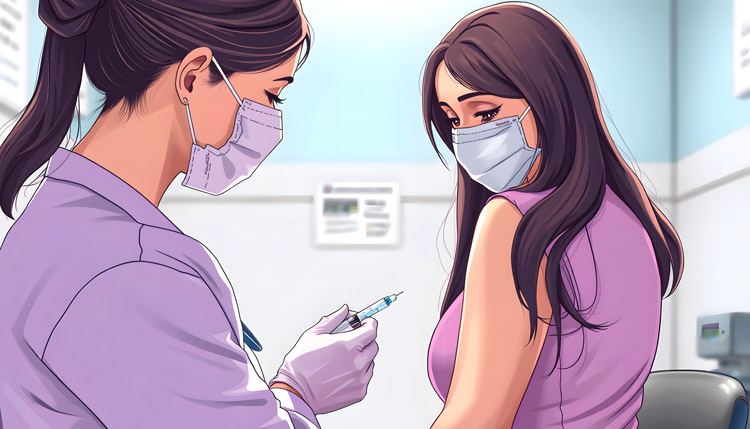
India is preparing to introduce a nationwide Human Papillomavirus (HPV) immunisation drive this year, offering free shots to adolescent girls to curb cervical cancer. Health Ministry sources confirmed that the programme will cover 14-year-old girls across the country.
The vaccine will be provided voluntarily and at no cost through govt health centres. These include Ayushman Arogya Mandirs, community health centres, district hospitals and govt medical colleges. Trained medical officers will supervise all sessions. Systems will also be in place to monitor recipients after vaccination and manage any rare side effects.
With this move, India will join over 160 nations that have already included HPV vaccination in their public health programmes.
Supplies for the rollout have been secured through India’s collaboration with Gavi, the Vaccine Alliance. Officials said the procurement ensures vaccines that meet global quality and cold-chain norms.
The decision follows a detailed scientific review and recommendations by the National Technical Advisory Group on Immunisation (NTAGI). India will use the quadrivalent HPV vaccine, Gardasil. It protects against HPV types 16 and 18, which are linked to cervical cancer, and types 6 and 11.
Cervical cancer remains the second most common cancer among women in India. Official figures show nearly 80,000 new cases and over 42,000 deaths each year. Persistent infection with high-risk HPV strains—mainly types 16 and 18—accounts for more than 80% of cases in the country, according to Health Ministry sources.
Globally, HPV vaccines have shown strong safety and effectiveness records. Since 2006, more than 500 million doses have been administered worldwide. Evidence reviewed by health authorities indicates 93–100% protection against cervical cancer caused by vaccine-covered HPV types.
Health experts stress that immunising girls before exposure to the virus offers the best defence. Early vaccination lowers future cancer risk and strengthens preventive healthcare for women.
Human Papillomavirus refers to a group of common viruses spread mainly through close skin contact. While most infections clear on their own, long-term infection with high-risk types—especially HPV 16 and 18—can lead to cervical cancer over time.
Medical evidence shows the vaccine works best when given before possible exposure to the virus. Administering it at age 14 ensures early and lasting protection. Both global and Indian studies reviewed by authorities confirm strong, durable immunity in this age group.
In June 2022, the Strategic Advisory Group of Experts on Immunization (SAGE) assessed emerging data on dosage schedules. The review found that a single-dose HPV vaccine offers protection comparable to two- or three-dose regimens.
In its December 2022 position paper, the World Health Organization (WHO) stated that, as an off-label option, a single-dose schedule may be used for girls and boys aged 9–20 years. Evidence suggests one dose provides similar efficacy and duration of protection as two doses, while improving affordability and coverage. However, at least two doses—and when feasible three—remain necessary for those who are immunocompromised or living with HIV.