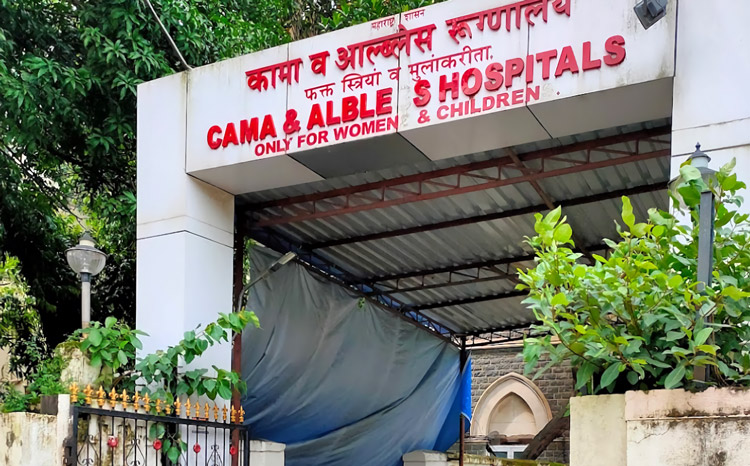
In a significant boost to public healthcare, Mumbai’s Cama & Albless Hospital has become the first government-run institution in Maharashtra to receive approval for establishing an Assisted Reproductive Technology (ART) Bank. This milestone expands access to affordable fertility treatment for thousands of couples who are unable to bear the expenses of private IVF centres.
For many low-income families, the high cost of IVF places parenthood beyond reach. While those with financial resources often turn to private fertility clinics for test-tube baby procedures, economically weaker couples frequently have no viable options.
To address this disparity, the state government set up an IVF facility at Cama Hospital, which began operations on March 6, 2024. The hospital later applied for permission to run an ART Bank, enabling the preservation of reproductive cells such as sperm and eggs.
With the newly granted approval, the hospital can now offer ART-2 procedures. Couples seeking IVF, ICSI and similar fertility treatments will be able to access donor sperm, donor eggs, and cryopreservation services at substantially reduced costs through the public healthcare system.
The ART Bank will also support patients undergoing treatment for cancer and other serious conditions by providing affordable fertility preservation options, helping them protect their ability to have children in the future.
The project has advanced with strong backing from the state’s medical education leadership. According to hospital administration, the facility is expected to begin operations soon, offering critical assistance to childless couples across Maharashtra who rely on government healthcare services.
Assisted Reproductive Technology generally involves a two-stage process.
In the first stage, the woman undergoes a thorough medical assessment. Conditions such as ovarian complications, fibroids, or blockages in the uterus and fallopian tubes are common contributors to infertility.
Many of these issues can be resolved through medication or surgical procedures, enabling natural conception. When these measures do not succeed, treatment progresses to the second stage—IVF.
During IVF, eggs from the woman and sperm from the man are collected, preserved, and fertilised in a laboratory setting. The resulting embryo is then placed in the woman’s uterus, leading to pregnancy. Children born through this method are commonly known as test-tube babies.
The newly approved ART Bank will offer end-to-end services, including the collection, processing, secure storage and distribution of sperm, eggs and embryos for IVF and related reproductive treatments.