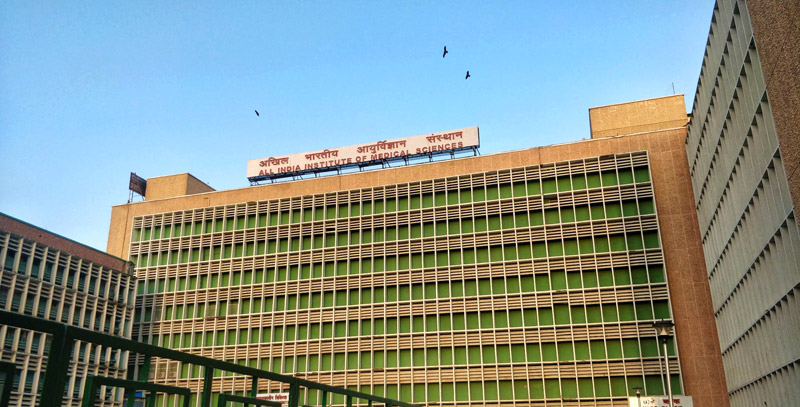
An expert from the All India Institute of Medical Sciences (AIIMS), New Delhi, has warned that poorly controlled diabetes is emerging as a major health threat in India, causing severe organ damage and life-threatening complications. Speaking on Wednesday, Dr. Manjunath Maruti Pol, Additional Professor in the Department of Surgery at AIIMS, explained that metabolic surgery is proving to be a crucial intervention for individuals whose Type 2 diabetes remains uncontrolled despite long-term medication and lifestyle management.
India, often labelled the global hub of diabetes, now has around 70 million affected individuals. According to Dr. Pol, nearly half of them struggle with uncontrolled blood sugar levels. He noted that while the global HbA1c benchmark for good control is 7, the threshold in India is 7.5 because many patients fail to meet the international standard.
“Uncontrolled diabetes can be defined as when HbA1C levels continue to remain at 7.5 despite taking 3 or more than 3 medicines and controlling diet and lifestyle for at least 2 years,” he explained.
He added that HbA1c levels are directly linked to diabetic complications—higher levels accelerate organ damage, including kidney failure, cardiovascular events, stroke, nerve damage, and vision loss.
Dr. Pol pointed out that metabolic surgery is now an established, globally recognised therapy for selected patients with uncontrolled Type 2 diabetes. The International Diabetes Federation (IDF) endorsed it as a treatment option in 2016.
How the Procedure Works
Guidelines recommend the surgery for individuals between 18 and 65 years of age. Unlike Type 1 diabetes, which affects the pancreas, metabolic surgery for Type 2 diabetes focuses on altering the stomach and small intestine.
“The stomach is made small and small intestine is joined, with this, the stomach is sized like a tube… so that the food goes directly to the intestine, bypassing the duodenum,” Dr. Pol explained.
This rerouting triggers the release of GLP and other hormones in natural rhythms and quantities, which helps halt disease progression and restore metabolic balance.
Sharing data from AIIMS, he said, “In our own retrospective analysis, we have performed over 100 surgeries, with 35 per cent on patients with uncontrolled Type-2 diabetes. All of them are currently off diabetes medications.”
He noted that many patients see dramatic improvements immediately after surgery, with near-normal blood sugar levels observed as early as the first day after the procedure—highlighting benefits that are not dependent on weight loss.
The surgery, performed using laparoscopic or robotic techniques, costs between ₹3 lakh and ₹6 lakh, according to Dr. Pol.
(Photo courtesy: Wikipedia/Vishnoi M)