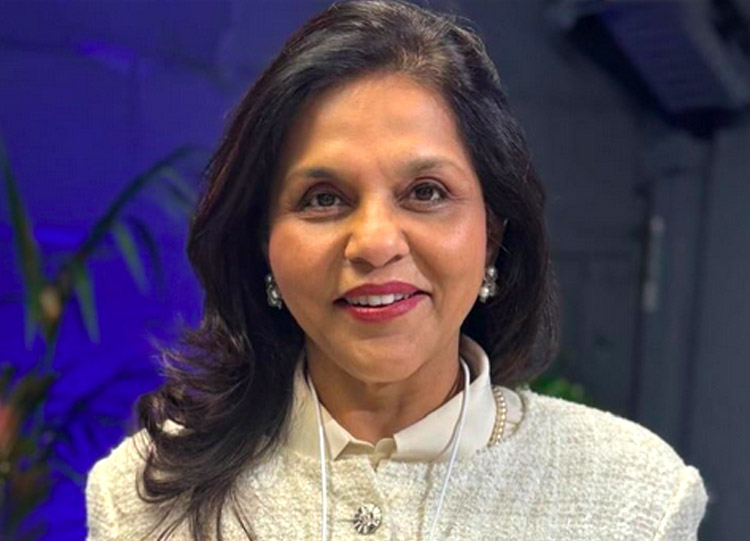
As India strengthens its position as a global medical tourism hub, technology is emerging as its most powerful differentiator. Speaking at the World Economic Forum in Davos, Dr. Sangita Reddy, Joint Managing Director of Apollo Hospitals, outlined how artificial intelligence is set to redefine patient care, clinical efficiency, and cross-border healthcare access—reshaping not just hospitals, but the future of global medical travel.
Artificial intelligence is no longer optional for healthcare—it is inevitable. That was the clear message from Dr. Sangita Reddy, as she laid out Apollo’s technology-led vision at the World Economic Forum in Davos.
“AI must happen,” Dr. Reddy stated, underscoring her belief that artificial intelligence will fundamentally reshape how healthcare systems operate by improving productivity and widening patient access.
According to her, AI has the potential to dramatically speed up medical diagnosis while easing the operational burden on healthcare professionals. By automating repetitive and administrative work, the technology allows doctors and nurses to focus on higher-value clinical decisions. “It removes mundane tasks for nurses and doctors and helps us leverage our intellectual property,” she said, adding that AI should be embedded across all healthcare platforms.
Dr. Reddy also highlighted Apollo’s success with telemedicine, particularly in states such as Andhra Pradesh, where digital healthcare delivery has already proven effective. She noted that the next phase involves taking these services deeper into rural and underserved regions to bridge long-standing healthcare gaps.
On the business side, she pointed to strong investor confidence in India’s healthcare ecosystem. Reflecting this optimism, Apollo Hospitals is preparing for significant expansion, with plans to add 3,000 hospital beds over the next three years to meet rising demand.
She credited supportive government policies for creating a favorable growth environment, citing measures such as 100% foreign direct investment in insurance and initiatives aimed at keeping insurance accessible. Dr. Reddy emphasized that wider insurance coverage, combined with a greater focus on preventive healthcare, will be critical to ensuring long-term health security for India’s population.
(Photo courtesy: x/drsangitareddy)