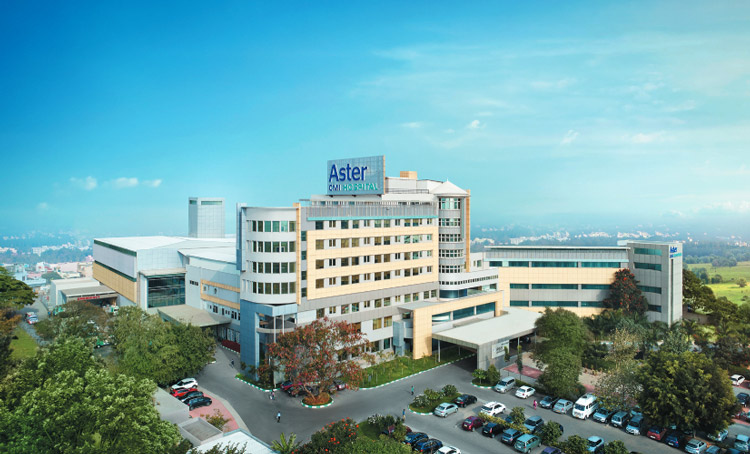
Aster DM Healthcare is pursuing an ambitious transformation that could place it among India’s leading hospital chains within the next three to four years. The company plans to expand its capacity sharply to around 15,000 beds by FY29, backed by its merger with Quality Care India and a strong pipeline of new hospital projects. However, this rapid scale-up comes at a time when the healthcare industry is grappling with acute staff shortages and heavy capital requirements, making execution a critical challenge.
As part of its growth roadmap, Aster DM aims to nearly quadruple its existing bed strength. Of the targeted 15,000 beds, roughly 5,000 will come through the integration of Quality Care India, while another 5,000 will be added via organic expansion and new facilities. The objective is to strengthen its national footprint and position itself alongside the country’s top hospital networks.
The company currently commands a market valuation of about ₹36,000 crore and trades at a steep price-to-earnings (P/E) multiple exceeding 100x. This premium valuation reflects strong investor expectations around long-term growth and improved profitability. Aster also plans to enhance operating margins by 200–250 basis points even as it scales up capacity. Its stock has recently hovered near ₹700, indicating continued market optimism.
Aster’s expansion places it in direct competition with established leaders such as Apollo Hospitals, which operates 71 hospitals and has a market capitalization of around ₹1.10 lakh crore. Apollo’s valuation multiple of roughly 60–62x highlights the premium investors assign to Aster despite its smaller scale, largely due to execution risks tied to rapid expansion.
The broader healthcare sector in India is also expanding rapidly, projected to reach about $638 billion by 2025, growing at an annual rate of 17.5–22.5%. Rising healthcare spending, digital adoption, and government initiatives like Ayushman Bharat are fueling this growth. Yet the system still faces a significant infrastructure gap, requiring an estimated 3 million additional beds, 1.54 million doctors, and 2.4 million nurses in the near future.
Despite aggressive infrastructure plans, Aster DM acknowledges that the biggest hurdle is not construction but workforce availability. According to Deputy Managing Director Alisha Moopen, the company views the “war on talent” as a more pressing issue than physical capacity.
Indian healthcare professionals remain in high demand globally, intensifying competition for skilled doctors and nurses. This shortage could directly affect Aster’s ability to operate new facilities efficiently and meet profitability targets. While the company expects benefits from the merger and plans to focus on high-value specialties such as cardiology and oncology, rising staff costs remain a key risk.
The group is also investing in technology and artificial intelligence to improve efficiency and has already reported a 12% increase in patient volumes. However, converting higher volumes into meaningful margin expansion will depend heavily on workforce stability and cost control.
Medical tourism is emerging as an important growth driver for Aster DM Healthcare, currently contributing around 7–8% of revenues. The company aims to raise this share into the mid-teens over time, leveraging India’s reputation for affordable yet high-quality medical care.
India’s medical tourism market is expected to reach $13 billion by 2026 and could expand to $65.1 billion by 2036. This growth is being supported by global demand for cost-effective treatments and improving international confidence in Indian hospitals.
Analysts remain broadly positive on Aster DM, with most ratings indicating a “Strong Buy” and 12-month price targets in the ₹705–₹717 range. While near-term upside appears limited, long-term sentiment remains constructive, supported by integration benefits from its GCC exit, digital investments, and expansion strategy.
Aster DM Healthcare is entering a decisive phase of expansion that could reshape its position in India’s healthcare sector. While its ambitious 15,000-bed target and merger-driven growth strategy offer strong long-term potential, the company faces serious execution challenges. Talent shortages, high leverage, and elevated valuation expectations mean that success will depend heavily on operational discipline and efficient scaling.
(Photo courtesy: www.asterdmhealthcare.in)