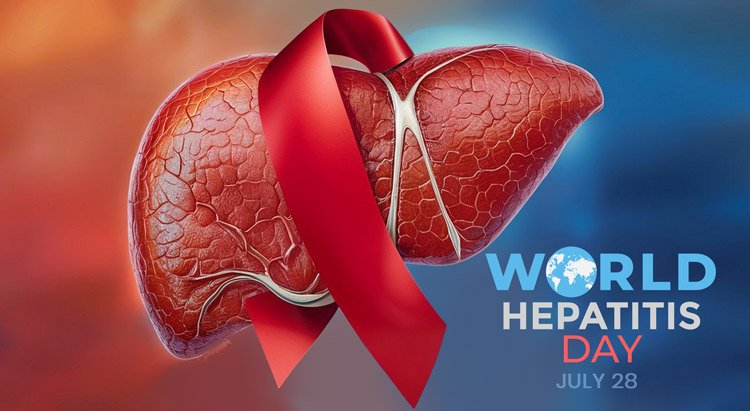
Every year on July 28, the world observes World Hepatitis Day, a global initiative dedicated to raising awareness about viral hepatitis—one of the leading yet often overlooked causes of chronic liver disease and liver cancer. Despite remarkable advances in medical science, viral hepatitis continues to claim more than a million lives every year. The tragedy is that many of these deaths are preventable through timely vaccination, early diagnosis, and effective treatment.
The World Hepatitis Day 2026 theme, “Hepatitis: Let’s Break It Down,” is a call to remove the barriers that prevent millions of people from accessing lifesaving prevention, testing, treatment, and care. The challenge today is no longer the lack of scientific knowledge or effective therapies. Instead, it lies in ensuring that these proven interventions reach every individual, regardless of geography, income, or social circumstances.
Understanding Viral Hepatitis
Viral hepatitis refers to infection of the liver caused by a group of viruses—primarily Hepatitis A, B, C, D, and E. While Hepatitis A and E usually cause acute illness and often resolve spontaneously, Hepatitis B (HBV) and Hepatitis C (HCV) are of greatest public health concern because they can become chronic infections.
Over many years, chronic hepatitis silently damages the liver, progressing from inflammation to fibrosis, cirrhosis, liver failure, and eventually hepatocellular carcinoma, the most common form of primary liver cancer. This slow progression often occurs without obvious symptoms, making viral hepatitis one of the most dangerous “silent” diseases affecting millions worldwide.
Hepatitis B & C spreads through infected blood, sexual contact, and from an infected mother to her child during childbirth. Unlike Hepatitis B, there is currently no vaccine against Hepatitis C, making early diagnosis and treatment especially important.
The Silent Epidemic
One of the greatest challenges with viral hepatitis is its ability to remain hidden for years. Unlike many infectious diseases that produce immediate symptoms, chronic hepatitis often progresses quietly. Most infected individuals feel perfectly healthy while the virus gradually damages their liver over years or even decades.
Early symptoms, when present, are often vague and nonspecific—fatigue, mild abdominal discomfort, poor appetite, nausea, or general weakness. These symptoms are easily overlooked or attributed to stress or lifestyle. By the time jaundice, abdominal swelling, unexplained weight loss, vomiting blood, or confusion develops, advanced liver disease may already be present.
This silent nature explains why viral hepatitis remains a major public health challenge despite being largely preventable and, in many cases, treatable.
Why World Hepatitis Day Matters
World Hepatitis Day is observed on July 28 in honour of Dr. Baruch Blumberg, the Nobel Prize-winning scientist who discovered the Hepatitis B virus and developed the first Hepatitis B vaccine. Over the years, this observance has evolved into one of the world’s most important public health campaigns against liver disease.
The 2026 campaign carries particular significance because humanity already possesses the tools needed to eliminate viral hepatitis as a public health threat. Effective vaccines prevent Hepatitis B infection, accurate blood tests detect infection before liver damage becomes irreversible, curative medicines eliminate Hepatitis C in more than 95% of patients, and long-term antiviral therapy for Hepatitis B effectively suppresses viral replication, slowing disease progression and substantially reducing the risk of liver cancer.
Scientific progress has given us powerful solutions. The challenge now is ensuring that these advances benefit everyone.
Breaking Down the Barriers
The slogan “Let’s Break It Down” represents much more than a campaign theme. It is a call to dismantle the barriers that continue to prevent hepatitis elimination.
Many individuals remain undiagnosed because they are unaware of the disease or believe they are not at risk. Others avoid testing because of stigma or fear of discrimination. Limited access to healthcare, financial constraints, fragmented health systems, and inadequate screening programmes further widen these gaps.
Stigma remains one of the most damaging barriers. Many people living with hepatitis experience unnecessary fear, isolation, or social judgment despite acquiring the infection through childbirth, childhood exposure, healthcare procedures, or other circumstances beyond their control. Eliminating hepatitis requires not only better healthcare but also greater public understanding and compassion.
The World Health Organization rightly emphasizes that proven science must now be translated into meaningful action through stronger political commitment, sustained investment, and equitable access to prevention, testing, treatment, and long-term care.
Prevention: Our Strongest Weapon
Among all public health interventions, prevention remains the most effective strategy against viral hepatitis.
The Hepatitis B vaccine is one of modern medicine’s greatest achievements and has protected millions of children and adults worldwide. Universal birth-dose vaccination and completion of childhood immunization schedules have dramatically reduced new infections in many countries.
Equally important are safe medical practices, including sterile injections, proper sterilization of medical and dental equipment, safe blood transfusion services, and strict infection-control measures in healthcare facilities.
The Importance of Early Testing
Because hepatitis often causes no symptoms until advanced stages, screening plays a vital role in preventing irreversible liver damage.
A simple blood test can detect Hepatitis B or Hepatitis C long before complications develop. Early diagnosis allows timely treatment, monitoring of liver health, vaccination of household contacts when appropriate, and measures to prevent further transmission.
Screening is especially recommended for healthcare workers, family members of infected individuals, pregnant women, people with abnormal liver function tests, those who have received blood transfusions before routine screening became widespread, individuals undergoing dialysis, people living with HIV, and anyone with recognised risk factors as advised by their physician.
A simple blood test today could prevent cirrhosis, liver failure, or liver cancer tomorrow.
Treatment Has Changed the Future
The outlook for patients with viral hepatitis has improved dramatically over the past decade.
Modern antiviral therapy allows most patients with chronic Hepatitis B to live healthy lives while significantly reducing the risk of cirrhosis and liver cancer. Even more remarkably, direct-acting antiviral drugs now cure more than 95% of Hepatitis C infections, making hepatitis one of the few chronic viral diseases that can be completely eradicated in many patients.
However, treatment is only effective when people are diagnosed early and can access affordable healthcare. Expanding testing, strengthening referral systems, and ensuring equitable access to medicines remain essential priorities.
The Indian Perspective
India continues to carry a substantial burden of viral hepatitis, particularly Hepatitis B and Hepatitis C. Recognising this challenge, the Government of India launched the National Viral Hepatitis Control Programme (NVHCP) to strengthen awareness, improve surveillance, expand testing, and increase access to treatment.
Universal Hepatitis B vaccination in infancy has already prevented countless infections. Nevertheless, adult screening, public awareness, and timely linkage to specialist care require continued strengthening.
Putting People at the Centre
Eliminating hepatitis is not solely a medical challenge—it is a societal one.
Communities, patients, healthcare providers, policymakers, and civil society must work together to eliminate stigma, encourage routine testing, improve treatment adherence, and ensure that no one is denied care because of financial hardship, geography, or social discrimination.
Continued investment in research, innovation, and improved therapies—particularly for chronic Hepatitis B and Hepatitis D co-infection—will further strengthen the global response in the years ahead.
A Call to Action
World Hepatitis Day is far more than an annual awareness campaign. It is a reminder that eliminating viral hepatitis is an achievable public health goal.
The vaccines exist. Accurate diagnostic tests are available. Highly effective treatments can control Hepatitis B and cure Hepatitis C. The science is no longer the obstacle.
What remains is the collective responsibility to ensure that awareness reaches every household, screening becomes routine, treatment is accessible to all, and stigma no longer prevents people from seeking care.
On this World Hepatitis Day 2026, let us break down the barriers that separate people from lifesaving healthcare. Let us promote vaccination, encourage early testing, strengthen healthcare systems, and support equitable access to treatment.
If governments, healthcare professionals, communities, and individuals work together, we can transform viral hepatitis from a silent global threat into a preventable, detectable, and treatable disease—and move one step closer to a world where no one dies from viral hepatitis.

Dr. Umashankar U. S. is a Senior Consultant – Medical Gastroenterology, Hepatology, and Therapeutic Endoscopy at Iswarya Hospital, Chennai