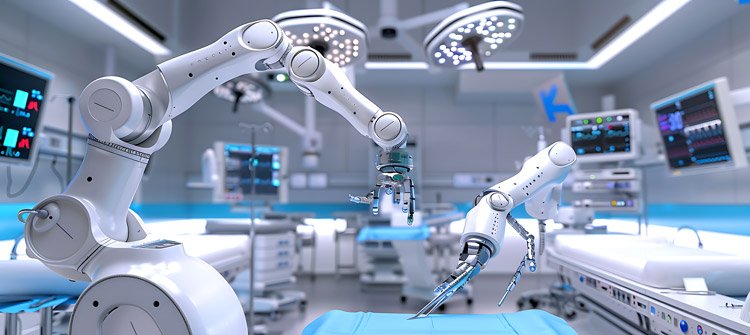
India is witnessing a steady transformation in the way complex medical care is planned and delivered. As hospitals invest in advanced surgical platforms, robotic technology is moving from being a specialized offering at select centres to becoming an increasingly important part of modern clinical practice. Its growing use in minimally invasive and complex procedures is opening new possibilities for surgical precision, specialist collaboration and patient care.
By MTT Research Desk
The momentum is being driven by rising demand for minimally invasive treatment, greater surgical accuracy and efforts to make specialist expertise available to more patients. The development of Indian-made robotic platforms is also creating opportunities to reduce technology costs and build a stronger domestic healthcare technology ecosystem.
Technology-led healthcare is expected to offer several advantages, including greater precision, standardization, efficient use of resources and scalability. Robotics and AI can reduce variations in human performance and assist doctors during lengthy or highly complex procedures. Rather than replacing specialists, these technologies can enhance their capabilities and allow them to focus on higher-value clinical decisions.
However, affordability remains a major concern. Wider insurance coverage, innovative financing options and stronger healthcare infrastructure will be necessary if robotic treatment is to reach patients beyond the premium healthcare segment.
From Advanced Surgery to Wider Adoption
India’s medical robotics market is estimated to be growing at around 17-21 per cent CAGR. Rising demand for minimally invasive procedures, medical value travel and the emergence of Indian robotic technology are among the factors supporting this expansion.
Robotic platforms provide surgeons with enhanced visualisation, improved instrument control and greater precision during delicate procedures. Three-dimensional magnified imaging and tremor reduction can be particularly useful in operations involving complex anatomy or restricted surgical spaces.
Depending on the procedure and patient, robotic surgery can offer advantages such as smaller incisions, reduced blood loss and potentially faster recovery. But the significance of robotics could extend well beyond the operating room.
Building a Connected Healthcare Model
The combination of robotic systems with AI, advanced imaging and digital connectivity could change how specialist care is delivered across geographical boundaries.
Connected healthcare models could allow specialist expertise to reach patients without being limited by physical distance. Telesurgery using the SSI Mantra system is one example of how robotic technology could support this approach.
With appropriate infrastructure, robotic platforms could enable specialists to participate in procedures involving patients located far from their primary centres.
Advanced imaging could further support this model by creating detailed, patient-specific three-dimensional representations for surgical planning. AI-powered tools could assist clinicians with image analysis and other aspects of clinical decision-making.
For India, where advanced medical expertise remains concentrated in major urban centres, such connectivity could be particularly significant.
Medical robotics is emerging as a powerful force in India’s healthcare transformation, promising greater surgical precision, minimally invasive care and wider access to specialist expertise. As indigenous innovation, digital connectivity and robotic surgery expand, the technology could reshape complex care while creating new opportunities across India’s healthcare ecosystem.
——————————
The Challenge of Access
The biggest test for robotic healthcare will be whether the technology can move beyond affluent urban patients.
Robotic surgery remains concentrated largely in private hospitals in Tier-1 cities, while much of the treatment cost is still paid directly by patients. This creates a significant barrier for a large section of the population.
Geographical availability is another major challenge. Even if robotic procedures become more affordable, patients cannot benefit from them unless hospitals with the necessary technology, infrastructure and trained teams are available closer to where they live.
Expanding robotic care into smaller cities will therefore require more than simply installing machines. Hospitals will need trained surgical and technical teams, maintenance capabilities and reliable digital infrastructure.
A New Opportunity for Indian Industry
The growth of medical robotics could create opportunities far beyond hospitals. A domestic robotic surgery ecosystem requires capabilities in precision engineering, sensors, optics, electronics, software, specialised instruments, advanced materials and equipment maintenance.
This broader industrial ecosystem could become an important part of India’s healthcare technology growth. Strengthening domestic capabilities across research, engineering, manufacturing and component development could reduce dependence on imported technologies while potentially making robotic healthcare more affordable.
The opportunity, therefore, is not simply for India to become a larger consumer of robotic systems. The country could also develop into a hub for designing, manufacturing and servicing healthcare robotics.
New Skills for a Technology-Driven Workforce
The expansion of robotic healthcare is also likely to change the skills required across hospitals. Rather than simply replacing existing jobs, the technology is expected to create demand for specialised professionals.
Surgeons will continue to make clinical decisions and remain responsible for patient outcomes. At the same time, robotic programmes will require biomedical engineers, robotics technicians, clinical application specialists, software professionals and simulation trainers.
Robotic technology could be particularly valuable in complex procedures, including cancer surgery, where precision and controlled movement are important. The technology can complement healthcare professionals by improving their capabilities, reducing repetitive workloads and enabling them to focus more effectively on patient care.
The Road Ahead
India’s robotic healthcare journey will ultimately be judged not by the number of systems installed but by how widely their benefits can be made available.
Insurance coverage, financing, indigenous manufacturing, skilled manpower and expansion into non-metro markets will all influence the pace of adoption. Public-private partnerships could also help extend advanced technology to regions where specialist healthcare remains limited.
If India can combine technological innovation with affordability, domestic capability and wider access, medical robotics could evolve from a premium surgical service into a powerful tool for expanding the reach, precision and quality of advanced healthcare.