Thoracoscopic Surgery and Immunotherapy Enable Early Recovery in a Child with Rare Opsoclonus-Myoclonus-Ataxia Syndrome
Chennai, November 13, 2026: Dr Mehta’s Hospitals successfully treated a five-year-old girl with Opsoclonus Myoclonus Ataxia Syndrome (OMAS), also known as Dancing Eye Syndrome, a rare autoimmune disorder associated with a thoracic tumour located adjacent to the aorta, the main artery that carries blood from the heart to the rest of the body. The team, led by Dr. M. Raghul, Pediatric Surgeon, performed minimally invasive surgery to remove the thoracic tumour. Dr. Shivan Kesavan, Pediatric Neurologist, treated the child for Opsoclonus-Myoclonus-Ataxia Syndrome (OMAS).
The five-year-old child from Chennai suddenly developed leg pain, a swaying gait and rapidly worsening weakness over four days. She soon could not stand or sit, and she developed involuntary jerking of the head and trunk, rapid darting eye movements and slurred speech. An MRI of the brain and spine at another private hospital had been reported as normal, but her condition continued to deteriorate. The child was brought to Dr. Mehta’s Hospitals for treatment in April 2026.
On arrival at Dr. Mehta’s Hospitals, Dr. Shivan Kesavan, Pediatric Neurologist, examined the child and diagnosed Opsoclonus-Myoclonus-Ataxia Syndrome (OMAS). The child was immediately admitted to the Pediatric Intensive Care Unit for further monitoring and evaluation. A whole-body PET-CT scan revealed a small lesion on the left side of the chest, adjacent to the aorta. The lesion was suspected to be a neuroblastic tumour. Doctors decided to surgically remove the thoracic tumour, which was identified as the underlying cause of the child’s neurological disorder.
Paediatric Surgeon Dr. M. Raghul performed a minimally invasive left thoracoscopic (keyhole) excision of the thoracic tumour. The procedure involved carefully dissecting the tumour from the surrounding structures, as it was densely adherent to the aorta and intercostal vessels and had a direct blood supply from the aorta. Its blood supply was carefully secured before the tumour was completely removed.
“Removing a thoracic tumour that is densely adherent to the aorta and the chest wall has its own complexities. Performing this through a minimally invasive thoracoscopic approach is technically challenging. Despite these adversities and complexities, the team successfully removed the tumour completely, avoiding the need for an open thoracotomy,” said Dr. M. Raghul, Pediatric Surgeon, Dr. Mehta’s Hospitals
Following tumour removal, Dr. Shivan Kesavan treated the child with intravenous immunoglobulin (IVIG), a key component of immunotherapy for Opsoclonus-Myoclonus-Ataxia Syndrome (OMAS). Cardiology and dermatology specialists also contributed to the child’s care. The child experienced no surgical complications, and her central line and chest drain were removed without incident.
The child’s involuntary eye movements (opsoclonus) and muscle jerks (myoclonus) had reduced, her sleep and irritability had improved, and she was able to follow commands and sit with support. She was taking solid food orally and receiving liquids through a nasogastric tube. She was discharged in May 2026 without any major complications. During a recent follow-up visit with Dr. Raghul, the child had made a remarkable recovery, was fully active, and showed no signs of her earlier symptoms.
“OMAS affects only a small number of children each year, and its early signs can be mistaken for more common conditions. Early recognition, a search for an underlying tumour, and combined surgical and immunological treatment can influence long-term neurological outcomes,” said Dr. Shivan Kesavan, Pediatric Neurologist, Dr. Mehta’s Hospitals.
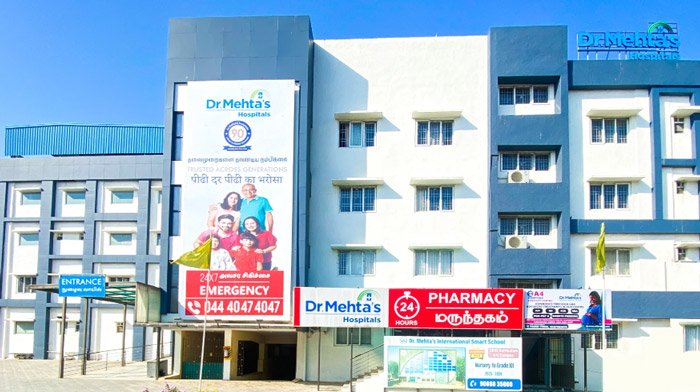
(Photo courtesy: mehtahospital.com)