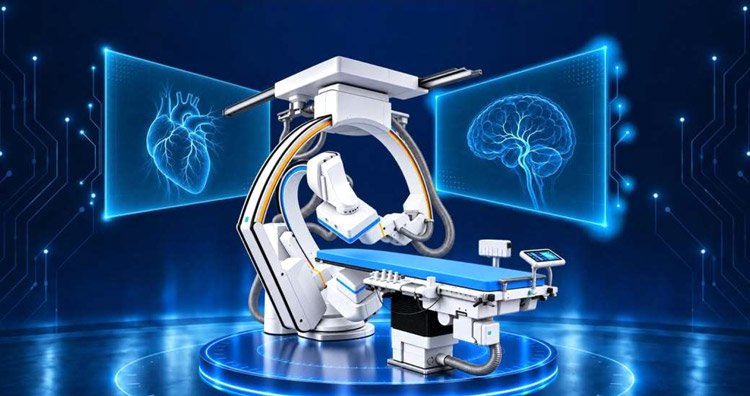
Advanced imaging technology strengthens specialised stroke, cardiac and neuro-interventional services at the hospital.
Patients requiring complex stroke, cardiac and neurovascular interventions in Andhra Pradesh now have access to an advanced imaging facility at CARE Hospitals, Health City, Arilova, Visakhapatnam. The hospital has inaugurated the state’s first Artis zee Bi-Plane Cath Lab, designed to support minimally invasive procedures involving the brain, heart and blood vessels.
The system captures images of blood vessels from two angles simultaneously and offers advanced 3D and CT-like imaging. These capabilities help specialists navigate delicate vascular structures and guide treatment devices with greater precision during complex procedures.
The technology is particularly relevant to time-sensitive conditions such as acute stroke, brain aneurysms, arteriovenous malformations (AVMs) and other complex neurovascular disorders, where detailed imaging and accurate device placement are important during treatment.
The facility was inaugurated by Velagapudi Ramakrishna Babu, MLA, Visakhapatnam East, in the presence of Palla Srinivasa Rao, MLA, Gajuwaka, and Haresh Trivedi, Regional CEO – India II, Aster DM Quality Care Limited. Senior hospital clinicians and leadership representatives also attended the event.
As part of the expansion, the hospital inaugurated a Neuro Lab, Stroke Unit and Endoscopic Spine Unit to strengthen its specialised services across neurosciences, emergency stroke management and minimally invasive spine care.
Supporting Time-Critical Stroke Treatment
One of the key applications of the Bi-Plane Cath Lab is the management of selected patients with acute ischaemic stroke, which occurs when a blood clot obstructs blood flow to the brain.
In suitable cases, specialists can perform an endovascular thrombectomy, guiding a catheter through the blood vessels to remove the clot and restore circulation. The availability of advanced imaging within the procedure room can help clinicians visualise vascular anatomy and guide instruments during treatment.
The system can also support interventions for brain aneurysms, arteriovenous malformations (AVMs), arteriovenous fistulas (AVFs) and other complex neurovascular conditions that require detailed vascular imaging.
Explaining the clinical benefits, Dr. Rajesh Poosarla, Senior Interventional Neuro Radiologist at CARE Hospitals, Visakhapatnam, said, “With this Bi-Plane Cath Lab, we can see the same blood vessel from two angles during a procedure. This helps us guide catheters, wires and stents more precisely through the small and complex blood vessels of the brain and heart. Having 3D and CT-like imaging available in the procedure room also gives us a clearer understanding of the anatomy and helps us decide the next step while treatment is underway.”
Expanding Cardiac and Vascular Intervention Capabilities
In addition to neurovascular procedures, the Bi-Plane Cath Lab can support complex cardiac interventions, including procedures to treat narrowed or blocked coronary arteries. Enhanced imaging helps specialists monitor the position of guidewires, balloons and stents during treatment.
The technology may also assist in selected arterial and venous interventions involving blood vessels in the legs and other parts of the body. Image-guided embolisation and other minimally invasive procedures are additional applications, depending on the clinical indication.
By combining advanced imaging with specialist expertise, the facility expands the hospital’s capabilities in managing complex cardiac and vascular conditions.
Strengthening Regional Healthcare Infrastructure
The new facility is part of CARE Hospitals’ efforts to expand access to specialised medical care in Visakhapatnam. Patients from across Andhra Pradesh and neighbouring states may benefit from access to advanced diagnostic imaging and interventional treatment without necessarily travelling to larger metropolitan centres for these services.
Haresh Trivedi, Regional CEO – India II, Aster DM Quality Care Limited, highlighted the importance of combining advanced technology with clinical expertise, noting that precise imaging can help specialists make faster, better-informed treatment decisions in complex cardiac and neurovascular cases.
The addition of the Bi-Plane Cath Lab, Neuro Lab, Stroke Unit and Endoscopic Spine Unit strengthens the hospital’s infrastructure for specialised neurological, stroke, cardiac and minimally invasive care.
For patients, timely access to appropriately equipped facilities and experienced specialists can be particularly important in emergencies such as stroke. The development also reinforces Visakhapatnam’s healthcare capabilities and may support its wider role as a regional destination for specialised treatment.
(Photo courtesy: instagram/carehospitals.vizag)