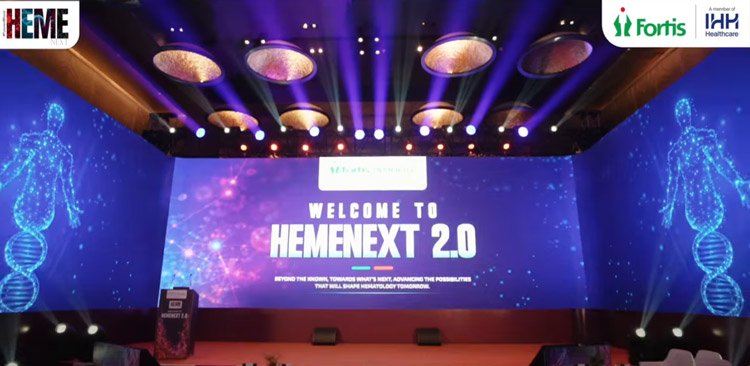
Fortis Memorial Research Institute (FMRI), Gurugram, brought together Indian and international specialists for HemeNext 2.0, a two-day scientific conclave focused on improving the diagnosis and treatment of blood disorders through advances in precision medicine, genomics and cellular therapies.
Held on 10–11 October at The Westin, Sector 29, Gurugram, the event was organised by the Fortis Institute of Blood Disorders. It featured three parallel scientific programmes covering adult and paediatric haematology, genomics, transplantation, artificial intelligence (AI), cellular therapies and infectious diseases. More than 200 faculty members and 400 participants from India, the United Kingdom, the United States and Singapore took part in clinical discussions, debates and research presentations.
The initiative comes amid a significant cancer burden in India. According to the Indian Council of Medical Research–National Cancer Registry Programme (ICMR–NCRP), the country recorded an estimated 14.6 lakh new cancer cases in 2022. Lymphoid leukaemia accounted for approximately 29% of cancers among boys and 24% among girls aged 0–14, highlighting the importance of early diagnosis and access to specialised care.
Dr. Rahul Bhargava, Principal Director & Chief – Haematology, Haemato-Oncology & BMT, Fortis Hospital Gurugram, and Chairperson of HemeNext 2.0, said, “India’s priority is to ensure that scientific progress reaches patients in time and at a cost they can afford. HemeNext 2.0 connects global research with Indian clinical experience to examine which advances can improve care and what is needed to deliver them safely. The focus is on informed treatment decisions, stronger clinical collaboration, and wider access.”
Advancing Precision Medicine and Cellular Therapies
The scientific programme examined how next-generation sequencing, rapid genomic testing, multi-omics and measurable residual disease (MRD) assessment can help clinicians identify disease characteristics, evaluate treatment response and make more informed decisions. Experts also discussed challenges involving test availability, result interpretation, turnaround times and affordability.
Dr. Shrinidhi Nathany, Consultant – Molecular Haematology and Oncology at Fortis Hospital Gurugram and Organising Secretary of HemeNext 2.0, said, “Patients with the same broad diagnosis can have different disease biology and treatment needs. Genomics helps us understand those differences. Its value lies in selecting the right test and translating the result into a useful clinical decision. Making appropriate testing timely, reliable, and accessible is essential to advancing precision care in India.”
Sessions also explored CAR-T cell therapy, targeted treatments and bone marrow transplantation. Discussions focused on patient selection, treatment timing, safety monitoring and the infrastructure and financial requirements that influence access to advanced therapies.
Focus on Childhood Blood Disorders and Infection Prevention
The paediatric programme addressed childhood leukaemia, inherited bone marrow failure, thalassaemia, sickle cell disease and transplantation. Other key topics included survivorship, immune health, fertility preservation and long-term complications following treatment. Experts also examined how donor registries and public-private partnerships could help more children access specialised care.
Dr. Vikas Dua, Principal Director & Head – Paediatric Haematology, Haemato-Oncology & BMT, Fortis Hospital Gurugram, and Chairperson of HemeNext 2.0, said, “For children with blood cancers and inherited disorders, care must protect both life and the years ahead. Timely referral, support to complete treatment and long-term follow-up are equally important. Sharing international evidence and Indian experience can help strengthen care from diagnosis to survivorship and identify partnerships that enable more children to access treatment.”
Infection management formed another important part of the programme. Dedicated sessions covered sepsis, fungal and viral infections, antimicrobial resistance and immunisation, addressing risks faced by patients whose immune systems are weakened by blood disorders or their treatment.
AI, Innovation and Future Medical Talent
The conclave also examined the role of AI in diagnostics, genomics and medical research. A case-based AI vs Human debate considered the potential of these technologies, alongside the need for clinical validation, data protection and appropriate medical oversight.
The Start-up Lounge provided a platform for interaction between clinicians and healthcare innovators. Scientific abstract presentations and The Heme Arena, an inter-institutional quiz for resident doctors, further encouraged research exchange and professional development among emerging specialists.
HemeNext 2.0 highlighted the importance of combining scientific innovation with practical clinical experience to improve blood disorder management. Continued collaboration, affordable diagnostics and wider access to specialised treatments will be essential to translating these advances into better outcomes for patients across India.
(Photo courtesy: facebook/fortishealth)