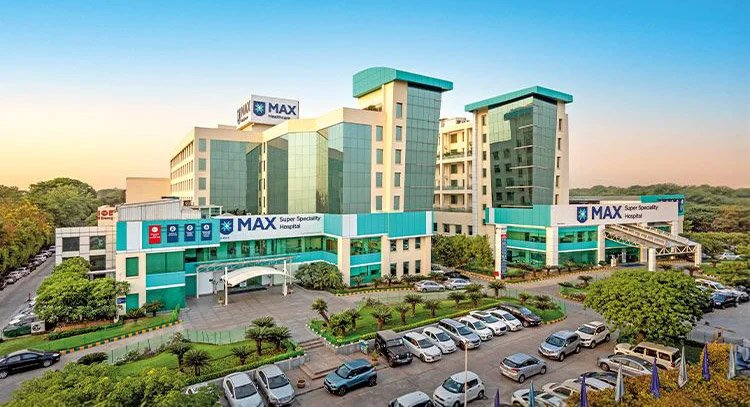
New Delhi: A specialised surgical technique at Max Smart Super Speciality Hospital, Saket, enabled doctors to remove a rare lung tumour in a 38-year-old Kenyan patient while preserving a significant portion of his lung. The seven-hour operation involved removing the affected lung lobe and reconstructing sections of the airway and a major blood vessel, avoiding the need for complete removal of the left lung.
The patient, Mr. Mohammed Yunis Guliye, was diagnosed with adenoid cystic carcinoma, an uncommon cancer that usually develops in glandular tissues, particularly the salivary glands. His tumour was located in the upper lobe of the left lung and had extended to the main airway and a major blood vessel supplying the lung.
He had been experiencing persistent pain on the left side of his chest, along with occasional episodes of coughing up blood. After several medical consultations in Kenya failed to establish a definitive diagnosis, he travelled to Max Hospital for further evaluation and treatment.
Complex Surgery to Preserve Lung Function
Given the tumour’s involvement with both the airway and blood vessel, conventional surgery could have required removal of the entire left lung, potentially resulting in a substantial loss of lung capacity. The medical team instead chose a double-sleeve left upper lobectomy, a specialised procedure designed to remove the affected lung lobe while preserving healthy lung tissue.
The operation was led by Dr Kamran Ali, Associate Director – Thoracic Surgery and Lung Transplant at Max Smart Super Speciality Hospital, Saket.
During the procedure, surgeons removed the tumour-bearing upper lobe along with the affected sections of the airway and blood vessel. They then reconstructed both structures to restore normal airflow and blood circulation to the remaining lower lobe of the left lung.
Speaking about the case, Dr Kamran Ali, Associate Director – Thoracic Surgery and Lung Transplant, Max Smart Super Speciality Hospital, Saket, said, “The key challenge was to remove the tumour completely while preserving as much healthy, functioning lung tissue as possible. Since the tumour involved both the main airway and a major blood vessel, the surgery required precise reconstruction of both structures after removing the affected upper lobe. This approach enabled us to preserve the entire lower lobe of the left lung, avoiding the need to remove the whole lung.”
The patient recovered sufficiently to be discharged five days after surgery.
Explaining the significance of the technique, Dr Ali further added, “A double-sleeve lobectomy is a highly specialised procedure that combines the removal of a tumour-affected lung lobe with the reconstruction of the airway and a major blood vessel. In appropriately selected patients, it can offer an alternative to removing the entire lung. By preserving more functioning lung tissue, the procedure can help retain lung capacity while allowing surgeons to treat complex tumours that involve critical structures.”
Advancing Lung-Preserving Cancer Treatment
The case demonstrates how specialised thoracic surgery can help manage tumours involving critical structures without resorting to more extensive lung removal in suitable patients. Combining tumour excision with airway and blood vessel reconstruction can offer a treatment option that prioritises both cancer control and the preservation of long-term lung function.
(Photo courtesy: maxhealthcare.in)