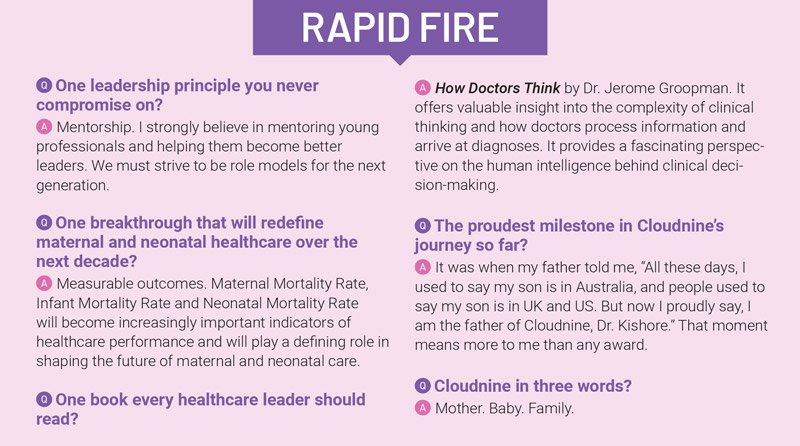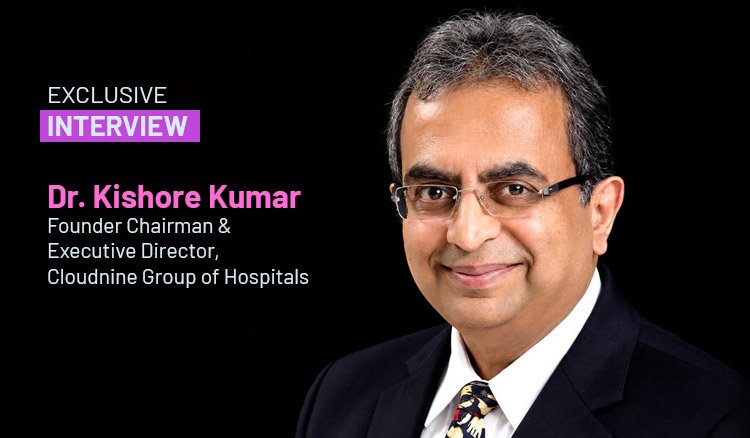
For more than three decades, Dr. R. Kishore Kumar, Founder Chairman & Executive Director, Cloudnine Group of Hospitals, has been a leading voice in advancing safer pregnancy, childbirth and neonatal care, with a sustained focus on improving outcomes for mothers and babies. His medical and leadership journey across four continents and diverse healthcare systems has shaped a global perspective on maternal mortality, premature births and neonatal care—a perspective that has profoundly influenced the evolution of Cloudnine and its approach to integrated mother-and-child healthcare.
In this exclusive interview with Medical Tourism Today, Dr. Kishore Kumar discusses why maternal and neonatal outcomes must remain central to India’s healthcare ambitions. He shares insights into Cloudnine’s focus on clinical excellence and measurable outcomes, the growing role of artificial intelligence in predicting premature births and neonatal sepsis, advances in fertility care, and simulation-based training. He also outlines his vision for a healthcare system in which India’s progress is ultimately reflected in safer outcomes for mothers and newborns.
After building an international medical career across four continents, you returned to India to redefine maternal and neonatal healthcare through Cloudnine. What fundamental gap did you set out to address, and how has that vision evolved as Cloudnine has grown into a benchmark for integrated mother-and-child care in India?
I left India in 1989–90 because neonatology had not yet evolved as a subspecialty for paediatricians in the country. After completing my training and spending nearly 16 years abroad, I witnessed the significant advances that had taken place in neonatology in Western countries, while India continued to experience a high burden of neonatal mortality, particularly among premature babies.
During my annual visits to India, I also saw mothers continuing to die during childbirth. It became clear to us that this situation needed to change fundamentally.
When we started Cloudnine in 2006, maternal mortality remained high. In the public sector, approximately 139 mothers died for every 100,000 deliveries, compared with 39 per 100,000 in the private sector. Premature babies, particularly those born before 28 weeks of gestation, also had limited access to specialised care, and many hospitals were not equipped to provide active treatment to them.
At the time, 28 weeks was considered the threshold of viability under the prevailing government regulations. This was broadly comparable to the position in Western countries several decades earlier. However, advances in technology and neonatal care had subsequently brought the threshold down to approximately 24 weeks in many developed healthcare systems.
Our objective was therefore twofold: to reduce maternal deaths during childbirth and improve the survival of premature babies. Importantly, by survival, I mean intact survival—survival without disability. That was the standard we set for ourselves, and I believe we have gone beyond that objective.
You have practised medicine across India, the United Kingdom, Australia and the United States before building Cloudnine. Which global healthcare practices have had the greatest influence on your leadership philosophy, and how have you adapted them to suit India’s unique healthcare landscape?
Each country where I trained and worked influenced me in a different way. My postgraduate training in India taught me humility, empathy and compassion—qualities that are fundamental to healthcare.
The United Kingdom provided me with excellent clinical training as a paediatrician. It also exposed me to the medico-legal dimensions of medical practice. When I became a consultant in 1993–94, I attended invitation-only programmes conducted by Queen’s Counsel, which helped us understand how the legal profession approaches healthcare and how clinicians should navigate the medico-legal environment.
Australia taught me the importance of maintaining a healthy balance between professional responsibilities and personal life, while my experience in the United States provided a different perspective on healthcare and professional practice.
My leadership philosophy is therefore an amalgamation of experiences across these healthcare systems. In addition, my Harvard MBA played an important role in shaping my development as a leader, particularly within the healthcare sector.
At Cloudnine, we incorporated several practices influenced by these international experiences. From the beginning, we established a rigorous audit system. Every one to two weeks, we reviewed multiple aspects of the patient journey—not only clinical care, but also how patients were received at the reception, waiting times, nursing care, medical care and what had worked well or required improvement.
Relevant stakeholders met regularly to review performance. Areas in which we performed particularly well were translated into protocols, while areas requiring improvement became learning objectives. This created a culture of continuous improvement, based on a simple principle: we should be better tomorrow than we are today.
Around the world, healthcare is increasingly measured by patient outcomes rather than the volume of services delivered. How does Cloudnine define clinical excellence, and which outcome measures best reflect the quality of care you strive to deliver?
For neonatal and maternity care, one of the important international benchmarks we use is the Vermont Oxford Network (VON). It is an international network that evaluates the quality of care provided by hospitals delivering maternal and neonatal care, predominantly across the United States, Canada, the United Kingdom, Europe, Australia and New Zealand.
We are proud to be the only Asian chain of hospitals that is part of the Vermont Oxford Network. This allows us to compare our outcomes with leading institutions internationally rather than evaluating ourselves solely against domestic benchmarks.
As a chain of hospitals, our maternal, infant and neonatal mortality indicators compare favourably with those of several European countries, including the United Kingdom. We also maintain our own internal benchmarks. Our objective has always been continuous improvement. Over the past 20 years, we have had six maternal deaths across our hospitals. During the first 10 years, we did not lose a single mother. Over the subsequent decade, six maternal deaths translated into approximately two maternal deaths per 100,000 deliveries.
Even that figure remains unacceptable to us. We continue to examine every maternal death to identify opportunities for improvement. Interestingly, all six mothers had underlying cardiac problems. As a result, in consultation with our obstetricians, we developed a protocol to evaluate the hearts of high-risk mothers between 32 and 34 weeks of pregnancy. The objective is to identify and manage potential cardiac risks before they result in a maternal emergency.
This reflects our approach to clinical excellence: even when our outcomes compare favourably with global benchmarks, we continue to look for opportunities to improve them further.
As healthcare organisations scale, maintaining consistent quality becomes increasingly complex. As Cloudnine continues to expand, what governance frameworks, clinical protocols and leadership practices ensure consistent standards of care across every hospital in the network?
Maintaining quality across a growing network was one of the most important challenges we faced. When Cloudnine was a single centre, people often asked whether the same standards could be maintained as we expanded.
When we had two or three centres, I personally visited the other hospitals twice a week to ensure that our standards were being followed. As the organisation expanded, we built a professional leadership structure capable of maintaining consistency at scale.
Today, our leadership team includes medical directors, an assistant medical director, a chief operating officer, a chief executive officer, a chief financial officer, a quality team and a learning and development function. Together, through our Executive Committee, we have established clinical and operational protocols that are implemented across new centres.
We also collect quality indicators regularly and compare them across all our hospitals every month. Each hospital conducts a monthly review meeting, where performance is assessed and compared with other centres, including our flagship hospital.
This creates a healthy form of internal competition. I am particularly proud that several of our newer centres have exceeded our expectations and, in some areas, are performing better than our flagship centre. That is a testament to the quality of the teams working across the organisation.
Protocols, quality measurement, regular reviews and strong clinical leadership are therefore central to maintaining consistency across the network.
India continues to face significant challenges in reducing neonatal mortality and improving maternal health outcomes. In your view, what policy reforms and healthcare investments are most urgently needed to accelerate progress over the next decade?
We have been engaging with both central and state governments to explore how our expertise can contribute to improving maternal and neonatal healthcare. One of the most important changes required is greater accountability for healthcare outcomes across the public sector.
There is an important disparity in how accountability is applied across the healthcare system. In the private sector, doctors and hospitals can face multiple forms of legal action, including proceedings before medical councils, consumer courts, civil courts and criminal courts, as well as legal notices.
The public healthcare system operates under a different framework, and this creates a disparity in accountability.
My view is that quality of care and healthcare outcomes must be subject to accountability across both the public and private sectors. If a maternal death occurs in a private hospital, it often receives significant media attention. Similar outcomes in government hospitals may receive considerably less scrutiny.
The issue is not simply about comparing deaths. It is about ensuring that the quality of healthcare is measured, monitored and improved consistently, regardless of whether the service is delivered by a public or private institution.
Unless healthcare systems are held accountable for outcomes, it will be difficult to make sustained progress in reducing maternal and neonatal mortality across the country.
Artificial intelligence, predictive analytics, remote monitoring and precision medicine are transforming healthcare globally. Which emerging technologies do you believe will fundamentally reshape maternal, fetal and neonatal medicine, and how is Cloudnine preparing for this transformation?
We have invested significantly in artificial intelligence. AI is still a developing field in healthcare, and it requires substantial time, data and effort before its full benefits can be realised. However, we have already seen promising results from two projects.
The first involved neonatal sepsis. A researcher associated with the Bill & Melinda Gates Foundation worked with our data for nearly four years to develop an algorithm capable of identifying babies at risk of neonatal sepsis at approximately 12 hours of age, compared with the conventional approach, in which a positive blood culture may take around 72 hours.
This has the potential to provide clinicians with an additional 60 hours in which to evaluate and treat babies at risk. The findings were subsequently published in a medical journal, and we hope this approach can eventually be replicated across other areas of healthcare.
The second project involved integrating AI with our hospital management system. In a pilot programme, the system was able to predict approximately 82% of women who were likely to deliver prematurely. By comparison, clinical consultants and obstetricians, even when provided with the available data, were able to predict approximately 26% of premature deliveries.
If these findings are validated and implemented at scale, AI could help us identify high-risk pregnancies much earlier. This would allow clinicians to intervene antenatally where possible and, when preterm delivery cannot be prevented, ensure that the mother and baby receive appropriate care in a timely manner.
I see AI as a technology that will augment clinicians rather than compete with them. Its purpose should be to help doctors make better decisions and ultimately improve patient outcomes.
Fertility challenges are rising globally due to changing lifestyles, delayed parenthood and environmental factors. How do you envision the future of reproductive medicine, and what innovations will be most critical in improving access and success rates?
Fertility care needs to be approached differently from many other areas of medicine. When we started our fertility programme, we noticed an important difference between India and Western countries.
Women in India tend to seek fertility treatment at a younger age. In countries such as Australia, most women seeking fertility treatment are between 35 and 40 years of age. In India, social and family pressures often lead couples to seek treatment earlier, sometimes after only a relatively short period of trying to conceive. Consequently, many Indian women seeking fertility treatment are between 25 and 35 years old.
At the time, fertility success rates in many Indian centres were approximately 38–39%, whereas rates in Western countries were closer to 45–50%. This raised an important question: why should success rates be lower in India when the patient population is generally younger?
We found that clinical expertise was only one part of the equation. Doctors account for approximately 25% of fertility-treatment success, while around 75% is influenced by technical factors, including embryology, laboratory practices and the assessment of various risk factors.
We therefore invested heavily in embryology training. For the first 10 years of our fertility programme, we brought in an Australian embryology expert to train our embryology teams. Our success rates subsequently reached approximately 50–55%, compared with the prevailing Indian average of around 38–39%.
We are now exploring how AI can further improve fertility treatment. One area of focus is identifying, at the beginning of treatment, women who are more likely to require procedures such as ICSI—intracytoplasmic sperm injection—rather than waiting several months to determine that conventional treatment has not worked.
The objective is to make fertility treatment more targeted, shorter and more cost-effective, while reducing the emotional and financial burden on couples.
What do you believe will be the biggest disruptions in maternal and child healthcare over the next decade, and how is Cloudnine positioning itself to lead rather than respond to these changes?
One of the biggest changes is that expectations around maternal and neonatal safety have fundamentally evolved.
Historically, families often accepted that a mother might not survive childbirth or that a baby might not survive the birth process. Healthcare has changed that perception. We have made childbirth considerably safer and neonatal survival significantly better, and patients now expect a much higher standard of care.
As the quality of care at institutions such as Cloudnine has improved, patients have also begun demanding similar standards elsewhere. This is an important development because it is creating pressure for the broader healthcare system to improve.
In Karnataka, for example, Cloudnine has become associated with a particular standard of maternity and neonatal care, and this has contributed to efforts to upgrade neonatal intensive care and maternity facilities through public-private initiatives.
Over the next decade, maternal and neonatal care in India should become considerably safer. However, the country cannot consider itself fully developed simply because it has advanced technology, space programmes, robotics or artificial intelligence. Maternal Mortality Rate, Infant Mortality Rate and Neonatal Mortality Rate must also come down significantly. Improving these indicators must remain a national priority.
If you were advising policymakers on designing India’s ideal maternal and child healthcare ecosystem for 2040, what three transformative changes would you recommend to create a healthier nation?
The first requirement is round-the-clock availability of essential specialists in every maternity hospital. Obstetricians, anaesthetists and paediatricians must be available 24/7.
In an obstetric emergency, a baby may need to be delivered within minutes. If the required specialists are not immediately available and an emergency response is delayed by 30 minutes or an hour, the opportunity to save the mother or baby may be lost.
At Cloudnine, we therefore ensure that paediatricians, obstetricians and anaesthetists are available around the clock. We do not simply have “duty doctors”; we have dedicated duty paediatricians, duty obstetricians and duty anaesthetists. Our average response time for an emergency delivery is less than 12 minutes. This level of readiness should become the norm across India by 2040. The second major requirement is simulation-based medical training.
The aviation industry dramatically improved safety after introducing simulation-based training. Healthcare can benefit in the same way. At Cloudnine, we conduct simulation training in obstetrics and neonatology, using mannequins and simulated emergencies to train clinicians to respond to situations such as obstructed labour, eclampsia, pre-eclampsia, neonatal seizures and neonatal resuscitation.
The objective is to allow clinicians to practise managing critical situations before they encounter them in real life. If the team does not perform adequately during simulation, the scenario demonstrates the potential consequences, allowing the team to learn and improve without putting a real patient at risk.
We conduct these workshops as part of our annual Cool Topics in Perinatology Conference in the cities where we operate. Such simulation-based training should become accessible to doctors across India, including those in the public healthcare system.
The third requirement is to create systems that continuously measure and compare outcomes so that every institution has an incentive to improve.
What is the next major strategic chapter for Cloudnine? Are you looking primarily at geographic expansion, deeper clinical specialisation, digital health, international patients, new healthcare verticals—or a combination of these?
It will be a combination of all these areas. However, our primary objective is to make the standard of maternity and neonatal care more uniform across India.
Cloudnine has become associated with quality maternity and neonatal care, and many organisations have adopted aspects of our infrastructure. However, our objective is not simply to replicate infrastructure; it is to share the clinical standards, protocols and culture that underpin our model.
We want to contribute to improving maternal and neonatal care across both the public and private sectors. Achieving this will require significant engagement with the public healthcare system, investment of time and resources, and the development of common protocols that can be implemented across different healthcare settings.
Digitalisation will also play an important role.
We also need a national network for maternal and neonatal outcomes, similar in concept to the Vermont Oxford Network. Such a network could enable hospitals across different states to compare their outcomes and learn from one another.
For example, outcomes in Madhya Pradesh could be compared with those in Karnataka, Kerala, Uttar Pradesh, Uttarakhand or Jharkhand. This would create a healthy competitive environment in which hospitals and healthcare systems are encouraged to improve their performance continuously.
Finally, after building Cloudnine into a recognized healthcare institution, what is the one question about the future of healthcare that keeps you awake at night—and why do you believe the industry needs to start addressing it now?
I believe the Indian healthcare system needs a significant reorientation.
When we were growing up, most families had a family doctor whom they consulted for common illnesses. Today, even relatively minor conditions often lead people directly to multispecialty hospitals. The concept of the family doctor has gradually weakened.
At the same time, we need much greater emphasis on preventive healthcare and public health. I believe the three pillars that require greater attention are primary healthcare, preventive healthcare and public healthcare.
Primary healthcare should strengthen the role of family physicians in managing common illnesses and providing continuity of care. Preventive healthcare should focus on identifying and addressing health risks before they develop into conditions requiring tertiary care.
Public healthcare must also focus on educating communities about preventable diseases. Dengue is a good example. We continue to see significant illness and deaths from dengue, even though many cases can be prevented through better sanitation and public-health measures.
Similarly, the continued prevalence of typhoid reflects gaps in sanitation and public-health infrastructure.
Therefore, primary, preventive and public healthcare require greater focus, funding and education. We need to take the entire population along with us in improving health outcomes rather than relying primarily on tertiary-care hospitals when people become ill.
That broader transformation is essential if India is to build a truly effective and sustainable healthcare system.