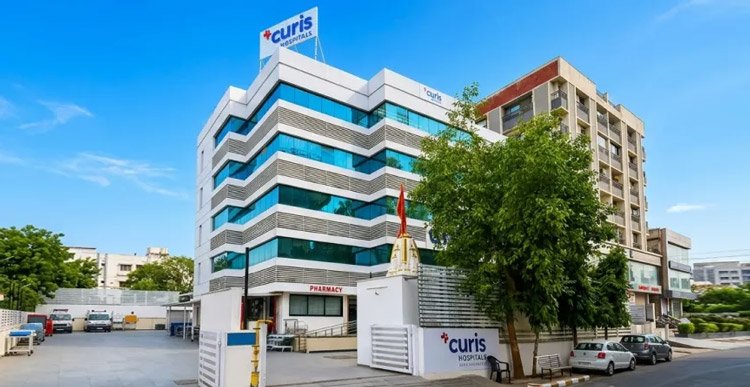
Ahmedabad: Patients requiring complex knee replacement procedures in Western India will now have access to another robotic-assisted surgical option, following the installation of the SkyWalker™ system at Curis Hospital, Ahmedabad.
The hospital’s collaboration with US-based MicroPort Orthopedics brings this technology to Western India for the first time. The development adds to the growing adoption of robotics in joint replacement, where computer-assisted planning and precision-guided surgical techniques are increasingly being used to support surgeons.
The system combines robotic assistance with a specialised knee implant design based on the medial-pivot concept. Its planning capabilities use CT scans to develop individualised surgical plans, while the proprietary Motion Follow™ technology assists surgeons during bone preparation. The objective is to achieve accurate joint positioning and restore knee movement as naturally as possible.
The technology is particularly relevant in treating advanced knee osteoarthritis, a condition that can significantly restrict movement and independence. Dr. Ajaysinh V. Devda, Director of Orthopedics at Curis Hospital, pointed to the growing number of patients in Gujarat presenting with severe arthritis and joint deformities. He said personalised planning and robotic assistance could help surgeons address such cases with greater precision.
The SkyWalker™ platform works with MicroPort’s Evolution® Medial-Pivot Knee System, which is designed around the movement patterns of a natural knee. The implant’s reported global performance includes patient satisfaction exceeding 95%, a 98.8% survivorship rate at 17 years and a 91% Forgotten Joint Score.
Another feature highlighted by the hospital is real-time gap assessment during surgery. Dr. Harshil Shah, Consultant in Orthopedics, said the system’s dynamic balancing capabilities could be particularly useful when treating patients with complicated joint conditions.
Ramesh Balasubramanian, Chairman and Founder of Curis Hospital, said the initiative reflects the institution’s objective of bringing advanced treatment capabilities to patients closer to home. MicroPort Orthopedics’ South Asia head, Dr. Mukesh Parmar, described the installation as an opportunity to combine established implant technology with robotic-assisted surgical planning in India.
The addition of robotic-assisted knee replacement marks another step in the development of specialised orthopedic services in Ahmedabad. Its long-term value will ultimately depend on clinical outcomes, patient recovery and the benefits demonstrated in everyday mobility.
(Photo credit: curishospitals.com)