The global shortage of donor corneas continues to be a major challenge in restoring sight to patients with serious corneal disorders. Against this backdrop, Dr Agarwals Eye Hospital has opened the world’s first dedicated Pinhole Pupilloplasty Centre, offering a tissue-preserving approach for selected patients with complex visual problems.
The new centre was inaugurated in the presence of Dr Amar Agarwal, Dr Manoj Khatri and other dignitaries. Its launch also coincides with the 41st National Eye Donation Fortnight, reinforcing the importance of both eye donation and innovative techniques that can reduce the need for donor tissue in appropriate cases.
The facility will specialise in Pinhole Pupilloplasty (PPP), a microsurgical technique developed by Dr Amar Agarwal. It is designed for carefully selected patients whose vision is affected by conditions including corneal scars, irregular corneas, high corneal aberrations and certain optical distortions after eye surgery.
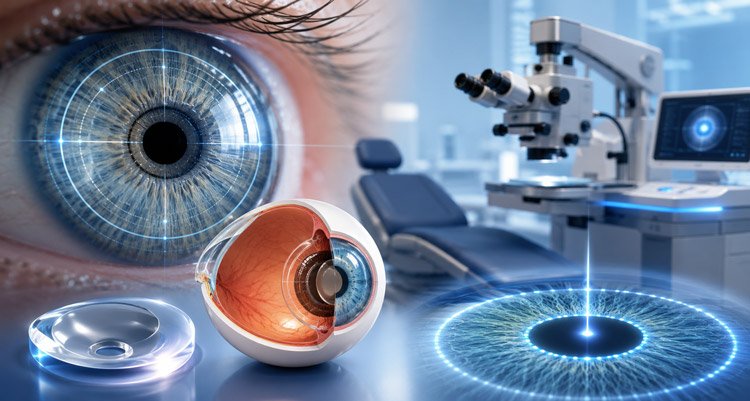
Rather than replacing the cornea, the procedure works by changing the way light enters the eye. A surgeon creates a small, precisely positioned opening in the iris, producing a pinhole effect.
This smaller optical opening limits the entry of scattered or distorted light and allows more focused rays to reach the retina. By reducing the impact of higher-order optical aberrations, PPP may improve visual quality and useful functional vision in suitable patients.
One of the key features of PPP is that the procedure does not require donor corneal tissue. This makes the technique particularly relevant in situations where access to donor corneas is limited.
The scale of the global shortage is considerable. An international survey examining corneal transplantation and eye banking estimated that about 12.7 million people worldwide were waiting for a corneal transplant. According to the survey, there was only one available donor cornea for approximately every 70 people requiring transplantation.
The study also reported that around 185,000 corneal transplants were performed each year in 116 countries. These figures highlight the substantial difference between the global requirement for corneal tissue and its availability.
PPP does not aim to replace corneal transplantation in every case. Instead, it provides an additional option for patients whose visual problems are related to complex corneal optics and who are suitable candidates for the procedure.
The establishment of the dedicated centre marks an effort to expand access to this innovative technique while preserving the patient’s own corneal tissue. It also highlights the growing role of tissue-sparing approaches in ophthalmology, particularly as the demand for donor corneas continues to outpace supply.
Conclusion: The new centre could broaden treatment options for selected patients with challenging corneal conditions, while demonstrating how innovative microsurgical techniques may help improve vision without relying on scarce donor corneal tissue.