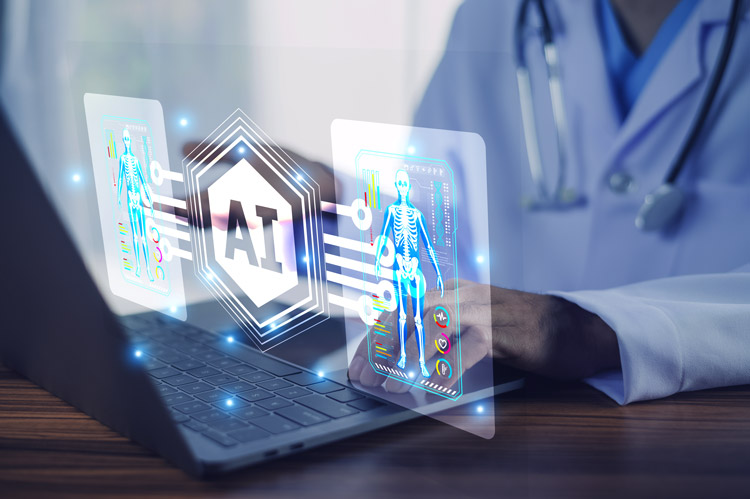
The Government of India has unveiled plans to introduce an artificial intelligence–enabled clinical decision support system (CDSS) across nearly 70,000 public and private hospitals nationwide. The initiative is aimed at improving patient safety, reducing clinical errors, and strengthening the overall quality of healthcare delivery.
The digital solution, named Smart Doctor, has been developed by the All India Institute of Medical Sciences (AIIMS), New Delhi, and will be implemented as part of the Ayushman Bharat Digital Mission (ABDM), the government’s flagship digital health programme.
Designed to act as a virtual assistant for clinicians, the AI-powered platform will help doctors make informed diagnostic and treatment decisions. Its primary focus will be on managing chronic and non-communicable diseases, including conditions such as diabetes and hypertension, where consistent, protocol-driven care is critical.
The system functions on a rule-based architecture that allows healthcare professionals to compare patient symptoms, medical histories, and treatment pathways with standardized clinical guidelines stored in a central medical database. Using this information, the tool can generate evidence-based suggestions related to treatment plans, medication choices, and appropriate dosages.
In addition, the platform is equipped to identify and highlight possible drug contraindications, helping clinicians avoid harmful drug interactions and improve medication safety.
To ensure swift nationwide adoption, the National Health Authority (NHA) has instructed all states and Union Territories to deploy the CDSS across hospitals and direct their respective hospital software providers to enable the feature immediately. Healthcare facilities currently operating on non-ABDM-compliant systems have also been asked to upgrade their software to ensure seamless integration, with the central government offering technical assistance to support the transition.
Explaining the intent behind the initiative, NHA officials said, “The CDSS is fundamentally a decision support mechanism designed to assist clinicians, not to override their judgment. Developed by AIIMS, it uses a rule-based framework that allows doctors to cross-reference symptoms and protocols against a standardized database.”
Highlighting the broader impact of the rollout, the official added, “By scaling this tool specifically for non-communicable diseases, we aim to minimize misdiagnoses and medical errors, while ensuring that the doctor’s final decision remains supreme.”
With the nationwide rollout of the AI-powered CDSS, India is taking a significant step toward standardised, technology-enabled clinical care. By integrating evidence-based decision support into routine hospital workflows while preserving clinicians’ autonomy, the initiative is expected to strengthen patient safety, improve outcomes for chronic disease management, and advance the country’s broader digital health transformation under the Ayushman Bharat Digital Mission.