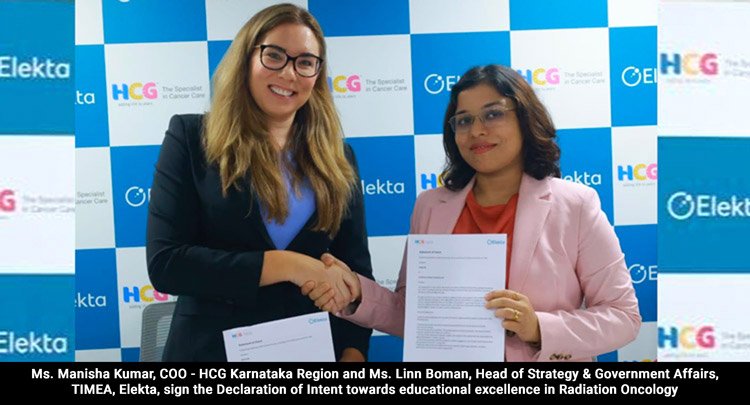
Bengaluru, August 05, 2026: HealthCare Global Enterprises (HCG), Bengaluru, has begun treating cancer patients using Karnataka’s first Elekta Unity MR-Linac. With this milestone, HCG opens up access to MR-guided adaptive radiation therapy for patients across Karnataka and neighbouring regions, bringing one of the most advanced approaches in radiation oncology closer to those who need it.
Unity combines a high-field 1.5 Tesla MRI scanner with a linear accelerator, enabling clinicians to visualise the tumor and surrounding anatomy in real time during treatment. This allows the care team to adapt the treatment plan online to anatomical changes that occur from one treatment session to the next, helping deliver highly precise radiation while protecting surrounding healthy tissue.
The need for such technology is real. Cancer is among India’s fastest-growing health challenges, and Karnataka too is seeing a steady rise in new cases every year. The Global Cancer Observatory (GLOBOCAN) estimates that new cancer cases in India will reach 2.08 million by 2040, a rise of 57.5 percent over 2020 levels. Numbers of this scale call for treatment that is more precise, more personalised, and able to adapt to each patient as their treatment progresses.
Dr. B.S. Ajaikumar, Founder and Chairman, HealthCare Global Enterprises Limited, said: “In the era of precision medicine, HCG is proud to add one more milestone with the installation of the Unity MR-Linac, where precision is taken to the level of near perfection. With this adaptive therapy, patients who qualify for the treatment will benefit immensely from radiation focused directly on the tumor, with minimal or no exposure to the surrounding healthy tissue. This gives us the opportunity to deliver the right treatment and improve outcomes with minimal or no side effects. And this is what HCG has always stood for – bringing the world’s most advanced cancer care to patients here at home, in Karnataka and across India.”
Dr. Manish Mattoo, Executive Director and CEO, HealthCare Global Enterprises Limited, said: “With Karnataka’s first Elekta Unity MR-Linac now treating patients, HCG is redefining the delivery of radiation therapy. Real-time imaging and adaptive treatment enable highly precise, personalised care while protecting healthy tissue. Combined with our multidisciplinary approach, this technology will help improve patient outcomes and expand access to advanced cancer care across Karnataka and neighbouring regions.”
Feras Al Hasan, Head – TIMEA, Elekta, said, “We are thrilled to partner with HCG hospitals and welcome them to our global community of Unity MR-Linac users. Elekta’s Unity MR-Linac ensures clinicians can accurately hit the tumor target and spare healthy tissue, even when the target moves. As early adopters of technology, HCG hospitals have always been ahead of the curve, serving patients with intent & accuracy. We believe our cutting-edge technology will enable their clinicians to deliver enhanced patient care through better dosing and visualization capabilities. We will further collaborate with HCG hospitals to accelerate adoption of adaptive radiotherapy in the country through workshops & skilling programs. This reaffirms our commitment to advancing high-quality cancer care across the region.”
Dr. John P Christodouleas, Head of Medical Affairs and Partner Research at Elekta, said: “We are delighted to partner with HCG as they bring MR-guided online adaptive radiation therapy to patients in Karnataka. HCG’s commitment to providing patients with the most advanced treatment options is exemplary and this milestone reflects their leadership in advancing precision cancer care in India. By enabling clinicians to adapt treatment in real time based on the patient’s anatomy on the day of treatment, Unity is helping redefine what is possible in radiation therapy.”
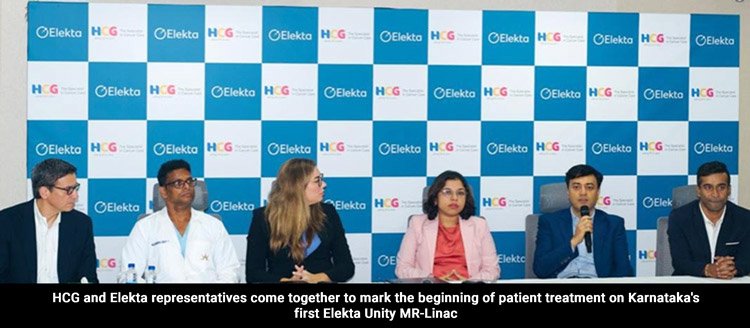
This milestone reflects the shared commitment of HCG and Elekta to expand access to advanced precision radiation therapy and strengthen cancer care in India. For patients, the difference is practical. MR-guided adaptive radiation therapy offers a more personalised treatment experience. Treatment is adapted to their anatomy on the day of each session, providing greater confidence that radiation is delivered precisely to the target while minimising exposure to surrounding healthy tissue. This approach is particularly valuable for tumors located close to critical organs or in areas where anatomy changes during treatment, allowing clinicians to make informed treatment decisions based on real-time imaging.
The clinical launch at HCG adds to the steady adoption of image-guided, adaptive radiation therapy in the country. As more providers invest in these technologies, MR-guided treatment is set to play a larger part in improving treatment accuracy, supporting better patient outcomes and bringing world-class cancer care within reach of more patients.
About Elekta
Elekta is shaping the standard of care, together with healthcare providers, by developing precision radiation medicine that brings advanced radiotherapy into routine clinical practice. Our solutions support consistent, efficient and personalized care, addressing evolving patient needs. Through adaptive radiotherapy, precision treatment delivery and integrated workflows, Elekta supports care teams across a range of clinical settings. Each year more than 2 million patients are treated using Elekta solutions across 130 countries. Elekta is headquartered in Stockholm, Sweden, with over 4,000 employees and offices in more than 40 countries. The company is listed on Nasdaq Stockholm.
For more information, visit elekta.com
About Healthcare Global Enterprises Limited (HCG)
HealthCare Global Enterprises Ltd. (HCG), headquartered in Bengaluru, India’s largest dedicated cancer hospital network in India. Through its network of 25 comprehensive cancer hospitals across India and Africa, HCG has brought advanced cancer care to the doorstep of millions of people. The Dedicated cancer hospitals provide expertise and advanced technologies for the effective diagnosis and treatment of cancer under one roof.
For more information visit: https://www.hcgoncology.com/
MR-Linac Case Studies
Case 1: Oligometastatic lung cancer treated with MR-guided SBRT
(Dr. Lohith G, Consultant Radiation Oncologist, HCG Hospitals)
Background: A 78-year-old man came in with worsening breathlessness. Scans and biopsy found lung cancer (adenocarcinoma) in the left upper lobe that had already spread to one adrenal gland, an “oligometastatic” pattern, meaning the cancer had spread but to only a limited number of sites, which made aggressive, targeted treatment a realistic option.
Route of treatment: Traditional radiotherapy plans off a single scan taken at the start, then treats assuming the tumor stays in place. That’s a problem here: the lung tumor sat near the constantly moving chest wall, and the adrenal metastasis sat beside the stomach, bowel, kidney, and pancreas, organs that shift daily. The Elekta Unity MR-Linac took a fresh MRI before every session and adjusts the plan in real time. The patient received 5 sessions for the lung tumor (40 Gy) and 5 for the adrenal metastasis (30 Gy), back-to-back, with no break.
Outcome: All sessions were completed on schedule, treatment was well tolerated, and the patient stayed clinically stable throughout. He was discharged in good condition with a follow-up scheduled two weeks later.
Why it matters for the patient: Treating with tighter margins meant less radiation exposure to healthy tissue nearby, translating to fewer side effects, a short 5-session course instead of weeks of conventional radiation, and no need for invasive surgery, supporting a faster recovery.
Case 2: Persistent lung metastasis after colorectal cancer surgery
(Dr. Lohith G, Consultant Radiation Oncologist, HCG Hospitals)
Background: A 63-year-old woman had colon cancer that had spread to her liver and lung. She underwent chemotherapy, then surgery to remove the colon tumor and liver metastasis. Surgery handled two of the three problem sites, but a metastasis remained in the lower left lung, in a spot that moves considerably with every breath.
Route of treatment: A tumor that shifts with breathing is hard to hit with a fixed plan: clinicians either risk missing it on some breaths or must irradiate a wider “safety margin,” exposing more healthy tissue. The MR-Linac solves this with real-time tracking during free breathing, watching the tumor move live on MRI and adjusting the beam accordingly. Her path was chemotherapy, then robotic surgery for the colon and liver disease, then 5 MR-Linac sessions (40 Gy total) with real-time tracking for the persistent lung metastasis.
Outcome: All 5 sessions were completed without interruption, treatment was well tolerated, and she remained clinically stable throughout, discharged in satisfactory condition with a two-week follow-up planned.
Why it matters for the patient: Real-time tracking let the team protect the spinal cord, spleen, and ribs sitting close to the tumor, lowering the risk of long-term side effects in those areas. Because this was a non-invasive, 5-session treatment rather than a second surgery, she was able to complete definitive treatment across all three cancer sites (colon, liver, lung) without further major surgery, supporting a quicker return to normal life.
Case 3: High-risk localized prostate cancer treated with MR-Linac radiotherapy
(Dr. Surendra Reddy T, Consultant Radiation Oncologist, HCG Hospitals Hebbal)
Background: A 74-year-old man came in with increasing urinary frequency. Evaluation led to a diagnosis of high-risk, localized prostate cancer, cancer confined to the prostate but with features that carry a higher risk of recurrence if not treated aggressively.
Route of treatment: His tumor board recommended androgen deprivation therapy (hormone therapy) combined with radical radiotherapy. He was treated on the MR-Linac rather than a conventional linear accelerator, and given hypofractionated radiotherapy, 5 days a week over 5 weeks.
Outcome: He completed the full course without interruption and tolerated treatment well, with no reported side effects.
How MR-Linac made the difference: MR-Linac gave the team excellent visualization of the prostate itself, so radiation could be aimed precisely at the tumor rather than a broader estimated zone. That same clarity extended to the surrounding pelvic anatomy, allowing the dose to nearby organs like the bladder and rectum to be minimized rather than treated as unavoidable collateral. Because the system could also correct for prostate movement during each session, not just before it started, treatment stayed accurate throughout every fraction. Together, this meant he could be treated safely, with a real shot at curing the disease, without the side effects typically associated with radiation to this area.
Case 4: Metastatic breast cancer (liver + bone) treated with MR-guided SBRT
(Dr. Surendra Reddy T, Consultant Radiation Oncologist, HCG Hospitals Hebbal)
Background: A 66-year-old woman with stage IV, HER2-positive breast cancer completed chemotherapy combined with immunotherapy. Follow-up PET/CT scans showed the disease had responded well overall, but two isolated spots remained active: one in the liver and one in the left femoral head (hip bone), with no other active disease detected, another case of oligometastatic disease, where only a small, limited number of sites need targeting.
Route of treatment: With only two isolated active sites left, her tumor board recommended stereotactic body radiotherapy (SBRT) rather than continued systemic treatment alone. She was treated on the MR-Linac, which uses daily MRI guidance and online adaptive planning to see soft tissue clearly, precisely locate each target, and better protect organs at risk than conventional imaging allows. She received high-dose SBRT over 5 consecutive treatment days in one week, covering both the liver and hip lesions.
Outcome: Treatment was completed successfully without interruption, and she tolerated it well with no acute treatment-related side effects.
Why it matters for the patient: By precisely targeting two separate, distant sites, liver and bone, in a single short course, MR-guided SBRT let her get definitive, high-dose treatment to residual disease without surgery and without added toxicity, helping consolidate the gains from her chemoimmunotherapy while avoiding a longer, more exposure-heavy course of treatment.