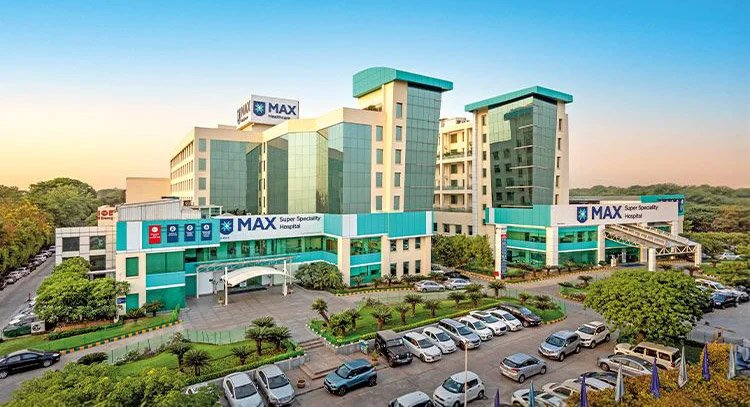
Doctors at Max Smart Super Speciality Hospital, Saket, have carried out a rare elbow reconstruction using a high-strength synthetic polyester ligament, helping restore stability in a 53-year-old road accident survivor.
Alpana Gaur from Ghaziabad, suffered an extensive degloving injury around her elbow in the accident. The trauma had severely damaged the surrounding soft tissue and destroyed almost all of the important ligament structures that normally keep the elbow stable.
Following initial treatment at another hospital, Gaur was transferred to Max Smart Super Speciality Hospital for specialized management. The upper-limb trauma team found that conventional ligament repair was not feasible because there was virtually no usable ligament tissue remaining.
The surgical team, led by Dr Vikas Gupta, Principal Director, Max Institute of Musculoskeletal Sciences and Orthopaedics, and Hand & Wrist, Elbow and Shoulder Specialist, chose a synthetic polyester ligament to reconstruct the damaged stabilising structures.
A synthetic graft offered another advantage: the doctors did not need to take a tendon from another part of the patient’s body. This avoided a second surgical site while providing immediate support to the injured elbow.
“The patient had sustained one of the most devastating elbow injuries we encounter in trauma surgery. The entire soft tissue envelope responsible for stabilising the elbow had been destroyed,” said Dr Vikas Gupta.
Dr Gupta explained that the synthetic ligament enabled the surgeons to recreate the damaged ligament complexes and establish stability soon after the operation. The approach also helped minimise additional surgical trauma that would have been associated with harvesting a tendon graft.
Getting the elbow moving early was another important part of the treatment strategy. Remarkably, supervised movement of the joint could begin within 24 hours of surgery because the reconstructed elbow had achieved sufficient stability.
The case demonstrates the potential of modern synthetic ligament reconstruction in managing complex elbow injuries where traditional repair or tendon-graft procedures may not be suitable. Such techniques could offer valuable options for patients with severe upper-limb trauma caused by road accidents, industrial injuries and other high-energy incidents.
The successful reconstruction shows how advanced surgical techniques can help doctors tackle devastating joint injuries while supporting earlier rehabilitation and preservation of function.
(Photo courtesy: maxhealthcare.in)