With cardiovascular disease continuing to account for a significant share of deaths in India, the need for earlier detection, personalised treatment and faster emergency care is becoming increasingly important. According to the Registrar General of India’s Report on Causes of Death 2021–23, cardiovascular disease accounts for nearly 31% of deaths in the country.
The cardiac health challenge is also increasingly affecting younger adults. Doctors have pointed to sedentary lifestyles, unhealthy diets, tobacco consumption and unmanaged stress as important risk factors, with cardiac events being reported among people in their 30s and 40s.
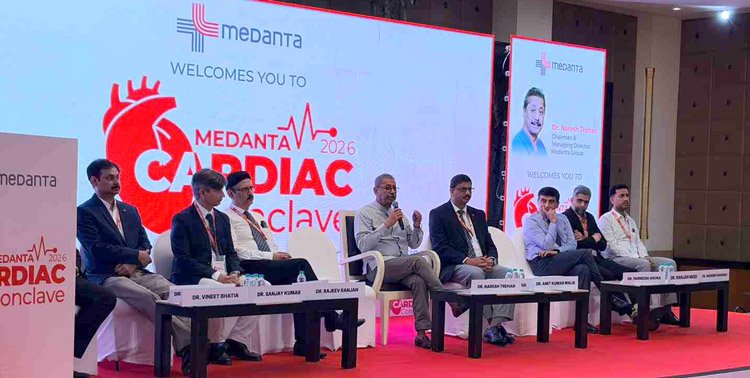
Against this changing healthcare landscape, Medanta Noida hosted the Medanta Cardiac Conclave 2026 on 26 September, bringing together cardiologists, cardiac surgeons, physicians and other healthcare professionals for discussions on the latest developments in cardiovascular medicine.
The conclave was inaugurated by Dr. Naresh Trehan, Chairman and Managing Director, Medanta Group. Experts representing preventive and clinical cardiology, interventional cardiology, cardiac surgery, electrophysiology and structural heart care participated in the scientific programme.
Discussions focused on emerging evidence, evolving treatment strategies and the practical challenges faced by cardiac specialists in managing increasingly complex patient needs.
Speaking about the conclave, Dr. Naresh Trehan, Chairman and Managing Director, Medanta Group, said, “Cardiac care today stands at an important point of evolution, with remarkable advances in the diagnosis and treatment of conditions that were once considered extremely complex. Yet, the burden of cardiovascular disease continues to be significant, and the challenge is to ensure that advances in medicine translate into timely and appropriate care for every patient. At Medanta, cardiac care has always been built around the integration of clinical expertise, advanced technology and multidisciplinary decision-making, with the objective of addressing the full spectrum of cardiovascular disease. The objective of the Medanta Cardiac Conclave was to bring this philosophy into an academic setting, allowing specialists to share experiences, examine emerging evidence and discuss established approaches. Such forums are important because medicine progresses not only through new technologies and treatments, but also through the exchange of knowledge and collective clinical experience.”
A key area of discussion was the growing move towards less invasive cardiac interventions. Specialists also highlighted how treatment decisions are increasingly being tailored to individual patient characteristics rather than relying on a uniform approach.
The discussions covered several areas, including the selection of antiplatelet therapy following acute coronary events, treatment strategies for patients with heart failure with reduced ejection fraction, and the choice between robotic and conventional minimally invasive cardiac surgery.
Another important theme was the need for rapid decision-making during cardiac emergencies. Speakers emphasised that timely intervention, preparedness and sound clinical judgement remain critical factors in improving patient outcomes.
The discussions highlighted how advances in technology are increasingly working alongside clinical expertise and multidisciplinary decision-making. As treatment options expand, specialists must also determine which approach is most appropriate for each individual patient.
The conclave provided a platform for specialists from multiple cardiac disciplines to exchange clinical experiences and discuss the direction of cardiovascular care. Such academic interactions are particularly relevant as both treatment technologies and patient profiles continue to evolve.
For Medanta Noida, the event also highlighted its role in bringing together specialists across cardiac disciplines to address complex cardiovascular conditions through coordinated care and contemporary treatment approaches.
As cardiovascular disease continues to affect people across age groups, ongoing collaboration, clinical learning and timely access to appropriate treatment will remain central to improving heart health outcomes. Forums such as the Medanta Cardiac Conclave provide an opportunity for specialists to share knowledge and collectively examine how cardiac care can continue to evolve.
(Photo courtesy: medanta.org)