Behind every scaly patch lies a deeper story of immunity, inflammation and the body’s response.
By Dr. Pradeep Mahajan, Regenerative Medicine Expert & Founder of StemRx Hospital & Research Centre.
A patch of dry, itchy skin may appears like a small issue. However, when it becomes thick, red, scaly and repeatedly returns, it could be psoriasis, a sign that effects on skin and also a person’s confidence, comfort and quality of life. In spite of usual misconceptions, psoriasis is not caused by poor hygiene, nor does it spread through physical contact, sharing food or being close to someone who has it. It is a chronic condition involving the body’s immune system, with genetics and environmental triggers also playing a role
Myth: Caused by poor hygiene
Myth: Spreads by touch or sharing food
Not true. It is a chronic immune-system condition. Not true. It cannot spread through closeness to someone who has it.
Reality: Immunity, genetics and triggers
An interplay of immune activity, family history and environment.
What Really Happens Inside the Skin?
Think of the skin as a wall that is self-healing. Normally, fresh skin cells take around three to four weeks to reach the surface and replace old ones. In psoriasis, malfunctioning immune signals speed up this process, causing cells to multiply too quickly and build up on the skin’s surface.
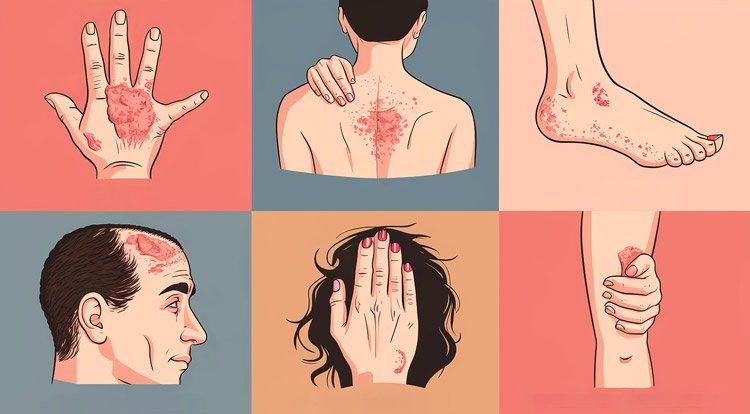
The result is thick, red patches covered with whitish or silvery scales. These patches may itch, burn, crack or bleed and usually appear on the scalp, elbows, knees, back, hands and feet. Psoriasis can also impact on nails and joints, sometimes leading to a related condition called psoriatic arthritis.
Why Does Psoriasis Flare Up?
Psoriasis does not influence everyone in the similar way. Some people experience slight patches, while others undergoes widespread inflammation. Symptoms may improve for a period and then return.
there are many factors can trigger or worsen flare-ups, considering emotional stress, infections, skin injuries, cold and dry weather, smoking, excessive alcohol consumption and certain medicines. A family history may also increase the likelihood of developing the condition.
This explains that the psoriasis cannot always be controlled by treating the visible patches alone. The underlying immune activity, individual triggers and overall health also matter.
Beyond the Visible Symptoms
observable patches may lead to discomfort, social anxiety or reduced self-confidence. constant itching can disturb sleep, while joint symptoms may impact with regular activities.
Psoriasis is also related with an increased risk of certain other health conditions, including cardiovascular and metabolic problems. This makes appropriate medical assessment important, particularly for people with extensive or persistent symptoms.
StemRx Hospital’s Approach: Looking Beyond the Skin
At StemRx Hospital & Research Centre, the aim to psoriasis can be framed around understanding the individual’s condition rather than focusing only on its visible symptoms. This involve considering inflammation, immune-system activity, possible triggers, lifestyle factors and associated health concerns.
A comprehensive care plan may involve
- Medical evaluation
- Appropriate dermatological treatment
- Skin care
- Nutritional guidance
- Stress management
- Monitoring of related conditions
Conventional treatments, including prescribed topical medicines, phototherapy or systemic medicines remain important options, depending on the severity of the disease.
A note on regenerative medicine
StemRx’s broader interest in regenerative medicine focuses on the body’s repair mechanisms and the biological processes involved in inflammation and tissue health. However, regenerative approaches for psoriasis should be considered investigational unless supported by appropriate clinical evidence and regulatory approval.
A Better Understanding, A Better Way Forward
Psoriasis is not simply a problem on the skin’s surface; it reflects a complex interaction between immunity, inflammation, genetics and environmental factors. Although psoriasis currently has no universal cure, effective treatments can help manage symptoms, reduce flare-ups and improve quality of life.
The first step is to look for the right medical advice, understand personal triggers and follow a treatment plan suited to individual needs. With knowledge care and pursued research, living with psoriasis can become more manageable and the condition need not define a person’s life..