By Dr. Ashish Airen, Senior Consultant, Vascular Surgery – CK Birla Hospitals, Jaipur

Not every leg pain that appears while walking is related to the bones, joints or muscles. In my practice as a peripheral vascular surgeon, I frequently see patients who have been treated for knee arthritis, sciatica or muscular pain, when the underlying problem is related to the blood vessels supplying or draining the leg.
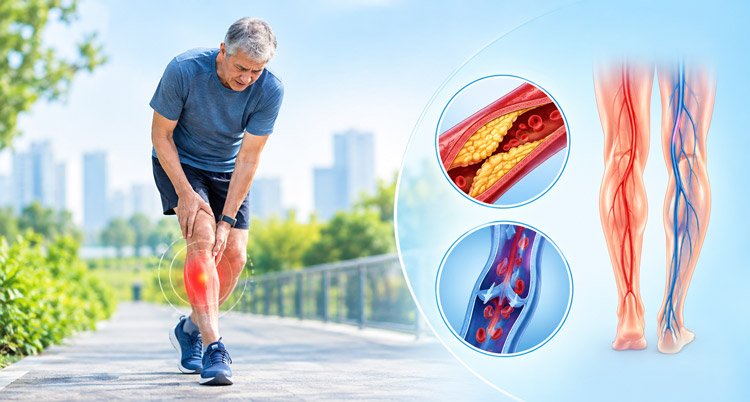
One important vascular cause is arterial claudication. When the arteries supplying the leg become narrowed because of peripheral arterial disease, the muscles do not receive enough blood and oxygen during exercise. The patient typically develops pain, heaviness, tightness or cramping in the calf, thigh or buttock after walking a predictable distance. The characteristic feature is that the discomfort improves within a few minutes of stopping and resting. As the disease progresses, the walking distance may gradually decrease. In advanced diseases, patients can develop pain even at rest, non-healing wounds or gangrene.
There is another, less commonly recognised vascular problem called venous claudication. Here, the difficulty is not inadequate arterial inflow but impaired venous drainage, often because of significant venous obstruction or venous reflux due to varicose veins. During exercise, blood gets trapped in the limb, producing a feeling of bursting pressure, heaviness, tightness and pain. Unlike typical arterial claudication, venous symptoms may take longer to settle after stopping and can be accompanied by swelling, particularly after prolonged standing or walking. Previous deep-vein thrombosis is an important risk factor.
The distinction is clinically important because the treatment is completely different. Arterial disease may require risk-factor modification, medication, supervised exercise therapy and, in selected patients, angioplasty or bypass surgery.
Venous obstruction requires assessment of the venous system and treatment directed at restoring or improving venous drainage and treatment of reflux by endovenous treatments like laser, RF ablation.
A simple clinical clue is to ask: When does the pain occur, what brings it on, how quickly does it disappear with rest, and is there associated swelling or a change in the foot? Examination of pulses and, when indicated, tests such as ankle-brachial index, arterial Doppler or venous imaging can help identify the cause.
People with diabetes, hypertension, high cholesterol, smoking history, kidney disease or previous DVT should be particularly alert to vascular causes. Persistent or recurrent leg pain deserves a vascular assessment when the symptoms do not fit a straightforward orthopaedic diagnosis. Recognising the problem early can prevent progression from a walking limitation to tissue loss and, in severe cases, limb-threatening ischemia.