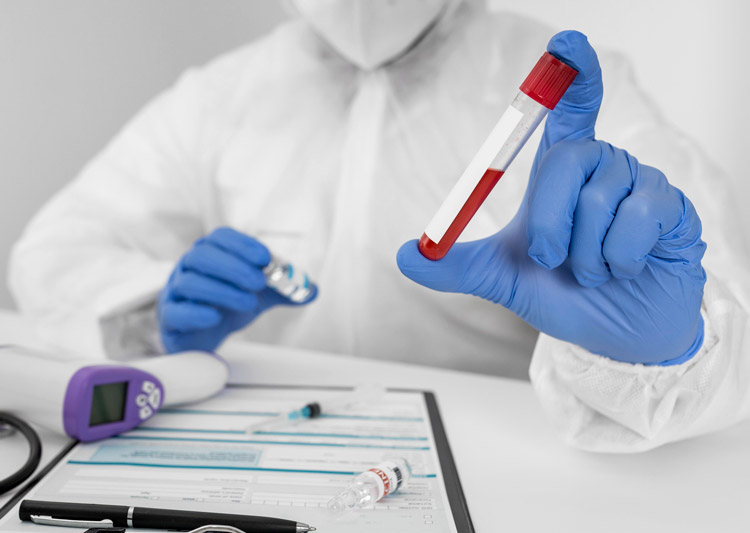
In a major step toward closing India’s haemophilia diagnosis gap, K J Somaiya Hospital & Research Centre has developed three quick diagnostic tests that can identify and monitor the disorder in just 5–10 minutes.
The announcement, timed with World Haemophilia Day, highlights a pressing issue—only about 26,000 patients are officially recorded in India, while estimates suggest the real number may be close to 1 lakh. This means a large majority remain undiagnosed.
The new testing solutions include a rapid assay for Factor VIII inhibitors, a latex agglutination test for Factor VIII antibodies, and a point-of-care tool to track emicizumab drug levels. Together, these innovations aim to simplify and speed up diagnosis.
Compared to traditional tests—which can take 4–6 hours, cost up to ₹15,000, and need advanced lab setups—the new kits deliver results within minutes at a much lower price of ₹100–₹150. This shift could make haemophilia testing far more accessible, even at primary healthcare centres.
The clinical impact could be substantial. Faster diagnosis allows timely treatment decisions, reduces complications, and expands care reach beyond major hospitals.
Samir Somaiya, Chairman of K J Somaiya Medical Trust, underlined the larger goal of the initiative, stating that good health remains the most critical outcome. He noted that Somaiya Ayurvihar is being built as a life-focused care hub, integrating treatment and research in areas like cancer and blood disorders.
The science behind these tests is robust. One point-of-care diagnostic has shown 93% sensitivity and 99% specificity, and has been accepted for publication in the Journal of Thrombosis and Haemostasis. The work is backed by Indian Council of Medical Research and Department of Biotechnology, with patent applications filed for all three innovations.
Early detection is especially crucial as nearly 25–30% of patients develop inhibitors that make treatment more complex.
Manisha Bobade, CEO of the hospital, said, “The establishment of the Haematology Department and the Bone Marrow Transplant unit at K J Somaiya Hospital has been a defining step. Our vision has always been to build a centre that can diagnose, treat, research, and innovate—all under one roof.”
Addressing broader challenges, Shrimati Shetty, Director – Laboratory Haematology & Clinical Research, added, “There is an acute shortage of coagulation laboratories in the country. A comprehensive laboratory should be able to diagnose not only haemophilia but all types of bleeding disorders. Yet, maintaining such infrastructure—from ultracold storage to quality control—is complex. Innovations like these rapid diagnostics have the potential to transform access, bringing timely and reliable testing closer to patients.”