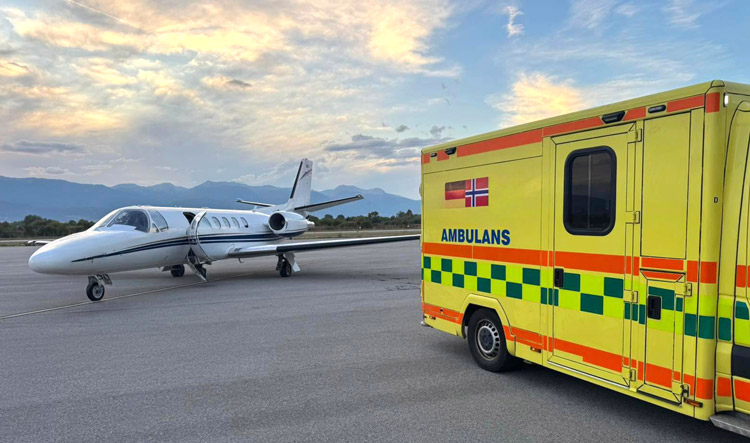
As healthcare becomes increasingly interconnected across Europe, medical aviation continues to play a vital role in ensuring timely access to specialized care. Understanding the operational environment behind these missions is essential for patients, providers, and healthcare stakeholders alike.
By Rachid Hochlef
The introduction of the Schengen regime fundamentally transformed the movement of people across much of Europe. Beyond simplifying border controls, it also streamlined many operational aspects of cross-border travel, influencing aviation regulations, procedures, and processes.
For medical aviation providers, these developments have significantly improved the way patients can be transferred within the region. However, it would be a mistake to confuse simplification with standardization.
While cross-border medical flights between countries such as France and Italy, Germany and Spain, or Switzerland and Austria are now far less burdened by bureaucratic procedures than they were decades ago, they still require extensive coordination among hospitals, airports, ambulance providers, and medical professionals.
Schengen facilitates cross-border operations, but it does not standardize them.
Schengen Removes Borders, but not Operational Planning
The European Union’s broader cross-border healthcare framework has significantly increased patient mobility across member states over the last decade. Directive 2011/24/EU established the legal foundation allowing EU citizens to access healthcare in another member state under specific conditions and reimbursement arrangements.
The EU and the Schengen Area are closely linked yet not identical. Switzerland, for example, is part of the Schengen Area despite not being a member of the EU.
The European Commission has consistently reported high authorization rates for cross-border healthcare requests, particularly between neighboring countries. These figures are important in understanding the operational reality of medical aviation. As patient mobility has increased over the past decade, so too has the frequency of cross-border patient transport missions.
One of the primary advantages of the Schengen framework for medical aviation operators is the reduction in border procedures required for patient transport. Intra-European patient transfers generally avoid complex immigration and customs controls. For emergency medical flights, this advantage can be decisive.
Border formalities can significantly delay patient transfers. While healthy travelers may experience only minor inconveniences, critically ill patients often require continuous medical supervision, particularly when artificial ventilation or intensive care support is involved.
The absence of border procedures also simplifies the movement of medical personnel accompanying patients.
However, aviation operations continue to function within national systems.
Airport slot coordination, ambulance access regulations, local hospital procedures, parking permissions, ground-handling availability, and medical reception protocols remain highly country-specific. Even within the Schengen framework, no two medical missions are operationally identical.
A flight may cross borders seamlessly in the air while encountering very different realities on the ground.
The Real Challenge Is Coordination Between Systems
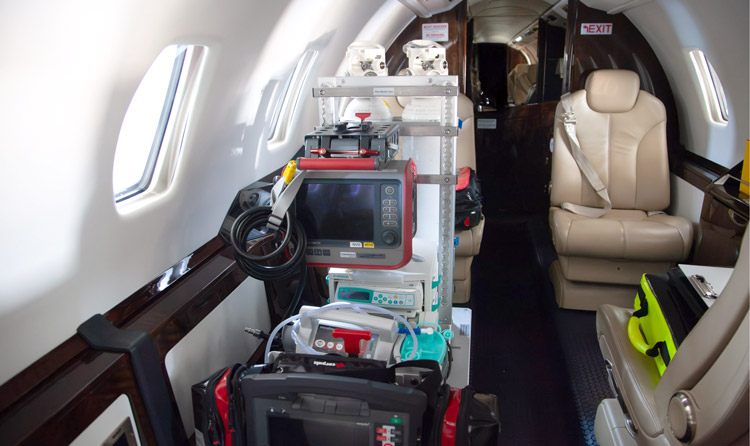
Successful cross-border medical transfers depend on precise coordination among numerous organizations. A complex medical flight often involves airlines, airports, hospitals, ambulance providers, ground handlers, and transport companies. Each participant must work in sync to ensure a safe and efficient mission.
When transporting critically ill patients requiring intensive care support, these challenges become even greater.
Medical documentation standards can differ between countries and even between hospitals. Language barriers may create difficulties during urgent coordination. Variations in ambulance equipment, patient handover procedures, and local clinical protocols often require operators to adapt their approach on a case-by-case basis.
Schengen does not eliminate these challenges. What it does is remove one layer of complexity, allowing operators to focus on the many others.
Airport Infrastructure Still Shapes Medical Transport Realities
Another common misconception is that medical flight accessibility is equal across Europe. While large international airports offer extensive infrastructure and services, they can also present challenges during urgent patient transfers.
Major airports such as Paris Charles de Gaulle Airport, Frankfurt Airport, Milan Malpensa Airport, and Adolfo Suárez Madrid–Barajas Airport provide robust facilities; however, congestion can complicate time-sensitive medical operations. Smaller regional airports may offer faster patient transfers but often have limited operating hours, reduced medical support capabilities, or restricted overnight handling services.
EUROCONTROL recognizes the importance of prioritizing medical flights. During medical emergencies and evacuations, air traffic controllers are expected to provide the necessary assistance to expedite departures and arrivals whenever possible.
Nevertheless, airports remain subject to operational limitations, including parking constraints, weather disruptions, runway congestion, nighttime restrictions, staffing availability, and other factors.
Similar challenges frequently arise in popular tourist regions such as the French Riviera, the Balearic Islands, northern Italy, and Alpine resort areas. In these environments, heavy commercial and business aviation activity can complicate medical transport operations. Coordinating ambulance services and minimizing transfer times often requires extensive local expertise and operational experience.
Ground Logistics Remain One of the Most Underestimated Factors
During a patient transfer, families naturally focus on the medical aircraft and its capabilities. While the aircraft is indeed a critical component, the transfer process involves multiple stages, each essential to maintaining patient safety and stability.
In medical aviation, bed-to-bed transfer has become the standard approach. Successful transport depends on minimizing patient instability throughout the entire journey.
As noted earlier, cross-border patient transfers involve additional challenges stemming from differences in ambulance equipment and operational practices between countries. Medical operators must therefore be prepared to manage any complications that may arise during the ground transportation phase.
Operational questions can emerge rapidly and often vary considerably between countries, airports, and healthcare systems. One airport may allow ambulances direct access to the tarmac, while another restricts vehicle movement during nighttime hours. Certain hospitals require all patient documentation to be cleared before arrival, while some countries maintain stricter controls on medications transported onboard international flights.
Infrastructure also varies significantly across Europe, and only some airports offer dedicated medical reception facilities designed to efficiently accommodate critically ill patients.
The Growth of Cross-Border Healthcare Will Continue
European studies suggest that cross-border patient mobility will continue to increase in the coming years. Healthcare cooperation among neighboring regions is expanding as patients increasingly travel abroad to access specialized treatments.
Factors driving cross-border patient transport include medical specialization, long waiting times at certain hospitals, and demographic trends. Many patients seek treatment at specialized centers offering advanced oncology, cardiology, trauma recovery, rehabilitation, or other highly specialized services.
This growth is expected to place additional demands on medical transport providers.
Europe’s aging population, regional healthcare disparities, and the concentration of specialized treatment centers will continue to drive international patient movement. Demand for oncology, cardiology, trauma recovery, pediatric care, and rehabilitation services remains a significant contributor to cross-border healthcare mobility.
At the same time, European border and passenger management systems continue to evolve, introducing new operational requirements that affect both passengers and transport providers. Although Schengen simplifies internal movement, aviation operators still face growing compliance obligations related to passenger data, security coordination, and public health procedures.
Medical aviation providers increasingly operate at the intersection of healthcare logistics, aviation regulation, and international coordination.
Meeting these challenges requires more than aircraft availability. It demands multilingual operational teams, strong relationships with hospitals and ground handlers across Europe, deep familiarity with airport infrastructure, and the ability to adapt rapidly when mission requirements change.
Simplification Does Not Eliminate Responsibility
The Schengen framework has undoubtedly made European medical transport more operationally efficient than it once was.
The reduction of border controls, combined with broader EU healthcare mobility rights, has improved both the speed and feasibility of many patient transfers across Europe.
Yet medical aviation remains a highly coordinated operational environment where every stage of the mission matters.
Patients may cross borders more easily today, but the responsibility for safely managing those journeys remains just as complex.
For operators, value increasingly lies not simply in conducting the flight itself, but in orchestrating the medical, logistical, airport, and ground transportation components that make the mission possible.
That is where experience continues to matter most.
(Photos provided by: Felipe Reisch)
About Centrale de Vols Ambulance
Centrale de Vols Ambulance provides worldwide medical evacuation and medical repatriation services. The company transports patients who cannot receive appropriate treatment where they are currently located and transfers them to the required destination using dedicated medical jets or medical escorts accompanying patients on commercial flights.

Rachid Hochlef is Head of Flight Operations at Centrale de Vols Ambulance