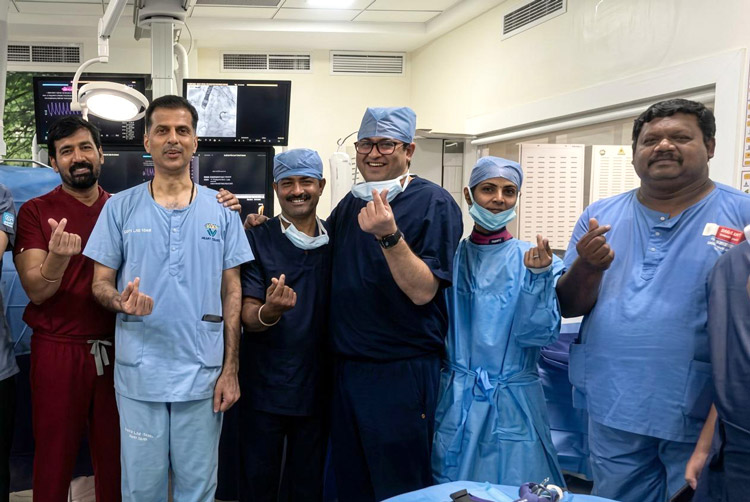
At Apollo Hospitals Chennai, doctors have successfully managed a high-risk cardiac case using a rare combination of BASILICA-assisted Transcatheter Aortic Valve Implantation (TAVI), preventing a potentially fatal complication during valve replacement.
The patient, a 67-year-old with a complicated medical background, had diabetes, coronary artery disease with prior stenting, and had undergone surgical aortic valve replacement in 2017 due to bicuspid aortic stenosis. Over time, the implanted valve degenerated, leading to severe narrowing and leakage, triggering recurring symptoms and requiring urgent intervention.
Scans before the procedure revealed a major concern — the coronary arteries were positioned dangerously close to the failing valve. In such scenarios, inserting a new valve can displace tissue and block blood flow to the heart, a rare but often fatal complication.
To manage this risk, the cardiac team opted for a minimally invasive TAVI procedure, delivering a new valve via a blood vessel in the leg. Given the high likelihood of coronary obstruction, they incorporated the advanced BASILICA technique to mitigate the danger.
The procedure was led by Dr. Sengottuvelu G, Senior Interventional Cardiologist and Clinical Lead of Structural Heart Interventions. He said, “This case highlights the evolving capabilities of transcatheter therapies in managing highly complex structural heart disease. BASILICA is a technically demanding procedure, and its successful execution reflects the expertise and coordination of our team.”
During the intervention, doctors carefully positioned a fine wire across the valve leaflet posing the risk. Using controlled electrical energy, they split the leaflet, allowing it to move aside when the new valve was deployed—ensuring uninterrupted blood flow to the coronary arteries.
As an added precaution, guidewires were placed in both coronary arteries, with standby stents ready for immediate deployment if needed.
Dr. C S Muthukumaran, Interventional Cardiologist, added, “Performing the first BASILICA procedure in the Apollo Group is a proud moment. It reinforces our commitment to bringing cutting-edge, life-saving technologies to patients in India.”
The procedure concluded successfully, with the new valve functioning efficiently, no blockage to coronary arteries, and stable heart rhythm. The patient has since been discharged in stable condition.
Although coronary obstruction during TAVI occurs in less than 1% of cases, it carries a high mortality rate of up to 40–50%, making preventive strategies essential. Techniques like BASILICA, while globally recognized with success rates above 90%, remain highly specialized and are still limited in use across India.
This case underlines the growing importance of advanced, minimally invasive cardiac interventions in treating complex conditions while avoiding repeat open-heart surgeries and enabling quicker recovery.
(Photo courtesy: apollohospitals.com)