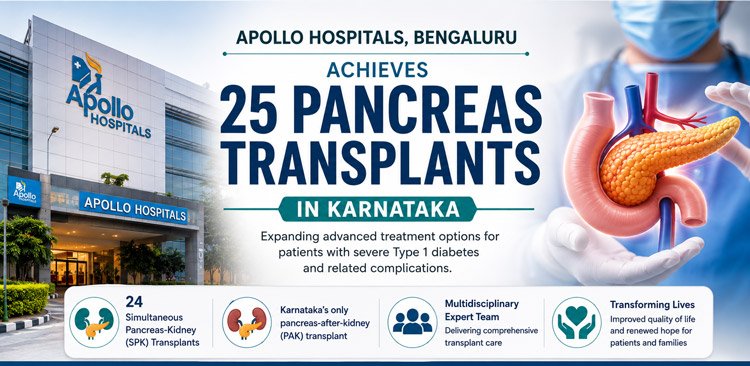
Apollo Hospitals, Bengaluru, has reached a significant milestone by completing 25 pancreas transplant procedures, strengthening access to an advanced treatment option for selected patients with severe Type 1 diabetes and related complications.
The programme is headed by Dr Suresh Raghavaiah, Senior Consultant – HPB & Multi-Organ Transplant Surgery, with support from a multidisciplinary team comprising transplant surgeons, nephrologists, diabetologists, anaesthetists, intensivists and other specialists.
Of the 25 procedures, 24 were simultaneous pancreas-kidney (SPK) transplants. The programme also included Karnataka’s only pancreas-after-kidney (PAK) transplant.
Addressing a Growing Diabetes Burden
The achievement comes against the backdrop of India’s rapidly expanding diabetes burden. The International Diabetes Federation Diabetes Atlas estimates that 89.8 million adults aged 20–79 in India were living with diabetes in 2024, while about 43% of cases were believed to remain undiagnosed. The number is projected to rise to 156.7 million by 2050.
Despite this growing need, pancreas transplantation remains relatively rare in the country. National Organ and Tissue Transplant Organisation data recorded 44 pancreas transplants across India in 2024, including six in Karnataka.
For carefully selected people with severe Type 1 diabetes, a pancreas transplant can restore the body’s ability to produce insulin and potentially eliminate the need for insulin therapy. When combined with a kidney transplant, it can also address kidney failure caused by advanced diabetic complications.
Dr Suresh Raghavaiah said the procedure can bring “a major change in quality of life” for appropriately selected patients, particularly those facing both severe diabetes and kidney failure. He also stressed that successful outcomes rely on appropriate patient selection, experienced transplant teams and systematic long-term follow-up.
From Dialysis to Greater Independence
One Apollo Hospitals Bengaluru patient was diagnosed with Type 1 diabetes at the age of 10. Over the years, he developed several serious complications, including diabetic retinopathy, vision loss, neuropathy, hypoglycaemic unawareness and repeated infections.
His condition eventually progressed to kidney failure, requiring dialysis. He subsequently underwent an SPK transplant. One year after the procedure, he no longer requires either insulin or dialysis and has regained a greater degree of independence in his daily life.
Akshay Oleti, CEO, Apollo Hospitals, Karnataka Region, said the milestone goes beyond the number of procedures performed.
“Behind these 25 transplants are 25 patients with different medical histories and challenges,” Oleti said, adding that the hospital’s focus remains on providing comprehensive care from patient assessment and transplantation through long-term follow-up.
The hospital also underlined the critical role of deceased-organ donation in making such complex transplant procedures possible and expanding access to potentially life-changing treatment.
Apollo Hospitals Bengaluru’s 25-transplant milestone highlights the growing capability for complex pancreas transplantation in Karnataka. As diabetes-related complications continue to increase, specialized transplant programmes, timely referrals, expert multidisciplinary care and greater awareness of organ donation will remain essential in improving outcomes for eligible patients.