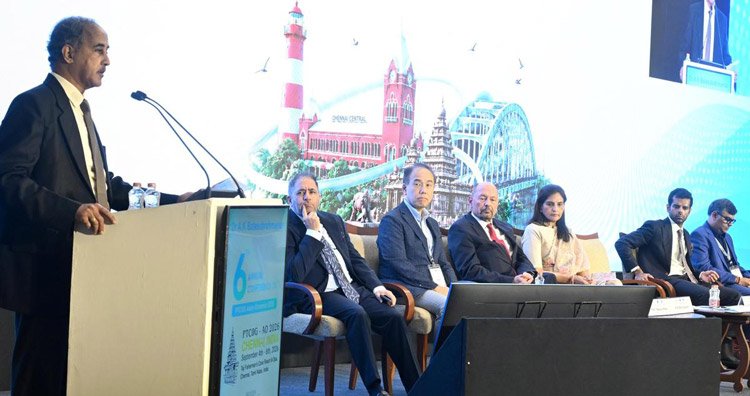
Apollo Proton Cancer Centre (APCC), Chennai, hosted the 6th Annual Conference of the Particle Therapy Co-Operative Group – Asia-Oceania (PTCOG-AO 2026) from September 4 to 6, bringing the regional meeting to India for the first time.
Held at the Taj Fisherman’s Cove Resort & Spa in Chennai, the three-day event attracted more than 450 delegates from 26 countries and regions. The conference focused on the theme, “Empowering Access to Particle Therapy through Research, Education and Collaboration.”
The programme brought together experts to discuss developments in proton and particle therapy, including clinical applications, treatment technologies, research and the infrastructure needed to expand access. Speakers also examined workforce requirements, clinical evidence and strategies for making advanced particle therapy more accessible.
The scientific sessions covered areas such as treatment planning, radiobiology, medical physics, quality assurance, motion management and adaptive particle therapy. Emerging technologies including proton arc therapy, artificial intelligence, machine learning, biological modelling and FLASH radiotherapy were also discussed, along with applications across different cancer types.
The conference was chaired by Dr. Rakesh Jalali, Organising Chairman of PTCOG-AO 2026 and Medical Director & Senior Consultant – Radiation Oncology at APCC. Dr. Srinivas Chilukuri, Scientific Chair (Clinical) and Organising Secretary of PTCOG-AO 2026 and Lead Consultant – Radiation Oncology at APCC, served as the Scientific Chair.
APCC began its proton therapy programme in Chennai in 2019. Since then, the centre has expanded its work across clinical care, research, professional training and education. PTCOG-AO 2026 provided an opportunity for centres with varying levels of experience in particle therapy to share knowledge, discuss challenges and explore opportunities for research and capacity building.
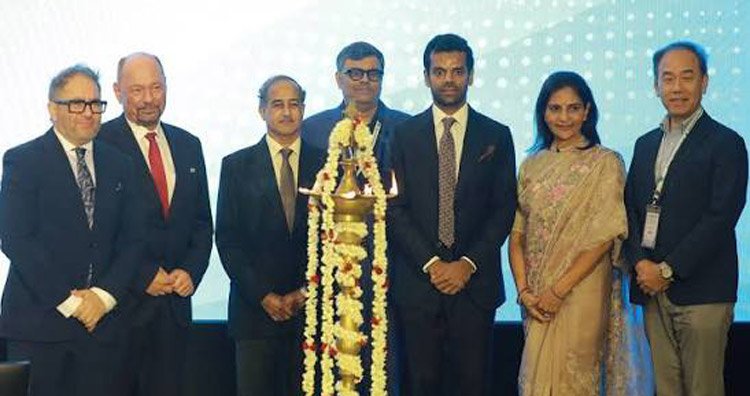
A key area of discussion was the need to expand access without compromising clinical quality. Experts considered cost-conscious treatment approaches, high-volume treatment models, workforce development and appropriate patient selection. The discussions also highlighted health economics and the importance of establishing whether new technologies deliver measurable benefits for patients.
Dr. Preetha Reddy, Executive Vice-Chairperson, Apollo Hospitals Enterprise Limited, emphasised that the expansion of advanced cancer care should be guided by scientific evidence and patient outcomes. She also pointed to India’s growing opportunity to contribute to global cancer care through prevention, early detection and precision treatment.
Advancing Access to Particle Therapy
PTCOG-AO 2026 highlighted the importance of combining clinical evidence, research, education and international collaboration to broaden access to particle therapy. The conference also reinforced the need for responsible adoption of advanced technologies, with patient benefit and appropriate clinical use remaining at the centre of cancer care.
The first PTCOG Asia-Oceania conference in India marks an important step for the country’s growing role in advanced radiation oncology. By bringing international experts together, the meeting could help strengthen research partnerships, clinical expertise and efforts to make particle therapy more accessible to patients.
(Photos courtesy: apollohospitals.com)