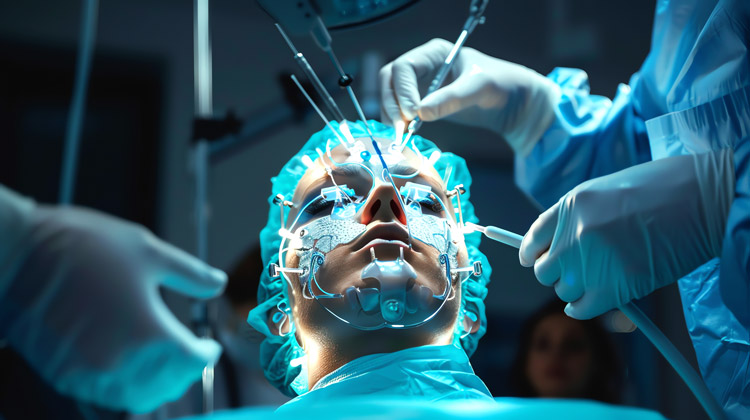
Patients who have suffered severe facial damage — including burn survivors and individuals born with major deformities — may soon have a new treatment option, as the All-India Institute of Medical Sciences (AIIMS) in New Delhi is preparing to launch the country’s first facial transplantation programme.
A face transplant is an extremely specialized reconstructive operation in which surgeons replace a portion or the entirety of a patient’s face using donated tissue.
Dr. Maneesh Singhal, Head of the Department of Plastic, Reconstructive and Burns Surgery at AIIMS, said many patients continue to live with serious deformities caused by acid attacks, firearm injuries and major accidents despite undergoing numerous corrective procedures. “Even after 10–12 surgeries, several individuals remain severely disfigured. Facial transplantation is no longer an experimental concept — it has become a necessary treatment option. Establishing this facility at AIIMS will allow us to provide both functional recovery and cosmetic restoration to patients who currently have very limited alternatives,” he explained.
He noted that while the procedure is among the rarest and most complex surgeries in reconstructive medicine, careful preparation is essential. According to him, specialised training, ethical planning and cooperation among multiple medical disciplines must be completed before such operations can begin.
To prepare, the department recently conducted an intensive cadaver-based surgical workshop along with academic sessions.
Dr. Dipankar Bhowmick, Professor and Head of the Department of Nephrology, outlined why kidney specialists are part of the team. A suitable donor is required for the transplant, and the recipient’s immune system naturally attempts to reject the new tissue. Medications are therefore administered to suppress this response. Because nephrologists have extensive experience managing these powerful drugs, they will help oversee immunosuppressive therapy. He added that AIIMS already possesses the required facilities and expertise for such treatment.
Psychological care will also be vital. Dr. Preethy K, Assistant Professor in the Department of Psychiatry, stressed the importance of counselling and long-term rehabilitation. She explained that patients may experience depression, post-traumatic stress or other mental health challenges before or after surgery, so doctors ensure they fully understand both the benefits and potential risks associated with the procedure.
(The above image is for illustrative purposes only)