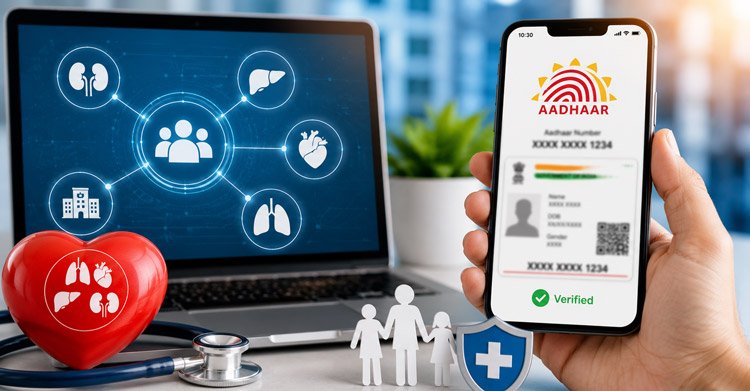
India’s organ transplantation programme has entered a new digital phase with the National Organ and Tissue Transplant Organisation (NOTTO) introducing a real-time online portal and mobile application aimed at improving the country’s organ allocation system. The platform is expected to enhance transparency, strengthen coordination among transplant centres and create a unified national waiting list for patients requiring organ transplants.
Designed as a centralised digital network, the portal links transplant hospitals, state authorities and regional organisations, allowing faster exchange of information and more efficient management of organ allocation. It also enables authorised hospitals and agencies to raise “super urgent” requests for critically ill patients who require immediate transplantation.
One of the portal’s biggest advancements is the creation of a single nationwide waiting list generated from patient registrations across hospitals. As patient information is updated, the system automatically maintains waiting lists at hospital, state, regional and national levels, allowing authorities to monitor organ availability and recipient status in real time.
The platform also introduces nationwide tracking of organ allocation, digital monitoring of transplant outcomes and a national database for swap donor matching. Officials believe these features will reduce delays, improve accountability, optimise the use of donated organs and simplify coordination between hospitals and regulatory agencies. The system further supports Aadhaar-linked organ pledges, helping record an individual’s donation decision in a secure digital format.
Unlike the earlier system, where transplant outcome records were maintained separately by individual hospitals, the new portal will create a central repository of patient follow-up information. Hospitals will be required to regularly update patients’ health parameters after transplantation, enabling long-term monitoring at the national level.
Patient Registration and Waiting List
Patients requiring an organ transplant will continue to register through an authorised transplant hospital of their choice. Access to the portal remains restricted to recognised hospitals, state health departments and NOTTO through secure login credentials.
Once patient details are entered, the system automatically places recipients in the appropriate hospital, state, regional and national waiting lists. This integrated approach replaces fragmented record-keeping systems previously maintained independently by hospitals and enables seamless coordination for organ allocation across the country.
Allocation of Donated Organs
The portal digitally records every stage of organ allocation while continuing to follow the existing allocation framework.
When organ donation takes place, the transplant hospital where the donation occurs receives the first opportunity to allocate the organ to an eligible recipient. If no suitable patient is available or the hospital does not perform transplantation for that particular organ, the organ is transferred to the state’s allocation pool. If no compatible recipient is identified at the state level, it is subsequently offered through the regional pool before reaching the national pool.
Kidneys, which account for the largest share of organ transplants in India, follow a slightly different allocation process. Under the existing guidelines, the donor hospital may retain one kidney, while the second is offered to the nearest eligible government transplant centre. Any unmatched organ then progresses through the state, regional and national allocation system.
“All of these inter-hospital, intra-state, and inter-state transfers will be coordinated through and recorded transparently on the portal,” said Dr Anil Kumar, director, NOTTO.
Expanding Opportunities Through National Swap Matching
The portal also expands the scope of swap transplantation by introducing a nationwide matching system for incompatible donor-recipient pairs.
Previously, hospitals searched for compatible swap donors within their own patient pools, limiting the chances of finding suitable matches. By creating a national database, the portal significantly increases the number of potential donor-recipient combinations, improving transplant opportunities for patients whose willing donors are medically incompatible.
“At present, swap donors are matched by hospitals. The number of such willing donors is limited at a hospital. Nationally, however, there are about a lakh patients on the waiting list. Finding a matching donor for such a swap would be much easier in the bigger pool,” said the NOTTO director.
Patients with compatible living relatives can continue their transplant process through the hospital where both donor and recipient are registered. Those awaiting organs from deceased donors will receive allocations according to the approved waiting list and applicable allocation guidelines.
Digital Alerts and Organ Donation Pledges
The portal replaces much of the manual coordination traditionally carried out through phone calls and messaging by introducing automated alerts and digital notifications for transplant coordinators.
It also allows citizens to pledge their organs online. These pledges are linked with Aadhaar, providing a verified digital record of an individual’s willingness to donate organs if they are unable to communicate their consent in the future.
Current Organ Transplant Scenario
NOTTO’s 2025 data highlights the growing scale of organ transplantation in India. Delhi recorded the highest overall transplant volume with 4,564 procedures, while Tamil Nadu led the country in deceased donor transplants with 266 cases. Kidneys remained the most frequently transplanted organ with 14,477 transplants, followed by liver and heart transplants.
Harmonising State Policies Remains a Challenge
Although the new platform creates a common digital infrastructure, organ allocation policies continue to vary across different states.
States such as Telangana, Maharashtra and Gujarat follow their own scoring models for recipient prioritisation. West Bengal, Karnataka, Rajasthan and Kerala generally give preference based on registration time, while Tamil Nadu uses a zonal allocation system. Madhya Pradesh and Chhattisgarh prioritise patients who either do not have a living donor or whose matched donor is unwilling to proceed with donation.
“We cannot force the states. However, there is a consultation ongoing to bring them on the same page so that the same allocation criteria may be followed across the board,” said Dr Kumar.
Officials clarified that while the portal generates a consolidated national waiting list, organ allocation will continue to follow existing state-specific guidelines until a common framework is adopted.
Beyond organ allocation, the platform will also support the registration and renewal of transplant centres, facilitate committee formation and enable state authorities to process regulatory approvals online. Although the portal has already been launched, officials indicated that the remaining modules will be activated in phases over the next two months after monitoring system performance.
The launch of NOTTO’s integrated digital platform represents a significant advancement in India’s organ transplantation ecosystem. By combining real-time waiting lists, nationwide donor matching, digital outcome tracking and Aadhaar-linked organ pledges into a single platform, the initiative is expected to improve transparency, strengthen coordination and make organ allocation more efficient. As additional features become fully operational and states move towards greater policy alignment, the system could substantially improve access to life-saving organ transplants across the country.
(The above image is AI-generated and is for illustrative purposes only)