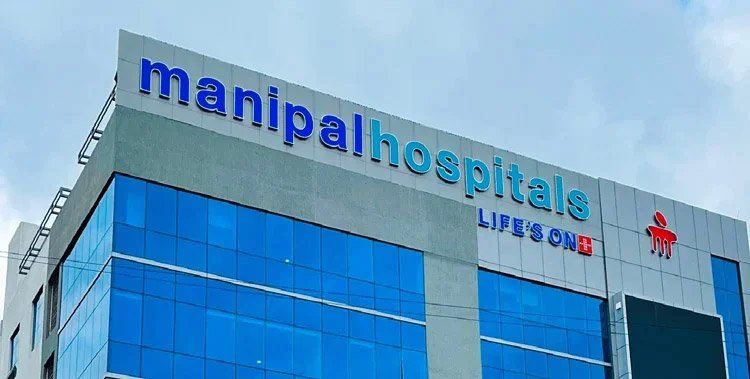
Manipal Health Enterprises Ltd is preparing for another phase of expansion, with a focus on acquisitions, new hospitals and technology-led healthcare delivery. The group is exploring growth opportunities across several Indian markets while strengthening its “physical plus digital” healthcare model through Artificial Intelligence (AI).
According to the company’s FY2025–26 annual report, Manipal Hospitals is assessing strategic opportunities in Telangana, Kerala, Andhra Pradesh and Chhattisgarh to strengthen its presence in selected markets.
The group is also evaluating inorganic expansion opportunities in Karnataka, Maharashtra and Goa, including the Mumbai-Pune economic corridor. Eastern India, particularly West Bengal, Odisha, Jharkhand and Sikkim, remains another area of interest.
New Mumbai Project
Mumbai will be an important part of Manipal’s next growth phase. The company has acquired the remaining land and building required for its planned greenfield hospital project in Juhu.
The transaction involved a total consideration of ₹495 crore, with ₹130 crore linked to the fulfilment of specified conditions.
Alongside physical expansion, Manipal is investing heavily in digital infrastructure. The group is rolling out a unified Hospital Information System (HIS) designed to connect clinical, diagnostic and administrative operations across its hospital network.
AI Takes Centre Stage
AI is becoming a key component of Manipal Hospitals’ technology strategy. The company has already introduced AI-supported nursing handovers at 24 hospitals and is expanding the use of wireless systems for continuous patient monitoring.
The group is also using AI to automate call-centre operations through chat, voice and omnichannel assistants. These systems are intended to support appointment management and initial patient enquiries.
“The next phase of Manipal Hospitals’ journey will be defined not only by the capacity we add, but by how effectively we harness the collective strengths of our people, clinical expertise, technology platforms and integrated network,” said Dilip Jose, Managing Director and CEO.
Focus on Complex Specialties
Manipal’s clinical growth strategy continues to revolve around its “CONGO-R” framework, covering six major specialty areas: cardiac sciences, oncology, neurosciences, gastro sciences, orthopedics and renal sciences.
Together, these specialties contributed 64.3% of the group’s gross inpatient revenue in FY2025–26.
To strengthen these services, the hospital network is adding advanced technologies, including robotic surgical systems, linear accelerators and PET-CT scanners.
Strong Financial and Operational Growth
The expansion plans follow a strong financial year for the group. Revenue from operations increased 25.4% to ₹10,336 crore during FY2025–26, while EBITDA reached ₹2,644 crore.
The year also saw the integration of Sahyadri Hospitals in Maharashtra and Medica Synergie in Eastern India, further expanding Manipal’s geographic footprint.
The company plans to increase its licensed bed capacity by approximately 2,426 beds by 2030. This will include around 483 brownfield beds and 1,943 greenfield beds.
As of March 31, 2026, Manipal Hospitals operated 49 hospitals with 13,037 licensed beds across 14 states and Union Territories. Its network treated more than 76 lakh patients during the year.
The company also added more than 5,500 beds between FY2020–21 and FY2025–26, making it one of the leading private hospital groups in India in terms of bed additions.
“We enter the next phase with a larger and more integrated platform, clear execution priorities and a continued commitment to remain a trusted brand for delivering quality healthcare,” Jose added.
Looking Ahead
Manipal Hospitals’ expansion strategy combines acquisitions, greenfield development and technology investments. With AI, advanced clinical infrastructure and a growing hospital network at the centre of its plans, the group is positioning itself for substantial capacity growth over the coming years.
(Photo courtesy: manipalhospitals.com)