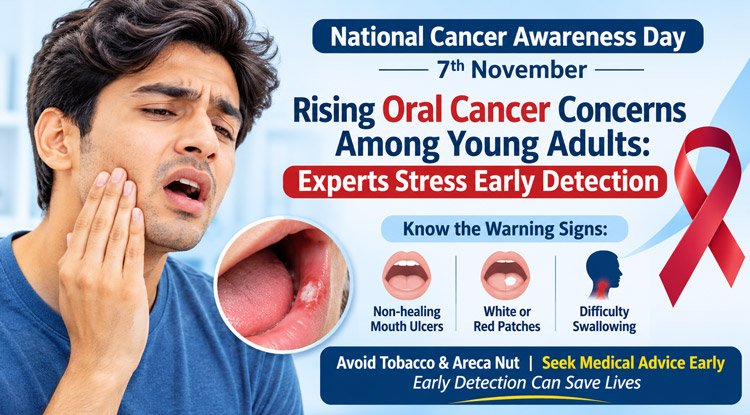
Rising Oral Cancer Concerns Among Young Adults: Experts Stress Early Detection
Oral cancer is increasingly becoming a concern among younger adults, with tobacco, gutka, areca nut, and other harmful habits contributing to the risk. Experts urge people to recognize early warning signs such as non-healing mouth ulcers, white or red patches, and difficulty swallowing, and seek timely medical evaluation.
Oral cancer is no longer a health concern limited to older adults. Increasingly, younger people are also being diagnosed with the disease, raising concerns about tobacco consumption, areca nut use, and delayed medical attention. On the occasion of National Cancer Awareness Day, cancer specialists are urging young adults not to ignore unusual changes in their mouth, as early detection can significantly improve treatment outcomes.
Dr Amit Chakraborty, Head and Neck Cancer Surgeon, SSO Cancer Hospital Mumbai Said,“Tobacco in the form of cigarettes, bidis, gutka, khaini and chewing tobacco is among the major risk factors for oral cancer. Areca nut, commonly consumed as supari or in paan preparations, is another important risk factor, even when it is consumed without tobacco. Alcohol consumption can further increase the risk, particularly when combined with tobacco use. Repeated exposure to these substances can damage the cells lining the mouth and contribute to cancer development,” said Dr Amit.
Dr Amit further added, “Many young people believe that oral cancer happens only after years of tobacco consumption or affects people above a certain age. This is a misconception that can delay diagnosis. Regular use of gutka, chewing tobacco, cigarettes and areca nut can increase the risk of oral cancer. Some people also develop the habit of consuming supari or flavoured areca nut products without realising that these are not harmless alternatives. A persistent mouth ulcer, a white or red patch, unexplained bleeding or a lump inside the mouth should never be ignored, particularly if it does not heal within two weeks. Early medical evaluation is essential to identify suspicious changes and begin treatment at the right time,”.
One of the major challenges is that young adults often dismiss early symptoms as ordinary mouth ulcers, dental problems or irritation caused by spicy food. Warning signs may include difficulty opening the mouth, persistent pain while swallowing, unexplained numbness in the tongue, a lump in the cheek or neck, and changes in speech. People who regularly consume tobacco or areca nut should be particularly careful about such symptoms. A clinical examination by a specialist and, if required, a biopsy can help establish the diagnosis. Avoiding tobacco and areca nut completely is one of the most important steps towards reducing the risk. Oral cancer can be treated more effectively when detected at an early stage. Unfortunately, many patients approach the doctor only after the disease has progressed because they ignore symptoms or depend on home remedies. Any mouth ulcer that does not heal, unusual patch, persistent pain or unexplained lump needs medical attention. People should not wait for symptoms to become severe before consulting a doctor. Regular dental check-ups, avoiding tobacco and areca nut, limiting alcohol consumption and maintaining good oral hygiene are important preventive measures. Awareness and timely action can save lives,” said Dr Amit.
Dr. Kirti Bhusan, Onco Surgeon, Apollo Spectra Hospital Mumbai Said, “Oral cancer continues to be a major public health concern in India. A 2025 study published in JAMA Network Open estimated nearly 2.81 lakh new cases of oral cavity and pharyngeal cancers in India in 2024, highlighting the significant disease burden. Young adults often overlook changes inside their mouths because they do not expect to develop cancer at an early age. Some continue consuming tobacco, gutka or areca nut despite experiencing mouth ulcers, burning sensations or difficulty opening their mouths. These symptoms are often dismissed as minor problems, resulting in delayed consultation. It is important for young people to understand that age does not make them immune to oral cancer. Being aware of risk factors, avoiding tobacco and areca nut, and seeking medical advice for unusual or persistent oral changes can make a huge difference in early detection and treatment outcomes.”
“Young people must understand that oral cancer is not limited to older age groups. Oral cancer is increasingly becoming a concern among younger adults and is impacting their overall well-being. Persistent mouth ulcers, unexplained patches, lumps or difficulty swallowing should not be ignored. Early medical evaluation and timely diagnosis can be lifesaving for the patient,” concluded Dr Deepak Khanna, head and neck cancer oncosurgeon, Zynova Shalby Hospital Mumbai.
(Photo: Ai-generated)