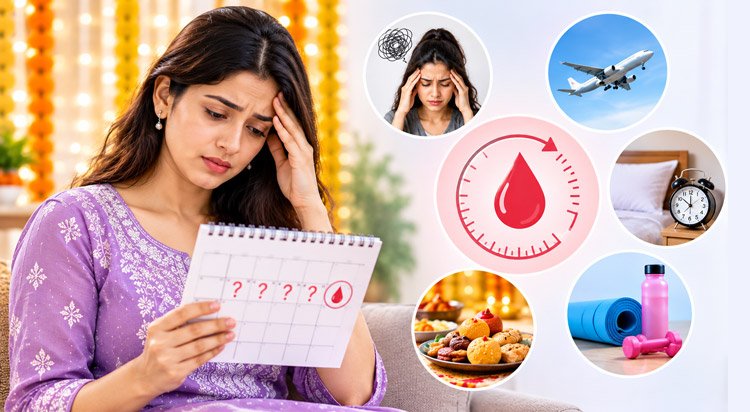
Festivals often bring changes in routine, but stress, travel, altered sleep and eating habits can sometimes affect the menstrual cycle.
By Dr. Tanveer Aujla, Consultant Obstetrician & Gynaecologist, Motherhood Hospitals, Noida, Sector 48

Festive celebrations can mean late nights, long-distance travel, busy schedules, social gatherings and changes in food habits. For many women, this temporary disruption may also coincide with a change in their menstrual cycle. Periods may arrive earlier or later than expected, become lighter or heavier, or be accompanied by more discomfort than usual.
While an occasional change does not always indicate a problem, understanding how lifestyle changes can influence the cycle can help women know when to simply observe and when to seek medical advice.
Several factors may temporarily influence the menstrual cycle:
- Stress: Planning celebrations, managing work alongside social commitments or dealing with family responsibilities can increase stress. Stress may affect the hormonal signals involved in ovulation and, in turn, alter the timing of periods.
- Travel: Long journeys, changes in time zones and disruption to daily routines can affect sleep, meals and activity levels. These changes may temporarily influence the cycle in some women.
- Poor sleep: Late nights and irregular sleeping hours can affect the body’s natural rhythm. If poor sleep continues for several days or weeks, it may contribute to changes in menstrual patterns.
- Changes in diet: Festive meals may be richer, heavier or more irregular than usual. Skipping meals, overeating or suddenly changing eating patterns can affect overall well-being and may contribute to cycle changes.
- Reduced or increased physical activity: A sudden change in exercise levels, particularly along with stress or changes in food intake, can also influence periods.
A completely normal festive routine may not always be possible, but a few habits can help:
- Try to maintain regular sleep and wake-up times.
- Do not regularly skip meals.
- Stay hydrated, especially while travelling.
- Include fruits, vegetables, protein and whole grains alongside festive foods.
- Continue moderate physical activity where possible.
- Take short breaks between busy activities.
- Keep track of period dates if your cycle tends to be irregular.
A single delayed or early period is not necessarily a cause for concern. However, women should consult a gynaecologist if periods remain irregular over several cycles or if there is a significant change from their usual pattern.
Medical advice is particularly important for very heavy bleeding, severe period pain, bleeding between periods, bleeding after sex, missed periods without an obvious reason or symptoms such as persistent fatigue, dizziness or unexplained weight changes. If pregnancy is possible and a period is delayed, taking a pregnancy test is also important.
Festive celebrations should not mean ignoring your menstrual health. Stress, travel, poor sleep and changes in eating and activity patterns can sometimes affect the cycle, particularly when several changes happen at once. Maintaining basic healthy routines and tracking your periods can help you understand your normal pattern. If changes persist or are accompanied by unusual symptoms, a gynaecologist can help identify the underlying cause.