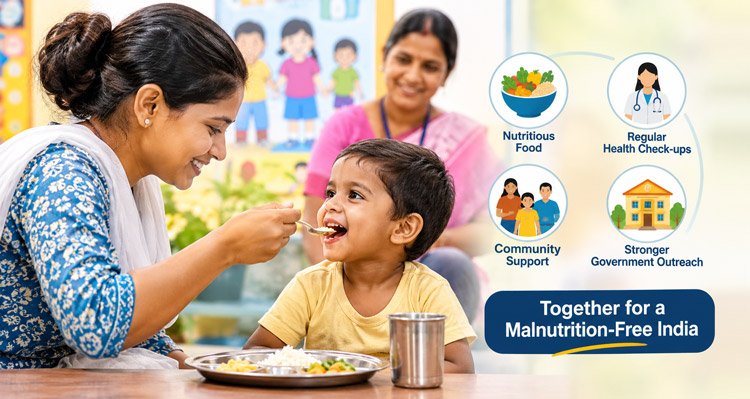
Mumbai: Recently, Maharashtra Chief Minister, Devendra Fadnavis flagged persistent malnutrition among children in slums of Mumbai and called for targeted interventions through corporate social responsibility partnerships. He highlighted that the city’s relatively high per capita income should be reflected in better nutrition indicators. Experts from Society for Nutrition, Education and Health Action (SNEHA) and Catalysts for Social Action (CSA) highlighted tackling malnutrition requires a combined & sustained effort by the government as well as the community.
Sharing her insights, Ms. Sushma Shende, Programme Director, Maternal and Child Health, SNEHA highlighted that counselling helps build awareness about how malnutrition can affect a child’s future health. “Its main objective is to address behavioural barriers, challenge existing beliefs and encourage caregivers to take action in the child’s best interest. Parents and caregivers need to understand what children should eat, how frequently meals should be given and how to maintain proper hygiene. This helps families make better food choices and continue healthy feeding practices at home,” Shende said. But identifying a child who is malnourished also plays a key role in tackling malnutrition.
Ms. Smitha Shetty, CEO, CSA said that identification is where recovery begins for a child. “A doctor assesses the child’s weight, height and growth, with haemoglobin tests where needed. Children with severe malnutrition or complications are referred immediately, while children under five may be admitted to a government Nutrition Rehabilitation Centre (NRC). At our organization, we encourage Child Care Institutions (CCIs) that we work with to turn every diagnosis into a written plan covering prescribed diets, deworming, supplements and review dates.”
Experts also emphasized on the key role the government can play in helping malnourished children, who have either been abandoned, neglected or orphaned. “Anganwadi workers help monitor children’s growth through regular weight and height assessments. They guide parents on nutrition and share information about available government health services. Community health workers help caregivers understand the importance of immunisation in protecting children from illnesses and infections. They also identify children who may need additional medical attention and refer them to the nearest health facility for treatment,” Shende said.
Shetty said that there are several provisions in the Juvenile Justice Model Rules, 2016 to help provide nutrition and healthcare for children.“Children are prescribed minimum dietary requirements for every CCI, including four meals a day and special diets for infants and sick children. Children can also access public healthcare, screening under the Rashtriya Bal Swasthya Karyakram (RBSK), iron-folic acid supplementation under Anaemia Mukt Bharat and twice-yearly deworming,” Shetty said.
The experts also emphasized that beyond physical recovery, there are other factors that need to be kept in mind to help such children. “Children who have experienced loss or neglect may struggle with eating, while grief and stress can affect physical recovery. Feeding works best through relationships: consistent caregivers, shared mealtimes and food that is never used as a reward or punishment. Through our sessions, we help build emotional resilience, while Children’s Committees give children a voice in their daily lives, including meal planning,” Shetty added. Shende on the other hand highlighted the role families and communities can play in preventing malnutrition recurrence. “Families can provide balanced meals, maintain hygiene, ensure timely vaccinations and seek medical help when needed. Communities can support families by spreading awareness about child nutrition and helping them access available health services and government schemes. Continued support and awareness can help children maintain better health and reduce the risk of malnutrition in the future,” she concluded.