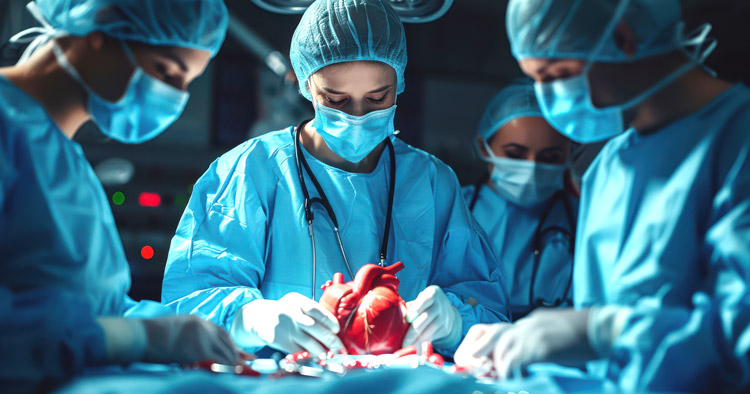
A team of cardiac specialists at KIMS Hospitals, Thane, has successfully performed the highly specialised Commando procedure on a 52-year-old woman with multiple severe heart disorders, marking a significant achievement in complex redo cardiac surgery.
The patient had undergone a mitral valve replacement in 2020 but later began experiencing progressive breathlessness that increasingly affected her daily life. After being evaluated by Dr. B.C. Kalmath, Director of Cardiac Sciences at KIMS Hospitals, detailed investigations uncovered a combination of serious complications, including narrowing of the previously implanted mitral valve, a large blood clot in the left atrium, damage to the aortic valve, leakage of the tricuspid valve, severe pulmonary hypertension, and an unusually small aortic root. The findings made repeat surgery the only viable treatment option.
The operation was performed by Dr. Saumya Sekhar, Consultant Cardiothoracic & Vascular Surgeon, with Dr. Leena Tayshete, Cardiac Anaesthetist. While the team had initially planned a standard redo valve replacement, the patient’s anatomy presented unexpected challenges during surgery. To safely address the complex condition, surgeons switched to the Commando procedure, a rare operation reserved for the most demanding valve reconstruction cases.
Instead of simply replacing the damaged valves, the surgeons first rebuilt the heart’s central fibrous support structure. They then implanted new mechanical mitral and aortic valves and repaired the leaking tricuspid valve during the same operation.
“This was an exceptionally high-risk case because multiple cardiac problems had developed simultaneously. Careful planning, multidisciplinary expertise, and timely intervention were critical to achieving a successful outcome,” said Dr. B.C. Kalmath.
“We were not just replacing damaged valves. We had to reconstruct the heart’s central supporting framework before safely implanting the new valves,” said Dr. Saumya Sekhar.
The patient responded well after surgery. Her heart regained a stable rhythm once normal circulation was restored, and she was successfully separated from the heart-lung machine with minimal medication support. She was taken off ventilator support on the first postoperative day, started walking by the fourth day, and was discharged from the hospital on the eighth day. A follow-up echocardiogram confirmed that both implanted valves were functioning normally.
The successful outcome demonstrates how advanced reconstructive cardiac techniques can offer hope to patients with complicated valve disorders requiring repeat heart surgery. It also reflects the growing expertise of specialised cardiac teams in managing some of the most technically demanding procedures with positive clinical outcomes.