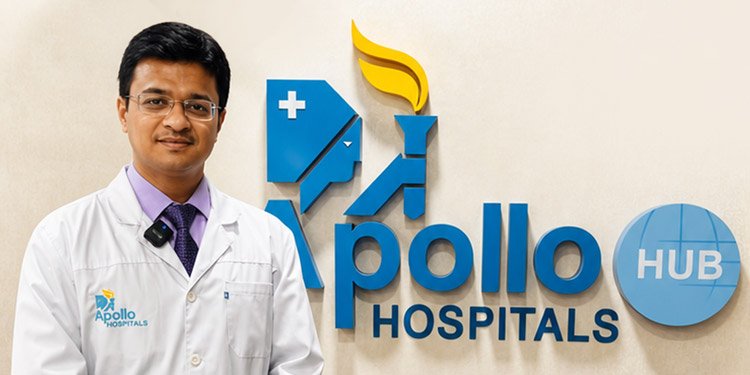
Cardiac care is entering a new era, with robotics, minimally invasive techniques, artificial intelligence and precision medicine redefining how heart disease is treated. In an interview with Medical Tourism Today, Dr. Varun Bansal, Senior Consultant – Minimally Invasive and Robotic Cardiac Surgery, Indraprastha Apollo Hospitals, New Delhi, discusses the evolution of cardiac surgery and the technologies shaping its future—from robotic procedures and precision surgery to LVADs, ECMO and transplantation.
Dr. Bansal, what are the most important lifestyle changes people can make to prevent heart disease, and how can early diagnosis and timely intervention help prevent the condition from progressing to complex surgery?
The most important point I would emphasise is that cardiovascular disease is not simply a disease of the heart—it is, to a large extent, a disease of lifestyle and cumulative risk exposure. Prevention therefore has to begin much before symptoms appear.
A heart-healthy lifestyle means maintaining an appropriate body weight, exercising regularly, eating a balanced diet with adequate vegetables, fruits, whole grains and fibre, avoiding tobacco in every form, limiting excessive alcohol consumption, sleeping adequately and learning to manage chronic stress. Equally important is controlling the major cardiovascular risk factors—blood pressure, diabetes, cholesterol and obesity.
Regular health screening becomes particularly important when there is a family history of premature coronary artery disease or when a person has risk factors such as diabetes, hypertension, smoking or dyslipidaemia.
Early diagnosis can fundamentally change the trajectory of cardiovascular disease. Coronary artery disease, for example, can often be identified before a patient develops a major heart attack. Similarly, valvular heart disease can be detected before irreversible changes occur in the heart muscle.
Timely intervention does not necessarily mean surgery. It means choosing the right treatment at the right time—whether that is lifestyle modification, medication, interventional cardiology or surgery.
When patients present late, we frequently have to deal with damaged heart muscle, impaired ventricular function, complications of previous heart attacks, severe valve disease or other advanced pathology. In such situations, treatment becomes more complex. So, my message to patients is simple: do not wait for symptoms to become severe before taking your heart health seriously. Prevention and early detection are among the most powerful forms of cardiac treatment.
* * *
Cardiac surgery has traditionally been associated with large incisions and prolonged recovery. How have minimally invasive and robotic techniques changed the surgical experience for patients, and which cardiac conditions are currently most suitable for these approaches?
The fundamental objective of cardiac surgery has not changed—we still need to perform the operation safely and achieve a durable cardiac result. What has changed dramatically is how we can reach the heart.
Traditional cardiac surgery often requires a median sternotomy, in which the breastbone is divided. Minimally invasive surgery allows us to perform selected procedures through much smaller access points, avoiding or reducing the need for a full sternotomy. Robotic surgery takes this concept further by using specialised instruments and a high-definition three-dimensional visualisation system.
For appropriately selected patients, this can translate into smaller incisions, less surgical trauma, reduced postoperative pain, earlier mobilisation, shorter hospitalisation and a faster return to normal activities. Importantly, however, minimally invasive surgery should not be equated simply with a smaller incision. The real objective is to achieve the same—or in selected circumstances better—surgical result with less physiological trauma.
Today, robotic and minimally invasive approaches are particularly well established for selected mitral valve repair and replacement procedures, certain tricuspid valve procedures, atrial septal defect closure, selected coronary artery bypass procedures, and some cardiac tumour and other structural heart operations.
The suitability depends on the patient’s anatomy, disease complexity, previous operations, associated illnesses, ventricular function and the surgeon and centre’s experience. I strongly believe that the operation should be tailored to the patient, rather than forcing every patient into a particular technology.
* * *
Robotic cardiac surgery is often described as one of the most technologically advanced frontiers in modern heart care. From a surgeon’s perspective, what specific advantages does robotic assistance offer in terms of precision, visualisation and surgical manoeuvrability?
Robotic surgery is essentially an extension of the surgeon’s capabilities. The robot does not operate independently; the surgeon remains completely responsible for every surgical decision and every movement.
One of the most important advantages is three-dimensional, high-definition magnified visualisation. The surgeon can see structures in considerably greater detail than may be possible with conventional two-dimensional visualisation.
The robotic instruments also provide multiple degrees of freedom of movement. Human wrists have a relatively limited range of motion, particularly when working through small ports. Robotic instruments can articulate inside the chest and reproduce wrist-like movements in a confined space.
Another important advantage is motion scaling and tremor filtration. Large movements made by the surgeon’s hands can be translated into very small, controlled movements at the instrument tip. These characteristics become particularly valuable when performing delicate reconstructive procedures—for example, suturing or repairing a mitral valve through a very small access route.
But technology by itself does not produce good surgery. The robot is an enabling technology; surgical judgement, experience, anatomical understanding and a highly trained team remain the decisive factors.
* * *
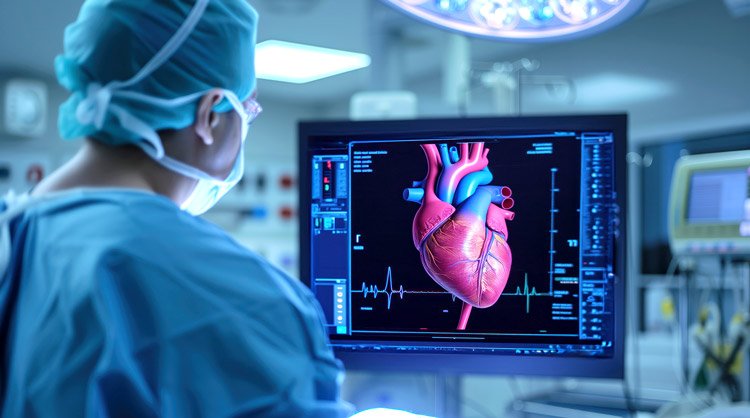
How do you decide whether a patient is best treated through conventional open surgery, minimally invasive surgery or robotic cardiac surgery?
This is one of the most important decisions we make, and I would never choose the surgical approach simply because a particular technology is available.
My first question is always: What is the safest and most effective way to treat this particular patient’s disease?
We assess the pathology, anatomy, severity of disease, ventricular function, age, previous operations, comorbidities, body habitus, pulmonary function and other relevant factors. We also study the imaging carefully, because the same operation may be straightforward in one patient and technically inappropriate in another.
The expertise and experience of the treating centre are equally important. A minimally invasive or robotic operation should not be undertaken merely to avoid a sternotomy if doing so compromises safety or the quality of the repair.
There are also patients for whom conventional surgery remains the best option—particularly when disease is extremely complex, when extensive reconstruction is required, or when the minimally invasive route does not provide an appropriate margin of safety.
I therefore look at the three approaches not as competing philosophies but as different tools in the cardiac surgeon’s armamentarium.
The correct question is not, “Can this operation be done robotically?” The more important question is, “What approach will give this patient the best combination of safety, durability and recovery?”
* * *
How is minimally invasive coronary bypass surgery changing treatment options for patients with coronary artery disease, particularly in terms of recovery and long-term outcomes?
Coronary artery bypass surgery remains one of the most effective treatments for appropriately selected patients with advanced coronary artery disease, particularly those with complex multivessel disease, diabetes or certain patterns of coronary anatomy.
Minimally invasive and robotic techniques have expanded the ways in which coronary bypass can be performed. In selected patients, we can harvest the internal mammary arteries using minimally invasive or robotic techniques and perform coronary anastomoses through a limited access approach.
One of the major attractions is reducing the surgical trauma associated with a full sternotomy. Patients can often mobilise earlier, experience less chest-wall disruption and return to normal activities sooner.
However, when discussing CABG, we must not lose sight of the most important endpoint: the long-term quality and durability of myocardial revascularisation. The goal is not to perform a minimally invasive operation at any cost. The goal is to combine the benefits of less invasive access with excellent coronary revascularisation.
As technology, imaging and surgical expertise continue to develop, I believe minimally invasive and robotic coronary surgery will become an increasingly important component of the spectrum of treatment available to appropriately selected patients.
* * *
How is personalised treatment changing cardiac care, particularly when patients with the same heart condition may require very different treatment approaches?
Personalised medicine is particularly relevant to cardiac surgery because two patients with what appears to be the same diagnosis may have completely different biological, anatomical and clinical circumstances.
For example, two patients may both have severe mitral regurgitation, but one may be an excellent candidate for repair through a robotic approach, while another may require a different surgical strategy because of the valve anatomy, ventricular function, previous surgery or associated disease.
Similarly, coronary artery disease cannot be treated simply by counting the number of blockages. We have to consider the patient’s age, diabetes, ventricular function, anatomy, arterial conduits, kidney and lung function, previous interventions and expected long-term benefit.
Modern cardiac care therefore increasingly relies on detailed imaging, advanced cardiac assessment, multidisciplinary decision-making and, where appropriate, computational and artificial-intelligence-based tools.
The future is moving away from a “one operation fits all” philosophy towards precision cardiac surgery, in which the procedure, access route and perioperative strategy are tailored to the individual patient.
* * *
What are some of the most challenging complex cardiac cases you manage, and how have advances in technology expanded the possibilities for treating such patients?
The most challenging patients are often those in whom several problems coexist—for example, severe coronary disease combined with poor ventricular function, complex valve disease, previous cardiac surgery, pulmonary hypertension or advanced heart failure.
Redo surgery can be particularly challenging because previous operations alter the normal anatomy and create adhesions, increasing the technical complexity and potential risks.
Patients with end-stage heart failure present another major challenge. Some may require advanced mechanical circulatory support, ECMO or transplantation, sometimes as a bridge from one therapy to another.
Technology has significantly expanded what we can accomplish. High-resolution imaging allows us to understand anatomy before entering the operating room. Three-dimensional reconstruction can assist planning. Modern perfusion technology, mechanical circulatory support systems, advanced anaesthesia and intensive care have transformed the management of critically ill patients.
Robotic and minimally invasive platforms have also expanded our ability to perform complex procedures through smaller access routes in appropriately selected patients.
But I would emphasise that complex cardiac surgery is rarely about one piece of technology. It is about integrating imaging, surgery, anaesthesia, perfusion, intensive care, cardiology and nursing into a highly coordinated team.
* * *
You have extensive expertise in heart transplantation, LVADs and ECMO. How do these advanced therapies fit into the modern management of patients with end-stage heart failure?
End-stage heart failure is a spectrum, and advanced therapies are used when conventional medical and interventional treatment is no longer sufficient.
For appropriately selected patients, heart transplantation remains the gold-standard definitive treatment for end-stage heart failure, but the availability of donor organs is limited. This is where mechanical circulatory support has become extremely important.
LVADs—left ventricular assist devices—can provide mechanical support to the failing ventricle. Depending on the clinical situation, an LVAD may be used as a bridge to transplantation, as a bridge to recovery in selected circumstances, or as long-term destination therapy.
ECMO occupies a somewhat different but complementary position. In patients with severe cardiac or cardiopulmonary failure, particularly those who deteriorate acutely, ECMO can provide temporary circulatory and/or respiratory support and may allow time for the underlying condition to recover or for a more definitive strategy to be implemented.
The critical issue is timing. Advanced heart failure therapies work best when patients are referred before irreversible multiorgan failure develops.
Modern heart failure care therefore requires close collaboration between heart-failure specialists, cardiologists, cardiac surgeons, intensivists, transplant teams, perfusionists and specialised nursing teams.
The most important message for patients and referring physicians is: advanced heart failure should not be considered a point at which treatment options have ended. In the right patient, there may be several sophisticated treatment pathways available.
* * *
Looking ahead, what do you believe will define the next major chapter in cardiac care—from robotic surgery and artificial intelligence to advanced mechanical circulatory support and transplant-based therapies?
I believe the next chapter of cardiac care will be defined by integration rather than by any single technology.
Robotic surgery will continue to evolve, with improved instrumentation, imaging and potentially increasing automation of repetitive components of surgery. Artificial intelligence will increasingly help us interpret imaging, predict risk, identify patients who may benefit from particular interventions and assist with surgical planning.
But AI will not replace the cardiac surgeon. Its greatest value will be in helping clinicians make better-informed decisions and potentially identifying patterns that may not be immediately apparent to the human eye.
Mechanical circulatory support will also continue to advance. Devices are becoming smaller and more sophisticated, and we are moving towards increasingly durable forms of support for patients with advanced heart failure.
Transplantation will remain a critical component of advanced cardiac care, while innovations in organ preservation, donor management and potentially xenotransplantation and bioengineering may eventually expand the availability of donor organs.
Perhaps the most exciting development is that these technologies will increasingly come together. We will have better imaging, better prediction, less invasive surgery, more sophisticated mechanical support and more personalised treatment.
But despite all this technology, the central principle will remain unchanged: the patient comes first.
The future of cardiac surgery is not simply about operating through smaller incisions or using more advanced machines. It is about achieving better outcomes with less physiological trauma, intervening earlier, preserving quality of life and making treatment increasingly precise and individualised.
That, in my view, is the real promise of modern cardiac surgery.
 Dr. Varun Bansal Dr. Varun Bansal is a Senior Consultant – Minimally Invasive and Robotic Cardiac Surgery at Indraprastha Apollo Hospitals, New Delhi, with extensive experience in cardiothoracic and vascular surgery. He holds a DNB in Cardiothoracic Surgery and has completed a Fellowship in Cardiovascular Surgery from Toronto. He has completed programs in Healthcare Management and Analytics from IIM Kozhikode and AI in Healthcare from NBEMS. He has also completed an advanced fellowship in cardiac surgery, heart transplantation and TAVI at Toronto General Hospital, University of Toronto, and is a Console Surgeon certified for the da Vinci Xi Robotic Surgical System. His areas of special interest include minimally invasive and robotic cardiac surgery, complex cardiac surgery, heart transplantation, LVAD and ECMO. Dr. Bansal has contributed to research and presentations in areas including robotic coronary surgery, LVADs, ECMO and complex cardiac procedures, reflecting his commitment to technology-driven, minimally invasive and precision cardiac care. |