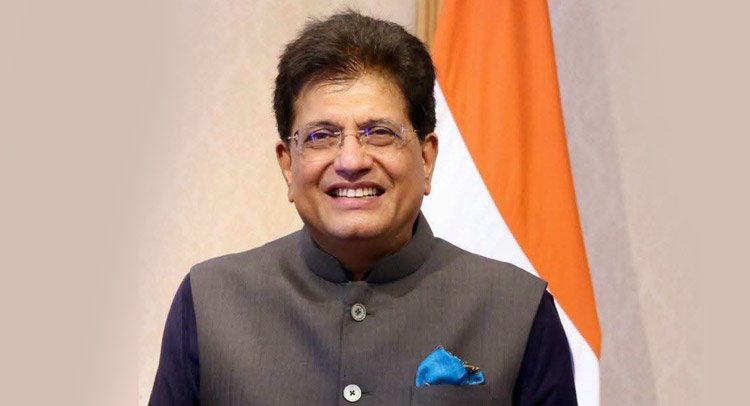
Union Minister of Commerce and Industry Shri Piyush Goyal has called for India to build on its position as the ‘pharmacy of the world’ and emerge as a leading global destination for medical and healthcare services.
Addressing the Pharma Machtech and Labnext Expo 2026 in New Delhi, Shri Goyal said India’s healthcare opportunity extends far beyond treatment. He highlighted the growing importance of prevention, wellness, caregiving, diagnostics, laboratory infrastructure, medical devices, telemedicine, teleconsultation, digital health, innovation and research and development for new medicines and advanced medical equipment.
Free Trade Agreements Could Expand Healthcare Export Opportunities
The Minister urged the healthcare and pharmaceutical industry to make greater use of opportunities created through India’s free trade agreements (FTAs).
He noted that before 2014, India’s free trade agreements collectively covered economies with a GDP of around $10 trillion. In comparison, the nine free trade and bilateral trade agreements finalised over the last four to four-and-a-half years cover economies with a combined GDP of around $60 trillion.
According to Shri Goyal, ongoing negotiations could further increase this coverage to approximately $75 trillion, creating opportunities for preferential lower-duty market access, services and mobility.
He also highlighted the government’s efforts to create new opportunities for young people and strengthen India’s position as a trusted international partner. He called upon industry stakeholders to contribute to the country’s development by helping expand access to quality education, healthcare and opportunities.
Medtech and Healthcare Could Drive Jobs and Startups
Shri Goyal identified medical and pharmaceutical machinery, consumables and related sectors as areas with significant potential for merchandise exports, import substitution and services exports.
He said the broader healthcare ecosystem has the potential to generate crores of jobs, thousands of business opportunities and lakhs of new startups, particularly in the medical technology (medtech) sector.
The Minister noted that growth in these areas could create new avenues for employment, entrepreneurship and income for young people while also supporting wider access to quality healthcare across India.
Push for Medtech Innovation and R&D
The Minister called for a stronger startup incubation ecosystem focused on medtech, medical equipment and consumables. He also emphasised the need to improve India’s design capabilities, copyright and patent frameworks and the wider intellectual property ecosystem.
He encouraged Indian companies and institutions to collaborate with international R&D centres, invite global innovators and major pharmaceutical companies to India, and establish design centres within the country.
Shri Goyal also called for greater use of technology partnerships, buyer-seller relationships and joint ventures to strengthen self-reliance in the sector.
He emphasised that India does not need to reinvent technologies that already exist globally. Instead, suitable global technologies can be brought to India while Indian innovations can be taken to international markets. He encouraged stakeholders to explore co-designing, co-developing, licensing, knowledge sharing and knowledge transfer.
Strengthening Self-Reliance in Medicines and Medical Equipment
The Minister stressed the importance of developing domestic capabilities in research, medicines and medical equipment, noting that Export Promotion Councils and industry stakeholders have an important role to play.
He also highlighted changes to the Goods and Services Tax (GST) aimed at improving affordability and opportunities for the sector.
Shri Goyal pointed to the government’s commitment of ₹1 lakh crore towards research and development, innovation and funding, and urged industry stakeholders to use these opportunities to develop new equipment, innovative drugs and medicines.
Building Resilient Healthcare Supply Chains
Strengthening the resilience of healthcare supply chains through greater indigenisation of equipment was another key priority highlighted by the Minister.
Recalling the experience of the COVID-19 pandemic, including shortages of oxygenators and ventilators, Shri Goyal stressed the need to learn from those challenges and build stronger domestic capabilities while maintaining high-quality standards.
He emphasised that there should be zero compromise on quality and standards as India expands its medical equipment and healthcare manufacturing capabilities.
India Can Serve Global Healthcare Needs
Shri Goyal said India should aim not only to provide high-quality healthcare to its own population but also to position itself as a global source of wellness and healthcare services.
He highlighted the potential of an integrated healthcare ecosystem involving Indian medical equipment and pharmaceuticals, patient care by Indian doctors, nursing and caregiving, technicians, hospital administrators, management professionals and engineering staff.
Such an integrated ecosystem, he suggested, could strengthen India’s position in the global healthcare market while creating opportunities across multiple segments of the healthcare value chain.
AI to Improve Healthcare Efficiency
Artificial Intelligence is also expected to play an increasingly important role in healthcare, according to the Minister.
Shri Goyal said AI could improve efficiency and help healthcare professionals perform their work better, smarter and faster. At the same time, he emphasised that human caregiving and nursing would continue to remain essential.
India’s R&D Advantage
The Minister also highlighted India’s cost advantage in research and development and called for greater collaboration among industry, academia, medical colleges, IITs and other centres of excellence.
He said such collaboration could significantly expand the scale of research and development in the country, particularly in areas such as innovation, medical design and clinical trials. He also highlighted the potential for manufacturing medical equipment in India.
Shri Goyal further noted that 100% Foreign Direct Investment (FDI) is permitted through the automatic route. Referring to the Economic Survey 2025–26, he said the pharmaceutical industry is shifting from volume to value.
Shared Testing Infrastructure for Indian Medical Equipment
The Minister called for strengthening the critical component ecosystem and domestic manufacturing capabilities through high-quality equipment, reiterating that there should be no compromise on quality.
He proposed establishing shared testing infrastructure and facilities where Indian medical equipment can be tested, benchmarked against the best products globally, certified and demonstrated to international customers.
He said the Government of India would support the acquisition of advanced technical testing equipment for such facilities in government-sponsored or university laboratories.
India’s Healthcare Ambition for 2047
Shri Goyal expressed confidence that coordinated efforts by industry, entrepreneurs, startups, researchers, healthcare professionals and other stakeholders can contribute to India’s journey towards becoming a developed nation by 2047.
India’s growing capabilities across pharmaceuticals, medtech, digital health, medical research, diagnostics and healthcare services could create opportunities not only for domestic healthcare delivery but also for exports and international medical value travel. Strengthening innovation, infrastructure, skills and global partnerships will be critical to turning this ambition into a sustainable healthcare growth story.
(Photo courtesy: piyushgoyal.in)