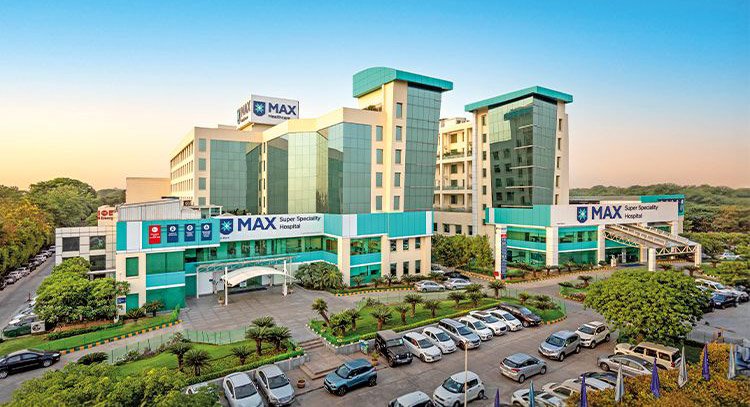
Max Super Speciality Hospital, Saket, has completed what it described as North India’s first four-way paired kidney exchange, giving four patients kidneys from four different donors whose own relatives could not donate directly.
The complex transplant involved patients and donors from Jammu and Kashmir, Delhi, Bihar and Nagaland. All four original donor-recipient pairs faced either blood-group mismatch or immunological incompatibility, making conventional transplantation impossible.
The hospital performed all eight surgeries on July 13 — four donor kidney removals and four transplant procedures. The operations began around 7 am and were completed by 6 pm, with five operating theatres working simultaneously. According to the hospital, all eight participants recovered well and were discharged.
The four cases involved different medical challenges. Tsutsangla Pongen, 34, from Nagaland needed a second kidney transplant but had developed donor-specific antibodies against her brother, Arikokba Pongen, 28.
In Jammu and Kashmir, 47-year-old Abdul Rouf Bhat was also awaiting a second transplant but could not receive a kidney from his sister, Nazneen Rehman Bhat, 42, because of immunological incompatibility.
Delhi-based Shivani Khurana, 46, was unable to accept a kidney from her husband, Varun Khurana, 49. She had developed antibodies against antigens shared by her husband following pregnancy and an earlier blood transfusion.
The fourth pair, Law Bahadur, 34, and his wife Nidhi Kumari, 36, from Bihar, faced an incompatible blood group.
Instead of abandoning the potential donations, doctors linked the four families through a paired kidney exchange. After extensive blood-group testing, HLA typing, cross-matching and immunological assessments, a compatible chain was established.
Under the exchange:
- Varun Khurana donated to Tsutsangla Pongen.
- Arikokba Pongen donated to Law Bahadur.
- Nidhi Kumari donated to Abdul Rouf Bhat.
- Nazneen Rehman Bhat donated to Shivani Khurana.
The hospital said the team used the Alliance for Paired Kidney Donation software to identify suitable donor-recipient combinations. Detailed immunological testing was then conducted to determine whether each proposed transplant was safe and feasible.
Because this was the first four-way paired kidney exchange of its kind in North India, the approval process required extensive documentation and scrutiny, according to the hospital.
The medical team made repeated presentations to the authorities before receiving the required permissions. The matter eventually reached the Delhi High Court through an appeal before the necessary approvals were obtained.
The transplant programme was led by Dinesh Khullar, Group Chairman, Department of Nephrology and Renal Transplant Medicine, and Anant Kumar, Chairman, Department of Urology and Kidney Transplantation, Max Saket. They were supported by Shafiq Ahmed, Senior Director, Urology, Andrology and Renal Transplant, BLK Max Hospital, and his team.
“Paired kidney exchange can open a new avenue for patients who have willing donors but are unable to undergo direct transplantation due to blood-group or immunological incompatibility,” Khullar said.
Kumar said the success of the four-way exchange demonstrated what could be achieved when families coordinate, and surgical teams execute a carefully coordinated plan for simultaneous procedures.
Ahmed said greater awareness and participation in kidney exchange programmes could help make better use of the limited pool of living donors and create more opportunities for patients waiting for suitable kidneys.
The successful four-way exchange highlights the potential of paired kidney donation for patients who have willing family donors but cannot undergo a direct transplant. By connecting compatible families across regions, such programmes could expand access to living-donor kidneys and offer new possibilities to patients facing prolonged waits for transplantation.
(Photo courtesy: maxhealthcare.in)