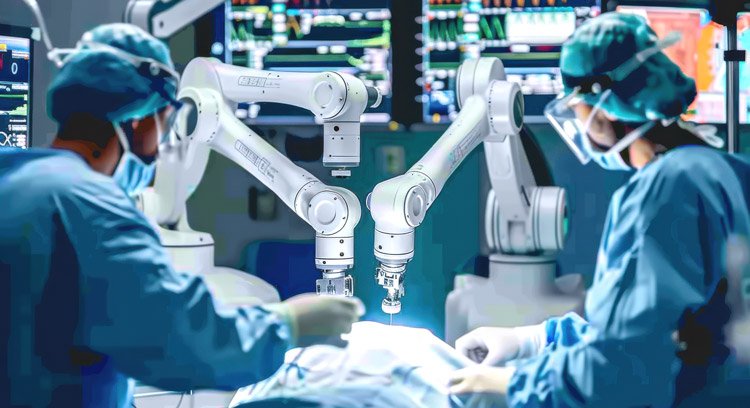
Robotic-assisted surgery is expanding rapidly across India, with Delhi-NCR emerging as the country’s largest hub for robotic systems and procedures, experts said at the Society of Robotic Surgery (SRS) India 2026 conference.
The conference marks the first time the global Society of Robotic Surgery has brought its international meeting to Asia, highlighting India’s growing capabilities in robotic, minimally invasive and technology-enabled surgical care.
Data presented at the meeting showed that 39 hospitals in Delhi-NCR currently have robotic surgical systems, while 11 institutions operate more than one system. The region has also witnessed a significant rise in robotic-assisted procedures over the past five years.
The number of procedures increased from 2,257 in 2021 to 3,594 in 2022, 5,024 in 2023, 7,595 in 2024 and 10,937 in 2025. This represents an almost five-fold increase over four years.
“Delhi NCR has emerged as a leading force in India’s robotic surgery journey, with the highest concentration of robotic-system installations in the country and a rapidly expanding volume of procedures,” said Dr Vivek Bindal, Organising Chairman, SRS India, and Principal Director and Head, Department of Minimal Access, Bariatric and Robotic Surgery, Max Hospital, Delhi.
According to Dr Bindal, the presence of robotic platforms across 39 hospitals, including multiple systems at 11 institutions, demonstrates the growing institutional acceptance and clinical expertise in robotic surgery across the region.
Robotic Surgery Expands Across Specialities
The adoption of robotic technology is no longer limited to a small group of surgical disciplines.
In Delhi-NCR, general surgery for benign conditions accounted for around 33 per cent of robotic procedures in 2025, followed by urology at 30.2 per cent and gynaecology at 22.1 per cent. General surgery for malignant conditions contributed another 10 per cent.
Robotic procedures are also being undertaken in areas such as head and neck surgery, thoracic surgery and cardiac surgery, reflecting the widening clinical applications of the technology.
The national growth has been equally significant. Across India, robotic-assisted procedures increased from 8,912 in 2021 to 44,857 in 2025, indicating that adoption is spreading beyond the country’s initial centres of robotic surgery.
“India is now at a defining moment in robotic surgery. The rapid rise in robotic procedures shows how quickly the technology is being adopted and how clinical expertise is expanding across the country,” said Dr Anup Kumar, Organising Chairman (Urology), SRS India, and Head, Department of Urology, Robotic and Renal Transplant, VMMC and Safdarjung Hospital.
Telesurgery Opens New Possibilities
India’s robotic surgery ecosystem is also beginning to move beyond conventional hospital-based procedures, with telesurgery emerging as a potential next step.
Dr Kumar recently performed a robotic telesurgery procedure remotely from Gurugram on a patient undergoing treatment at Preeti Kidney and Urology Hospital in Hyderabad, covering a distance of more than 1,600 km.
The procedure was later cited by Union Health Minister J P Nadda as an example of how technology could expand access to specialised surgical expertise.
A separate cross-border demonstration further illustrated the possibilities of remote robotic surgery. Dr Bindal led a live robotic telesurgery demonstration between India and China in collaboration with BORNS Robotics. Surgeons at Max Super Speciality Hospital, Vaishali, remotely operated a robotic console located nearly 5,000 km away in Chengdu, China, to perform pre-clinical procedures.
Such developments could eventually support remote surgical assistance, specialist training and tele-mentoring, while potentially extending specialised expertise to hospitals in Tier-2 and Tier-3 cities. However, experts emphasised that wider implementation would require robust clinical protocols, regulatory oversight, cybersecurity and reliable technology infrastructure.
Focus on Safety and Regulation
The rapid development of remote robotic surgery is also driving discussions around international standards and safeguards.
International consensus recommendations on remote robotic-assisted surgery published in the World Journal of Surgery in 2026 address several critical areas, including connectivity, cybersecurity, surgeon training, credentialing, emergency preparedness and regulatory requirements. Dr Bindal is among the authors of the publication.
Addressing the SRS India 2026 conference through a video message, Union Health Minister J P Nadda said India was at an “exciting juncture” in healthcare innovation, supported by advances in technology, artificial intelligence, digital health and surgical robotics.
“India has the opportunity not merely to adopt the technology of the future but innovate, develop and lead,” Nadda said, adding that the country was increasingly becoming an important global destination for healthcare innovation and advanced surgical technology.
India Moves Towards a Broader Robotic Surgery Ecosystem
With nearly 45,000 robotic-assisted procedures performed nationally in 2025, India’s robotic surgery landscape is moving beyond early adoption. The growing number of systems, procedures, trained specialists and technology partnerships points towards the development of a broader ecosystem around robotic surgery.
The next phase is likely to depend not only on increasing access to robotic platforms, but also on building specialised expertise, strengthening safety frameworks and making advanced surgical capabilities accessible to a wider population.