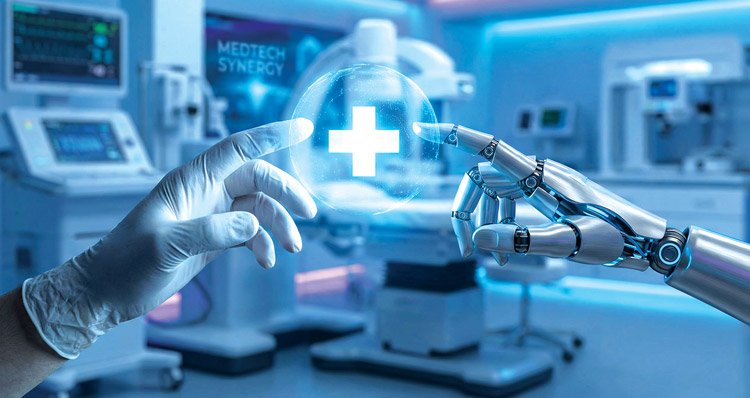
Artificial Intelligence (AI) is rapidly emerging as one of the most influential technologies shaping the future of healthcare. What began as a tool for data analysis has evolved into a powerful force driving innovation across the healthcare ecosystem. Hospitals, healthcare providers, researchers, and technology companies are increasingly leveraging AI to improve efficiency, support clinical decision-making, enhance patient experiences, and address some of healthcare’s most pressing challenges.
By Dr. Pilla Meena
For the medical tourism industry, the impact is particularly significant. International patients today seek not only high-quality and affordable treatment but also access to advanced technologies that can deliver greater precision, safety, and convenience. As healthcare becomes more digital and connected, AI is helping providers create a more seamless patient journey while strengthening their competitiveness in the global healthcare marketplace.
The Intelligent Revolution Reshaping Healthcare
Artificial Intelligence is no longer a futuristic concept confined to research laboratories. It has become an integral part of modern healthcare delivery, supporting everything from disease detection and treatment planning to hospital management and patient engagement. By processing vast volumes of data at remarkable speed, AI enables healthcare professionals to make more informed decisions while reducing inefficiencies across the system.
Industry analysts estimate that the global AI healthcare market could exceed US$180 billion by the early 2030s, driven by growing investments in digital health, medical imaging, precision medicine, and automation. As healthcare systems worldwide face rising patient volumes, workforce shortages, and increasing costs, AI is emerging as a critical tool for improving both clinical and operational performance.
Smarter Diagnostics and Earlier Disease Detection
One of the most impactful applications of artificial intelligence is in medical diagnostics. AI-powered systems can analyze patient records, laboratory results, clinical data, and medical images within seconds, helping healthcare professionals identify diseases earlier and more accurately.
These technologies are increasingly being used to detect cancers, cardiovascular diseases, neurological disorders, respiratory illnesses, and diabetic complications. By identifying subtle patterns that may be overlooked during routine evaluations, AI assists clinicians in making faster and more informed diagnostic decisions. Rather than replacing physicians, these systems serve as intelligent support tools that enhance clinical expertise and improve patient outcomes.
Revolutionizing Medical Imaging
Medical imaging has become one of the most successful and widely adopted areas of AI in healthcare. Advanced algorithms can evaluate X-rays, CT scans, MRI scans, mammograms, and ultrasound images with remarkable precision, helping radiologists identify abnormalities and prioritize urgent cases.
AI-assisted imaging tools can detect tumors, fractures, strokes, pulmonary conditions, and other abnormalities at earlier stages, often improving the speed and consistency of diagnosis. Many healthcare institutions are now integrating AI directly into radiology workflows, enabling faster reporting times and improved efficiency without compromising clinical accuracy.
For international patients, quicker and more accurate diagnoses can significantly reduce treatment delays and enhance overall care experiences.
Personalized Treatment and Precision Medicine
Healthcare is steadily moving away from a one-size-fits-all approach, and artificial intelligence is playing a major role in this transformation. AI enables healthcare providers to analyze genetic information, medical histories, laboratory results, lifestyle factors, and treatment outcomes to create individualized care plans tailored to each patient.
This personalized approach is particularly valuable in fields such as oncology, cardiology, and rare disease management. AI-powered decision support systems can help physicians predict treatment responses, identify potential complications, and recommend therapies that are most likely to benefit a specific patient. As a result, patients receive more targeted care with potentially better outcomes and fewer unnecessary interventions.
AI in Cancer Care
Cancer treatment is among the healthcare sectors experiencing the greatest impact from artificial intelligence. AI is supporting clinicians across the entire cancer care continuum, from early detection and diagnosis to treatment planning and long-term monitoring.
Advanced algorithms can analyze imaging studies and genetic profiles to identify tumors, determine disease progression, and recommend targeted treatment strategies. In radiation oncology, AI assists physicians in developing highly precise treatment plans that maximize effectiveness while minimizing damage to surrounding healthy tissues. Researchers are also using AI to accelerate cancer drug discovery and identify new therapeutic approaches. As precision oncology continues to evolve, AI is helping make cancer care more individualized, efficient, and effective.
The Rise of AI-Assisted Robotic Surgery
Robotic surgery has become an important part of modern healthcare, and artificial intelligence is enhancing its capabilities further. AI-assisted surgical platforms provide surgeons with greater precision, real-time guidance, and enhanced visualization during complex procedures.
By continuously analyzing surgical data and anatomical structures, these systems help surgeons navigate delicate tissues with greater confidence. The benefits often include smaller incisions, reduced blood loss, fewer complications, shorter hospital stays, and faster recovery times.
For medical tourists, these advantages can be particularly valuable, allowing patients to minimize downtime and return home sooner after treatment.
Digital Health and Virtual Care
Artificial intelligence is also driving the rapid growth of digital healthcare services. AI-powered virtual assistants, symptom checkers, remote monitoring systems, and patient engagement platforms are helping healthcare providers extend care beyond traditional hospital settings.
Patients can access healthcare information, receive medication reminders, schedule appointments, and monitor chronic conditions through intelligent digital tools. These technologies are improving accessibility while reducing the burden on healthcare professionals.
For international patients, digital health solutions facilitate communication before travel, during treatment, and after returning home, ensuring continuity of care throughout the medical journey.
Advancing Pathology and Laboratory Medicine
Pathology and laboratory medicine are benefiting significantly from AI-driven innovation. Digital pathology systems can analyze tissue samples and microscopic images with exceptional speed and consistency, helping pathologists identify abnormalities more efficiently.
AI tools are increasingly being used to detect cancer cells, classify tumors, and support diagnostic decision-making. In laboratory medicine, artificial intelligence assists with quality control, result interpretation, and predictive analysis, contributing to more accurate and efficient diagnostic processes.
Predictive Analytics and Preventive Healthcare
One of AI’s most promising contributions is its ability to help healthcare providers anticipate health risks before serious complications occur. Through predictive analytics, AI systems can identify patients who may be at higher risk of conditions such as heart disease, stroke, sepsis, diabetes complications, or hospital readmissions.
By enabling earlier intervention, predictive models support a more proactive approach to healthcare. This shift from reactive treatment to preventive care has the potential to improve outcomes, reduce healthcare costs, and enhance population health management.
Transforming Hospital Operations
Beyond clinical applications, artificial intelligence is reshaping how hospitals operate. Healthcare organizations generate vast amounts of operational data, and AI helps transform that information into actionable insights.
Hospitals are using AI to optimize bed utilization, improve operating room scheduling, forecast patient volumes, streamline supply chains, and manage workforce resources more effectively. Administrative functions such as billing, coding, documentation, and revenue cycle management are also increasingly automated.
These efficiencies contribute to lower operating costs, shorter waiting times, improved resource allocation, and a better overall patient experience.
Accelerating Drug Discovery and Medical Research
Artificial intelligence is significantly reducing the time required to develop new medicines. Traditional drug discovery can take many years and involve substantial financial investment. AI accelerates this process by analyzing vast scientific datasets, identifying promising compounds, predicting molecular interactions, and prioritizing potential drug candidates.
This capability is helping researchers advance treatments for cancer, rare diseases, neurological disorders, and infectious diseases. As AI continues to evolve, it is expected to play an increasingly important role in bringing innovative therapies to patients faster.
AI and Medical Tourism: A Powerful Partnership
As healthcare becomes increasingly technology-driven, AI is emerging as a key differentiator for medical tourism destinations. Hospitals that successfully integrate advanced technologies into their clinical and operational workflows can offer patients faster diagnoses, more personalized treatments, enhanced safety, and improved continuity of care.
Countries investing in AI-enabled healthcare infrastructure are strengthening their appeal to international patients seeking world-class treatment supported by cutting-edge innovation. For medical tourists, the combination of medical expertise and intelligent technology offers greater confidence throughout the treatment journey.
Conclusion
Artificial Intelligence is fundamentally transforming healthcare by making it more precise, efficient, personalized, and accessible. From diagnostics and medical imaging to robotic surgery, predictive analytics, hospital operations, and drug discovery, AI is influencing nearly every aspect of modern medicine.
For the medical tourism industry, this technological evolution presents tremendous opportunities. Patients increasingly seek healthcare providers that combine clinical excellence with advanced innovation, and AI is becoming central to delivering that promise. While human expertise remains irreplaceable, the partnership between healthcare professionals and intelligent technologies is creating a new era of medicine—one that offers better outcomes, greater efficiency, and a more connected patient experience across borders.