
India has firmly positioned itself in global medical tourism, but future growth will hinge on more than clinical excellence. As demand rises, the focus must shift toward building a seamless, patient-centric ecosystem that can support and sustain this expanding cross-border healthcare journey.
By Rajeev Taneja
—————————
India’s role in global medical value travel is no longer emerging. It is already established at meaningful scale, with the clinical depth, international patient confidence, and healthcare infrastructure needed to command a real seat at the global table. In 2024, India recorded 644,387 foreign tourist arrivals for medical purposes, following 659,356 in 2023 and 474,798 in 2022, underscoring that cross-border care demand is not a future opportunity alone, but an already active and expanding reality.
Yet the next phase of growth will not be defined by hospital capacity alone. India has already proven that it can attract global patients at scale. The more important question now is whether the ecosystem around care can scale with the same maturity. That is where the next boom in medical tourism will be won, not only by providers of care, but by the enablers that make care more accessible, coordinated, and continuous across borders.
India’s Advantage Is Already Bigger Than Cost
India’s appeal in medical value travel has moved well beyond affordability. The market was valued at US$ 7.69 billion in 2024 and is projected to reach US$ 14.31 billion by 2029, reflecting both strong momentum and growing international confidence in India’s healthcare proposition. IBEF also notes that 634,561 foreign tourists visited India for medical treatment in 2023, accounting for 6.87% of all foreign arrivals.
This growth reflects a broader shift in how India is being perceived. The country is no longer being chosen only because treatment is more affordable. It is increasingly being chosen because it can combine specialist expertise, advanced interventions, and better care access within a competitive cost structure. That is a different kind of leadership, and a more durable one.
The Real Differentiator Is the Patient Journey
International patients do not experience healthcare as a single procedure. They experience it as a journey, often one that begins long before admission and continues well after discharge. Diagnosis review, treatment planning, financial clarity, travel readiness, hospital alignment, language support, caregiver coordination, discharge, rehabilitation, and follow-up are all part of the care experience. For a patient travelling across borders, these touchpoints are not peripheral. They shape trust as much as the clinical outcome itself.
This is precisely why the next phase of medical value travel cannot be understood as a hospital story alone. Clinical excellence remains foundational, but the ability to organise the journey around that care is becoming equally important. As patient expectations rise and treatment pathways become more complex, the countries that lead will be those that can reduce friction, improve predictability, and deliver continuity across the full care lifecycle.
Why Enablers Will Define the Next Phase?
This is where organised medical value travel companies become central. Their role is not simply to facilitate admissions. Their role is to build the connective tissue of cross-border care. They help create stronger clinical corridors between source markets and destination providers, align patients with the right hospital networks, improve case management, support on-ground coordination, and enable continuity across pre-treatment, treatment, and post-treatment phases.
That role is becoming more important at a policy level too. The Union Budget 2025-26 stated that medical tourism and Heal in India will be promoted in partnership with the private sector, along with capacity building and easier visa norms. The Union Budget 2026-27 went further by proposing five Regional Medical Hubs, designed to include Medical Value Tourism Facilitation Centres, diagnostics, post-care, and rehabilitation infrastructure. That policy direction itself reflects a larger truth: the future of medical tourism will depend not only on treatment delivery, but on ecosystem design.
India Is Ready. The Next Task Is to Scale Intelligently
India already has several structural strengths in its favour. It remains the largest global supplier of generic medicines, accounting for around 20% of global supply, reinforcing its position as a serious healthcare economy with scale and resilience. What must come next is not proof of relevance, but better orchestration of leadership.
So, can India handle the next boom in medical tourism? Yes, because it is already handling it. The stronger question is whether India can deepen that leadership by building a more connected, better coordinated, and continuity-led healthcare ecosystem around the patient. The next chapter will not belong only to those who deliver care well. It will belong to those who can organise access to that care with greater trust, clarity, and consistency. That is how India will not just participate in the next boom, but define it.
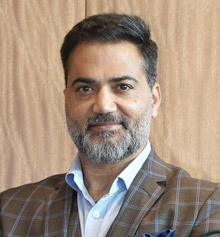
Mr. Rajeev Taneja is the Founder of GlobalCare Health, a global healthcare consulting organization focused on international patient services, medical travel, and enabling access to high-quality, affordable treatment through a network of accredited hospitals worldwide. The company provides end-to-end solutions ranging from medical travel coordination and digital health services to hospital development and cross-border care, supported by partnerships with over 150 leading medical institutions across Asia and the GCC.
A thoughtful and well articulated piece. It rightly highlights that India’s strength in medical tourism now goes beyond affordability to delivering high quality, trusted care…
Well explained and timely, Mr Taneja. Strengthening coordination, post-care, and patient support systems will be key if India wants to sustain and scale its leadership in medical tourism.
The shift from cost advantage to a holistic patient journey is spot on—India’s real opportunity lies in making healthcare seamless, not just affordable.
A patient-first ecosystem is exactly what will set India apart globally.
Great read. India’s next leap in medical tourism will truly depend on how well it connects care with experience.
Scaling infrastructure is important, but scaling patient trust will matter even more.
While the article raises valid points, it feels overly optimistic and somewhat overlooks the ground realities—like inconsistent service quality across hospitals and gaps in patient coordination. Without addressing these issues more directly, the “next boom” narrative seems a bit premature.
As a clinician, I agree that India has strong medical expertise, but sustained growth in medical tourism will depend on standardised protocols, better post-operative care systems, and stronger coordination beyond hospital boundaries.