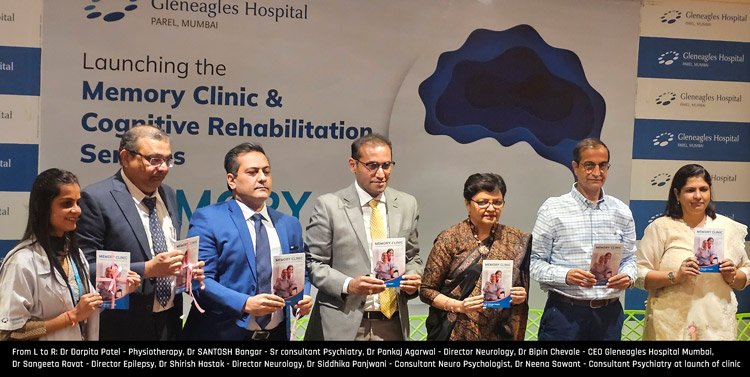
Gleneagles Hospital Mumbai launches a multidisciplinary Memory Clinic and Cognitive Rehabilitation Services on World Alzheimer’s Day
Mumbai, September 22, 2026: Forgetfulness is often considered a normal part of ageing. However, when memory lapses become frequent, begin affecting daily activities, or are accompanied by changes in attention, behaviour, communication or decision-making, they may require a more detailed evaluation.
Memory is not an isolated brain function. It is closely linked to attention, thinking, language, emotional well-being and the ability to perform everyday activities. Understanding persistent memory concerns can therefore be complex and may require expertise from multiple specialities.
Recognising this need, Gleneagles Hospital Mumbai has launched its Memory Clinic & Cognitive Rehabilitation Services, offering a multidisciplinary approach that brings together specialists from Neurology, Neuropsychology, Rehabilitation, Neuropsychiatric Care and Medical Social Work (MSW).
The integrated model brings clinical assessment, cognitive evaluation, rehabilitation and social support together within a coordinated care pathway. The objective is not only to understand why a person may be experiencing memory or cognitive difficulties, but also to assess how these challenges affect everyday life and determine the support that may be appropriate.
A Memory Clinic can play an important role in distinguishing occasional forgetfulness from more persistent cognitive concerns. A structured assessment can help clinicians evaluate areas such as memory, attention, language, reasoning and executive functioning, while neurological evaluation can help identify or assess possible underlying conditions.
Cognitive rehabilitation is another important component of the care approach. Rather than focusing solely on diagnosis, rehabilitation can help individuals develop practical strategies to manage cognitive difficulties in their daily lives. Depending on individual needs, this may include structured cognitive activities, memory strategies, attention exercises, functional rehabilitation and guidance for caregivers.
The multidisciplinary approach also recognises that cognitive difficulties can affect the entire family. Medical Social Work can support patients and caregivers in navigating the practical, emotional and social aspects of the care journey, while rehabilitation specialists can work towards improving functional independence.
Dr. Sangeeta Ravat, Director – Epilepsy, Gleneagles Hospital Mumbai, said, “Memory concerns should be looked at in the context of the individual and not simply attributed to ageing. A comprehensive assessment helps us understand the nature of the concern and identify the areas where support may be required. By bringing together Neurology, Neuropsychology, Rehabilitation and Medical Social Work, our Memory Clinic aims to provide a more holistic approach to patients and their families. Cognitive rehabilitation can further help individuals develop practical strategies to manage everyday cognitive challenges.”
Dr. Bipin Chevale, CEO, Gleneagles Hospital Mumbai, said, “Memory and cognitive health are important aspects of healthy ageing, yet concerns around them are often overlooked or accepted as a normal part of growing older. With the launch of our Memory Clinic and Cognitive Rehabilitation Services, we aim to bring together multiple areas of expertise under one coordinated approach. Our endeavour is to provide patients and families with greater awareness, timely guidance and comprehensive support throughout their care journey.”
The Memory Clinic & Cognitive Rehabilitation Services was launched at Gleneagles Hospital Mumbai on September 21, 2026, coinciding with World Alzheimer’s Day. The initiative aims to promote greater awareness of memory and cognitive health and highlight the importance of timely evaluation and appropriate support.
As awareness around cognitive health grows, a multidisciplinary approach can help shift the conversation from simply asking, “Why am I forgetting?” to understanding “What is causing the change, and what support can help?”