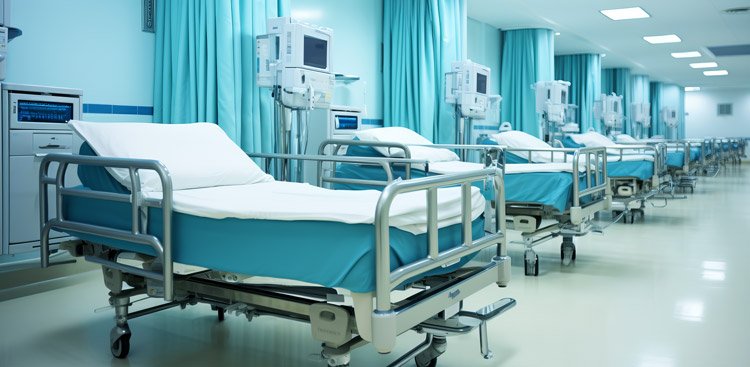
India’s hospital sector is entering a major expansion phase, with leading healthcare chains investing around ₹40,000 crore to add thousands of new beds. This capacity growth is also expected to drive fresh demand for medical equipment, particularly in specialised areas such as cardiac care, oncology, imaging and robotic surgery.
By MTT Research Desk
India’s organised private hospital sector is entering a major capacity expansion phase, with 18 large hospital chains expected to add more than 34,000 beds between FY26 and FY30. The expansion involves an estimated investment of around ₹40,000 crore, according to ICRA.
The additional beds could increase the combined capacity of these hospital groups by nearly 48–50 percent compared with March 2025 levels. However, the expansion represents only a small part of India’s overall hospital bed requirement.
India is estimated to have a shortage of about 2.4 million quality hospital beds. The country currently has around 1.3–1.5 beds per 1,000 people, below the National Health Policy 2017 target of two beds per 1,000 population.
Hospital capacity is being added mainly in metropolitan areas and tier-I and tier-II cities, where demand and paying capacity remain relatively strong.
Despite continued expansion, hospitals are maintaining healthy occupancy levels. During the June quarter of FY27, Max Healthcare reported 75 percent occupancy, Apollo Hospitals 70 percent, Fortis Healthcare 68.7 percent and Manipal Health Enterprises 65 percent.
Several newly added facilities have also reached operational break-even relatively quickly. Manipal’s new hospitals in Yelahanka and Kanakapura achieved EBITDA break-even within two and five months, respectively, while Aster DM Healthcare’s greenfield hospital in Kasaragod reached the milestone within nine months.
The expansion is not limited to adding beds. A significant portion of the investment is moving towards specialised medical services that require high-value equipment.
CRISIL identifies cardiac sciences, oncology, neurosciences, gastroenterology and orthopaedics as the major specialty areas driving hospital revenues. Together, these segments account for about 65 percent of hospital revenue, compared with around 59 percent before the pandemic.
Oncology has recorded particularly strong growth, increasing its contribution from about 12 percent to nearly 18 percent.
This specialty-led expansion is creating demand for advanced imaging systems, radiation therapy equipment, surgical technologies, infusion systems, catheterisation laboratories and robotic platforms.
ICRA estimates that hospitals are spending close to ₹1 crore per bed on average. The figure is higher for some major hospital groups, with Apollo Hospitals’ new capacity costing around ₹1.8 crore per bed and Narayana Health spending about ₹1.5 crore per bed.
The cost reflects the increasing focus on advanced diagnostics, minimally invasive procedures, cardiac care, robotics and other specialised services.
Aster DM Healthcare plans to add around 4,170 beds over the next three to four years, taking its total capacity to approximately 15,000 beds. Around 53 percent of the expansion is expected through brownfield projects at existing hospitals.
The company is prioritising oncology, cardiac sciences, transplantation and robotic surgery. Its robotic surgery volumes increased 80 percent year-on-year during the June quarter, while joint replacements rose 39 percent and transplants 19 percent.
Manipal Health Enterprises is also expanding its specialty-focused network across oncology, cardiac sciences, neurology, gastroenterology, orthopaedics and renal care. The company has allocated around ₹4,000 crore to add nearly 3,000 beds over the next three to four years.
Apollo Hospitals is targeting a capacity of 14,100 beds by FY31. Max Healthcare increased its operational capacity by 13 percent year-on-year to 5,379 beds during the June quarter, while Fortis added 100 brownfield beds and plans another 400 during FY27.
Narayana Health is investing around ₹3,000 crore to develop approximately 2,000 additional beds over three years. Rainbow Children’s Medicare has more than 900 beds under development.
The expansion can initially put pressure on profitability as new facilities take time to reach optimal occupancy. Apollo’s recently commissioned hospitals reported an EBITDA loss of ₹38 crore during the June quarter, while Max Healthcare cited newly commissioned brownfield beds and the acquisition of Kalinga Hospital as factors affecting margins.
Hospital operating margins have improved from around 14–15 percent before the pandemic to nearly 20–21 percent, according to CRISIL. Improved profitability is helping healthcare companies reinvest in new facilities and specialised services.
For medical technology companies, the expansion is likely to translate into stronger demand for high-value equipment. Imaging, oncology systems, cardiac technologies, robotic surgery and minimally invasive platforms are expected to account for a significant share of upcoming procurement.
At the same time, India’s broader shortage is concentrated in affordable and general hospital capacity, which may not receive the same level of investment as specialised private healthcare.
India’s hospital expansion is creating a significant opportunity for the medical equipment industry, particularly in advanced and specialty-care technologies. As organised hospital chains add capacity and expand centres of excellence, equipment procurement is expected to increasingly follow areas such as oncology, cardiac care, imaging and robotic surgery. However, bridging the country’s wider shortage of affordable hospital beds will require investment beyond the current specialty-focused expansion cycle.