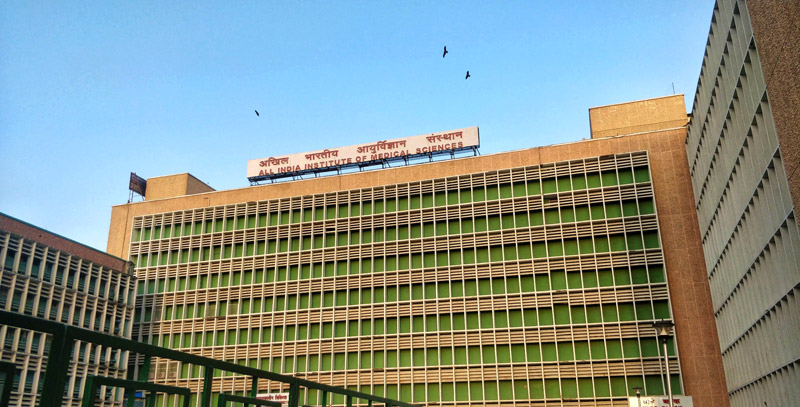
Faced with an ever-growing volume of diagnostic imaging, the All India Institute of Medical Sciences (AIIMS), New Delhi, has introduced artificial intelligence to assist in interpreting chest X-rays—one of the most frequently prescribed tests at the hospital.
Every day, close to 1,000 chest X-rays are performed at AIIMS for patients presenting with conditions ranging from breathing difficulties and chest pain to trauma and severe infections. With such heavy demand, radiology departments often struggle to keep pace, resulting in reporting delays that can stretch to a day or more.
To address this challenge, AIIMS has begun using an AI-powered software that can analyse chest X-rays and produce provisional reports within five to ten minutes. The technology has been developed by a Mumbai-based private healthtech firm and has received approval from the US Food and Drug Administration (FDA).
“This AI tool dramatically speeds up initial assessment and allows clinicians to identify potential abnormalities much sooner,” said Dr Raju Sharma, professor and head of the radiology department at AIIMS.
The software relies on deep learning, a branch of artificial intelligence trained on vast datasets, to recognize patterns and flag abnormalities such as lung nodules and other early warning signs visible on chest radiographs.
Hospital officials have been clear that the technology is intended to support doctors, not replace them. According to Dr Sharma, the system’s primary role is to help with triaging—ensuring that cases showing possible abnormalities are prioritised for faster clinical attention.
“All images undergo a detailed review by a group of radiologists and clinicians before treatment begins,” Dr Sharma said. “The bottom line is that it might work 24/7, but the decision is that of a radiologist.”
AIIMS is also planning to build its own in-house AI solution in the future. The current software was adapted during a pilot phase to suit the institute’s requirements.
“The system was customized during a pilot phase, and AIIMS aims to eventually develop its own AI tool. While still experimental, it is already helping improve workflow by easing workload pressure, speeding care, and enhancing diagnostic accuracy,” said Dr Devasenathipathy K, professor of radio diagnosis at AIIMS.
The scale of daily operations highlights why such support is needed. The radiology outpatient department alone handles around 1,000 patients each day. During regular hours, four to five radiologists manage routine chest X-rays, while night shifts involve additional responsibilities such as CT scans and ultrasound reporting.
“The system generates provisional reports, which are always reviewed by radiologists and clinicians before treatment. This helps reduce turnaround time,” Dr Devasenathipathy explained.
To ensure safety and accuracy, AI-generated findings are closely monitored. “We carry out weekly joint conferences to ensure thorough review and discussion of all AI-assisted reports. There is strong oversight, and these findings are never used in isolation,” he said.
For patients, the change could mean quicker consultations and earlier clinical decisions. Preliminary reports can now be available by the time patients return to their doctors after an X-ray, improving the flow of care.
The benefits are especially significant during emergencies. Late-night and early-morning shifts are often handled by junior doctors, who may not have immediate access to senior specialists.
“Without quick initial results, it can be difficult to identify which patients need urgent attention first,” Dr Sharma noted.
The AI system helps by automatically flagging critical findings related to the lungs, heart, bones and diaphragm. According to doctors, the software has a sensitivity of 99.7%, meaning it detects nearly all abnormalities.
“In emergency situations, junior doctors can use the software for support and learning, which helps reduce missed findings and speeds treatment,” Dr Devasenathipathy said.
With artificial intelligence now integrated into its radiology workflow, AIIMS is taking a significant step toward faster diagnostics, better prioritization of critical cases, and reduced strain on healthcare professionals—while keeping final medical decisions firmly in human hands.
(Photo courtesy: Wikipedia/Vishnoi M)