By Dr. Pawan Poddar, Director of Cath Lab and Senior Consultant Interventional Cardiologist, Yashoda Hospitals, Hyderabad.
Heart disease rarely announces itself with a single dramatic moment. In most cases, the body sends out quiet signals for weeks, months, or even years before a serious cardiac event occurs. The trouble is, these signals — mild chest discomfort, unusual tiredness, breathlessness, or a fluttering heartbeat — are easy to dismiss as stress, acidity, poor sleep, or simply “getting older.”
Recognising these early warning signs, understanding who is most at risk, and knowing what modern cardiac care can offer are essential steps toward protecting long-term heart health.
Understanding Heart Disease
Heart disease is an umbrella term for a range of conditions affecting the heart and blood vessels, including:
• Coronary artery disease
• Heart attack
• Heart failure
• Arrhythmias (irregular heartbeats)
• Heart valve disorders
• Cardiomyopathy (disease of the heart muscle)
• Congenital heart defects
Some of these conditions develop gradually and remain silent for years, which is exactly why routine health monitoring matters — particularly for people with known risk factors.
Early Warning Signs You Shouldn’t Ignore
- Chest Pain or Discomfort
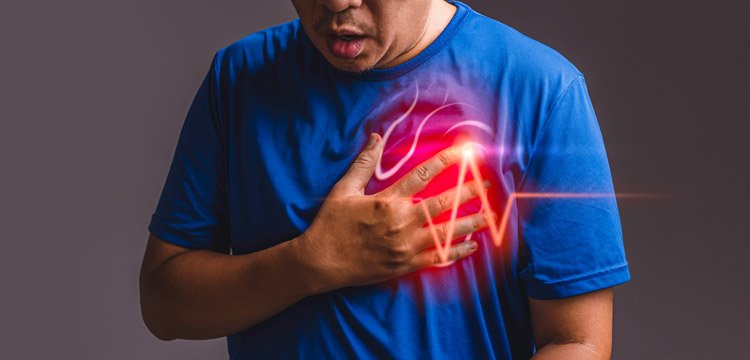
This is the symptom most people associate with heart trouble, and for good reason. It may feel like pressure, tightness, heaviness, squeezing, or a burning sensation — not always sharp pain. It can occur during activity or at rest and may spread to the shoulder, arm, back, neck, jaw, or upper abdomen.
Seek emergency care immediately if chest discomfort occurs alongside sweating, breathlessness, nausea, dizziness, or weakness. - Shortness of Breath
Breathlessness during routine activities, while climbing stairs, lying down, or even at rest can signal that the heart isn’t pumping efficiently. This symptom sometimes appears before chest pain, making it an important early clue rather than one to brush aside. - Unusual or Persistent Fatigue
Feeling tired after a poor night’s sleep is normal. Persistent exhaustion that doesn’t improve with rest — especially when routine tasks suddenly feel difficult — is different. This is a particularly common but overlooked symptom in women. - Irregular or Rapid Heartbeat
Palpitations may feel like a racing heart, fluttering, skipped beats, or pounding. Occasional episodes may be harmless, but frequent or persistent palpitations — especially with dizziness, fainting, chest pain, or breathlessness — need evaluation. - Dizziness or Fainting
Sudden light-headedness or fainting can stem from low blood pressure, abnormal heart rhythms, or other causes. Repeated episodes, particularly alongside chest pain or palpitations, warrant prompt medical attention. - Swelling in the Legs and Feet
When the heart struggles to pump efficiently, fluid can accumulate in the lower limbs. Persistent swelling — especially combined with breathlessness or rapid weight gain — should be checked by a doctor. - Reduced Exercise Tolerance
A gradual decline in your ability to do things you once managed easily — walking short distances, climbing stairs, or completing daily chores — shouldn’t automatically be blamed on age. - Excessive Sweating
Unexplained cold sweats, particularly paired with chest discomfort, nausea, or dizziness, can be a warning sign requiring urgent evaluation. - Nausea or Indigestion-Like Symptoms
Some cardiac events present with nausea, upper abdominal discomfort, or indigestion-like sensations rather than classic chest pain — a pattern more common in women and often mistaken for a stomach issue.
Heart Attack: Know the Signs
A heart attack occurs when blood flow to part of the heart muscle is severely restricted or blocked. It is a medical emergency.
Warning signs include:
• Chest pressure or discomfort
• Pain spreading to the arm, shoulder, jaw, back, or neck
• Shortness of breath
• Cold sweating
• Nausea
• Dizziness
• Unusual weakness
Symptoms can vary between individuals — older adults and people with diabetes, in particular, may experience less typical presentations. If you suspect a heart attack, don’t wait for symptoms to pass. Call for emergency help immediately, and never drive yourself to the hospital.

Who is at Higher Risk?
Certain factors increase the likelihood of developing cardiovascular disease:
• High blood pressure – often produces no obvious symptoms, making regular monitoring essential
• Diabetes – damages blood vessels over time
• High cholesterol – contributes to plaque buildup in arteries
• Smoking – significantly damages blood vessels
• Obesity – linked to hypertension, diabetes, and abnormal cholesterol
• Physical inactivity – contributes to weight gain and poor cardiovascular fitness
• Family history – especially heart disease in close relatives at a younger age
• Age – risk increases over time, though younger adults are increasingly affected too
Notably, heart disease is no longer confined to older populations. Sedentary lifestyles, poor diets, chronic stress, and rising obesity rates mean younger adults are seeing cardiac events more often than in previous decades.
Advances in Modern Cardiac Diagnostics
Cardiac care has evolved considerably, offering doctors more precise tools to detect problems early:
- Electrocardiogram (ECG) – records the heart’s electrical activity to identify rhythm abnormalities
- Echocardiography – uses ultrasound to assess heart chambers, valves, and pumping function
- Stress testing – evaluates how the heart performs under physical exertion
- Coronary angiography – assesses blood flow through the coronary arteries when blockage is suspected
- Advanced imaging (CT/MRI) – provides detailed views of heart structure when needed
- Blood tests – cardiac biomarkers, cholesterol, and blood sugar levels offer valuable risk insights
Emerging technology is also playing a growing role. Smartphone-based ECG devices and wearable sensors now allow some patients to track heart rhythm and share data with their doctors remotely, potentially catching abnormalities earlier than traditional check-ups alone.
Specialised Areas of Cardiac Care
Modern cardiology extends well beyond general check-ups:
• Electrophysiology focuses specifically on heart rhythm disorders such as atrial fibrillation, tachycardia, and bradycardia.
• Cardiothoracic surgery becomes necessary when medication or minimally invasive procedures aren’t sufficient — covering conditions affecting the heart, lungs, and chest structures.
• Interventional procedures, such as angioplasty with stent placement, can restore blood flow through blocked arteries without major surgery.
• Cardiac rehabilitation programmes combine supervised exercise, nutrition guidance, and counselling to support recovery after a cardiac event.
When to See a Cardiologist
You don’t need to wait for symptoms to become severe. Consider a consultation if you experience:
• Recurrent chest discomfort
• Unexplained breathlessness
• Frequent palpitations
• Repeated dizziness or fainting
• Persistent swelling
• Reduced exercise tolerance
• A strong family history of heart disease
• Abnormal results from routine screening
Protecting Your Heart
Prevention remains one of the most powerful tools available:
• Eat heart-healthy — emphasise vegetables, fruits, whole grains, lean proteins, and limit salt, added sugar, and saturated fats
• Stay physically active — aim for regular activity such as walking, cycling, swimming, or yoga
• Avoid tobacco — smoking cessation is one of the single most effective steps for heart health
• Maintain a healthy weight
• Manage stress through relaxation techniques, exercise, and adequate sleep
• Get regular screenings for blood pressure, blood sugar, and cholesterol, particularly after age 35–40
Taking Heart Symptoms Seriously
Heart disease often progresses quietly, and its earliest signals — mild chest discomfort, breathlessness, fatigue, palpitations, or swelling — are easy to explain away. But these symptoms, when persistent, recurrent, or combined with other warning signs, deserve proper medical evaluation rather than assumption.
The encouraging reality is that modern cardiac care has never been better equipped to detect problems early and manage them effectively. Combining awareness of your body’s signals with regular check-ups, healthy lifestyle choices, and timely consultation with a cardiologist gives you the best possible foundation for long-term heart health. The right time to pay attention to your heart is before a serious problem develops — not after.

Dr Pawan Poddar is Director of Cath Lab and Senior Consultant Interventional Cardiologist at Yashoda Hospitals, Malakpet, Hyderabad. He holds an MD in Internal Medicine from the All India Institute of Medical Sciences (AIIMS), New Delhi, and a DM in Cardiology from the Post Graduate Institute of Medical Education and Research (PGIMER), Chandigarh. He is also a Fellow of the Society for Cardiovascular Angiography and Interventions (FSCAI), Fellow of the European Society of Cardiology (FESC) and Fellow of the American College of Cardiology (FACC).
With 16 years of experience, Dr Poddar has extensive expertise in interventional cardiology and complex cardiac procedures. He has performed more than 15,000 diagnostic coronary angiograms and over 3,500 coronary angioplasty and stenting procedures. His clinical expertise includes complex coronary interventions such as left main and bifurcation stenting, chronic total occlusion (CTO) interventions and saphenous vein graft interventions.
His areas of expertise also include advanced coronary imaging and plaque-modification techniques, including intravascular ultrasound (IVUS), optical coherence tomography (OCT), rotational atherectomy and intravascular lithotripsy (IVL). He also has experience in structural heart interventions, including transcatheter aortic valve replacement (TAVR), valve-in-valve procedures and device closures for congenital heart conditions.
Dr Poddar also performs peripheral vascular interventions, including carotid and renal angioplasty and stenting, as well as pacemaker, ICD and cardiac resynchronisation therapy (CRT) procedures. His clinical experience extends to paediatric cardiac catheterisations and selected structural interventions.
He is a life member of the Cardiology Society of India and the Paediatric Cardiology Society of India and is associated with international professional organisations including the American College of Cardiology, European Society of Cardiology and Society for Cardiovascular Angiography and Interventions.