
For many Indian couples, starting a family is no longer a straightforward journey. Fertility concerns are entering conversations earlier, while changing social patterns, reproductive health challenges and modern living are reshaping the path to parenthood. Behind the growing demand for fertility care lies a complex story—one that involves both men and women and extends far beyond a single medical cause. Understanding what is driving this shift is essential to addressing infertility with greater awareness, timely care and less stigma.
By MTT Research Team
Infertility is increasingly becoming a subject of concern among Indian couples. Fertility clinics are expanding, conversations around IVF and assisted reproductive technology (ART) are becoming more common, and many couples are beginning their families later than previous generations. At the same time, doctors are encountering patients with conditions such as polycystic ovary syndrome (PCOS), endometriosis, obesity, diminished ovarian reserve and male-factor infertility.
But there is an important distinction between infertility becoming more visible and proving that its biological prevalence is increasing uniformly across India.
The World Health Organization (WHO) estimates that about one in six people of reproductive age worldwide experience infertility during their lifetime. WHO defines infertility as the inability to achieve pregnancy after 12 months or more of regular, unprotected sexual intercourse. It can result from male factors, female factors, a combination of both, or sometimes remain unexplained.
India does not have a single, recent nationwide infertility surveillance system that can conclusively establish that infertility has increased by a particular percentage over a defined period. Indian studies have produced different estimates depending on the population, age group, definition and methodology used. One analysis of Indian demographic data, for example, estimated infertility at 18.7 per 1,000 women among women married for at least five years and currently in union.
So what is actually driving the growing concern?
The answer lies in a combination of age, changing family patterns, reproductive disorders, male health, lifestyle, infections, environmental exposure and improved diagnosis.
Delayed Parenthood Is Changing the Fertility Equation
One of the most important factors is when couples begin trying to have children.
For women, age is a fundamental biological determinant of fertility. The number and quality of eggs decline with age, with the decline becoming more significant as women move through their 30s and particularly after 35. Consequently, a couple that begins trying for a first child at 32 or 35 faces a different biological situation from a couple that begins trying at 24 or 25.
This does not mean that pregnancy after 35 is impossible. Many women conceive naturally and have healthy pregnancies in their late 30s and beyond. However, the probability of conception per menstrual cycle generally decreases with advancing maternal age, while miscarriage and chromosomal abnormalities become more common.
This creates a modern paradox.
Indian couples may be more financially prepared and professionally established before starting a family, but reproductive biology does not necessarily adjust to these social changes.
Career development, longer education, financial pressures, urban housing costs, marriage at a later age and the desire to achieve professional stability can all contribute to postponing parenthood.
The consequence is not necessarily that every younger generation is biologically less fertile. Rather, more couples may be attempting conception at ages when natural fertility is already declining.
The Male Factor Can No Longer Be Ignored
Infertility is often incorrectly perceived as predominantly a women’s problem. Medical evidence does not support that assumption.
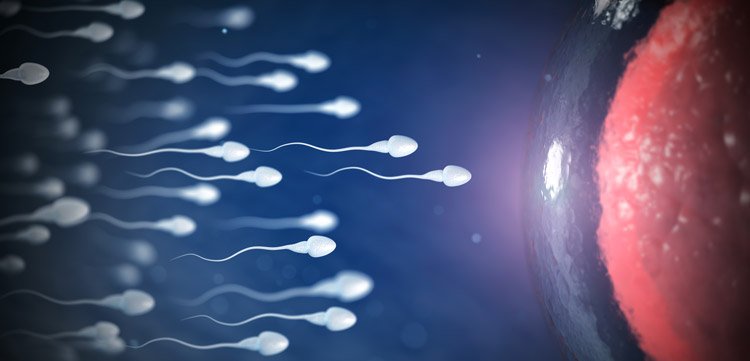
Male factors can include low sperm concentration, reduced sperm motility, abnormal sperm morphology, obstruction of the reproductive tract, hormonal disorders, testicular problems and certain genetic conditions. WHO’s current infertility guidance specifically recognises male reproductive disorders as important causes of infertility.
Research has traditionally estimated that men are solely responsible for roughly 20–30% of infertility cases and contribute to around half of cases overall, although exact proportions vary between populations and studies.
This is particularly important in India because social attitudes can still lead couples to initially investigate only the woman.
A fertility evaluation should therefore normally involve both partners.
For a man, a basic semen analysis can provide important information about sperm concentration, movement and morphology. Further testing may be required depending on the findings.
The growing recognition of male-factor infertility is changing the conversation from “why can’t the woman conceive?” to a more scientifically accurate question:
What is affecting the reproductive health of either or both partners?
Sedentary Lifestyles and Obesity Are Part of the Problem
Modern urban life has brought convenience—but also less physical activity, more sedentary work and easy access to calorie-dense food.
Obesity is associated with impaired fertility in both women and men. WHO identifies obesity, smoking and excessive alcohol consumption among lifestyle factors associated with increased infertility risk.
In women, excess weight can interfere with ovulation and hormonal regulation. It can also worsen metabolic abnormalities associated with PCOS.
In men, obesity can be associated with hormonal changes and poorer semen parameters.
However, the relationship should not be reduced to “being overweight causes infertility.” Fertility is affected by multiple interacting factors, including age, genetics, metabolic health, reproductive disorders and environmental exposure.
Likewise, being thin does not automatically protect someone from infertility. Very low body weight and inadequate nutrition can also disturb reproductive function.
The goal is therefore metabolic and reproductive health—not simply a particular number on the weighing scale.
PCOS Is a Major Reproductive Health Issue
Polycystic ovary syndrome has become an increasingly recognised condition among Indian women.
WHO describes PCOS as a common hormonal disorder affecting an estimated 10–13% of reproductive-aged women globally. It is the most common cause of anovulation and is a leading cause of infertility. Importantly, WHO estimates that as many as 70% of women with PCOS worldwide may be unaware that they have the condition.
PCOS can cause irregular periods, abnormal ovulation, increased androgen activity, acne and excess facial or body hair. Not every woman with PCOS will experience infertility, and not every woman with irregular periods has PCOS.
But when ovulation becomes irregular or absent, opportunities for conception can decrease.
This is particularly relevant in India because many women may normalise irregular periods for years, assuming that menstrual irregularity is simply a lifestyle issue or a normal variation.
That can delay diagnosis.
Endometriosis: The Hidden Cause of Infertility
Another condition that deserves greater attention is endometriosis.
Endometriosis occurs when tissue resembling the lining of the uterus grows outside the uterine cavity. It can cause pelvic pain, painful periods and difficulties with conception.
A review of Indian research has estimated that endometriosis may affect tens of millions of women in India, although precise national prevalence remains difficult to establish because diagnosis is frequently delayed and studies use different methodologies.
International evidence indicates that endometriosis is substantially more common among women experiencing infertility than in the general reproductive-age population.
The problem is that symptoms can sometimes be dismissed.
Severe menstrual pain is occasionally treated as something women are simply expected to tolerate. But persistent or disabling menstrual pain, chronic pelvic pain or pain during intercourse warrants medical assessment.
Earlier recognition of endometriosis may help some women preserve reproductive options and receive appropriate treatment sooner.
Tubal Damage and Reproductive Tract Infections
Not all fertility problems originate from hormones or lifestyle.
The fallopian tubes are essential for natural conception because they provide the pathway through which sperm and egg meet. Damage or blockage can therefore prevent conception.
WHO identifies tubal disorders as an important cause of female infertility. Tubal damage can result from untreated sexually transmitted infections, pelvic inflammatory disease, complications from unsafe abortion, postpartum infection or previous pelvic and abdominal surgery.
Some reproductive tract infections can remain asymptomatic, meaning a person may not realise that an infection has occurred until fertility problems emerge later.
This makes sexual and reproductive health education, early diagnosis and appropriate treatment of infections important components of infertility prevention.
The issue is particularly sensitive in India because discussions about sexually transmitted infections can still carry stigma. That stigma can discourage people from seeking timely testing and treatment.
Air Pollution May Be Another Piece of the Puzzle
India’s severe air-pollution burden has generated increasing scientific interest in reproductive health.
A 2026 meta-umbrella analysis published in Fertility and Sterility examined evidence linking air pollution with semen quality. It found statistically significant associations between higher pollution exposure and poorer measures of sperm motility, progressive motility and morphology, while sperm concentration was also inversely associated with pollution exposure. The researchers described the effects as modest but potentially important at a population level.
A separate 2025 systematic review also reported an association between outdoor air pollution exposure and reduced semen volume.
These findings do not mean that air pollution makes an individual infertile, nor do they prove that pollution is responsible for India’s fertility trends.
They do, however, strengthen the case for treating environmental pollution as a reproductive-health issue worthy of further research.
Pollutants can potentially affect reproductive biology through oxidative stress, inflammation and endocrine disruption. WHO also notes that environmental pollutants and toxins can directly affect eggs and sperm.
Heat Exposure and Occupational Risks
India’s changing climate and high temperatures also raise questions about male reproductive health.
Sperm production is temperature-sensitive. Research has long suggested that substantial occupational heat exposure can adversely affect sperm production and quality.
This may matter particularly for workers exposed to high temperatures for prolonged periods—such as those working around furnaces, industrial environments, kitchens or other hot workplaces.
Emerging research is also examining how combinations of occupational heat, air pollution, sleep disruption and lifestyle factors may influence semen quality.
This is an area where India needs considerably more large-scale, population-based research.
Smoking, Alcohol and Other Lifestyle Exposures
Smoking has well-established links with poorer reproductive outcomes, while excessive alcohol consumption can also adversely affect fertility.
Tobacco smoke exposes the body to numerous toxic chemicals that can contribute to oxidative stress and cellular damage. In men, smoking has been associated with poorer semen parameters; in women, smoking can adversely affect reproductive health and pregnancy outcomes.
WHO specifically lists smoking and excessive alcohol consumption among lifestyle factors associated with infertility.
The conversation should also include anabolic steroids and non-medical use of hormones.
Some men use anabolic steroids to increase muscle mass without understanding that these substances can suppress the body’s own reproductive hormone system and impair sperm production. WHO lists anabolic steroids among factors capable of producing abnormal semen parameters.
Stress Is Important—but It Should Not Become a Convenient Explanation
Stress is frequently blamed for infertility.
The reality is more complicated.
High psychological stress can affect sleep, sexual function, behaviour and, in some circumstances, reproductive hormonal pathways. Chronic stress may also indirectly contribute through changes in diet, physical activity, smoking or alcohol consumption.
But telling an infertile couple to “just relax” is neither scientifically adequate nor compassionate.
Stress should be regarded as one possible contributor within a complex biological and social system, not as an explanation for unexplained infertility.
Infertility itself can generate substantial psychological distress, creating a vicious cycle in which the medical problem causes emotional stress rather than the stress being the original cause.
The Nutrition Paradox
India faces a particularly complicated nutritional environment.
On one side are nutritional deficiencies and undernutrition; on the other are obesity, insulin resistance and diets high in refined carbohydrates, ultra-processed foods, sugar and unhealthy fats.
Both extremes can affect reproductive health.
A balanced dietary pattern containing adequate protein, vegetables, fruits, whole grains, healthy fats and essential micronutrients supports general health and reproductive function.
However, couples should be cautious about fertility supplements marketed as quick solutions.
There is no universal “fertility diet” that can overcome conditions such as blocked fallopian tubes, severe male-factor infertility, advanced endometriosis or age-related decline in ovarian reserve.
The Psychological and Social Cost of Infertility
The medical problem is only one part of the story.
In India, couples experiencing infertility may also face questions from relatives, pressure to produce a child, marital tension and social stigma.
Women are often blamed disproportionately, even when the infertility factor is male or affects both partners.
This can lead to delayed medical evaluation, secrecy and unnecessary emotional suffering.
A more scientifically informed approach would treat infertility as a couple’s reproductive-health issue, not as a test of masculinity, femininity or marital success.
The WHO’s current global infertility guidance emphasises appropriate diagnosis and progressively advancing treatment—from fertility counselling and management of underlying causes to treatments such as intrauterine insemination and IVF when medically appropriate.

Are More Indian Couples Actually Becoming Infertile?
This is perhaps the most important question—and the answer requires caution.
There is not enough high-quality, nationally representative longitudinal evidence to say that infertility has risen uniformly across India’s population by a specific percentage.
Different Indian studies have reported different prevalence estimates. A recent systematic review, for example, found substantial variation in estimates of primary and secondary infertility and noted that definitions and study populations influence the results.
At the same time, several factors can make infertility appear increasingly common in everyday life:
- Couples are more aware of infertility.
- More couples are actively seeking medical treatment.
- Fertility clinics and diagnostic facilities have expanded.
- People are increasingly discussing male infertility.
- Couples are postponing parenthood.
- Conditions such as PCOS and endometriosis are being recognised more often.
- Fertility testing has become more accessible.
- IVF and other assisted reproductive technologies are more visible.
Therefore, the rise in infertility conversations should not automatically be interpreted as proof of a dramatic biological collapse in Indian fertility.
The reality is more nuanced: reproductive timing has changed, risk factors are evolving, and previously hidden infertility is increasingly being diagnosed.
What Indian Couples Can Do
There is no guaranteed way to prevent infertility, because some causes are genetic, age-related or medically unavoidable.
However, couples can reduce several modifiable risks.
1. Do not unnecessarily postpone parenthood
People should make reproductive decisions according to their circumstances, but should understand that fertility—particularly female fertility—is age-dependent.
2. Evaluate both partners
Infertility investigations should not automatically begin and end with the woman. Male-factor infertility is common and often treatable.
3. Do not ignore menstrual problems
Persistently irregular periods, severe menstrual pain, suspected PCOS or other reproductive symptoms deserve professional evaluation.
4. Maintain healthy metabolic health
Regular physical activity, a balanced diet and maintaining a healthy weight can support reproductive and overall health.
5. Avoid tobacco and excessive alcohol
These are modifiable risk factors recognised by WHO.
6. Treat infections promptly
Sexually transmitted and reproductive tract infections should not be ignored, particularly when symptoms occur or there has been a relevant exposure.
7. Reduce avoidable environmental exposures
Individuals cannot completely eliminate air pollution exposure, but sensible measures—following local air-quality advisories, improving indoor ventilation and filtration where appropriate, and reducing exposure to occupational pollutants—can contribute to overall health.
8. Seek medical advice at the appropriate time
For most couples, infertility is considered after 12 months of regular, unprotected intercourse without conception. Earlier evaluation may be appropriate when the woman is older, periods are irregular, there is known reproductive disease, previous pelvic surgery or other recognised risk factors. WHO uses the 12-month definition for infertility.
India’s Fertility Challenge Is More Than an IVF Story
Infertility in India cannot be explained by a single cause.
It is the result of an increasingly complex interaction between age, delayed parenthood, reproductive disorders, metabolic health, male fertility, infections, lifestyle, environmental exposure and access to healthcare.
At the same time, it is important not to turn infertility into another source of fear.
India does not yet have sufficiently robust nationwide longitudinal data to conclude that biological infertility is increasing at a particular rate across all population groups. What is clear is that more couples are confronting fertility problems in a society where the timing of parenthood, lifestyles and reproductive-health awareness are changing rapidly.
The answer therefore cannot simply be more IVF clinics.
India needs a broader reproductive-health strategy: better fertility education, earlier diagnosis of PCOS and endometriosis, greater attention to male reproductive health, prevention and treatment of reproductive infections, healthier lifestyles, environmental research and affordable evidence-based fertility care.
Most importantly, infertility needs to be treated as a medical condition rather than a personal failure.
A couple struggling to conceive does not need blame. They need accurate information, timely diagnosis and appropriate treatment.
And for India, understanding the real causes of infertility—not merely counting IVF cycles—will be the first step towards addressing the country’s changing reproductive-health landscape.
Medical note: Infertility has many causes, and population-level associations do not establish that a particular factor caused infertility in an individual. Couples concerned about fertility should consult a qualified gynaecologist, reproductive-medicine specialist, urologist/andrologist or other appropriate healthcare professional.